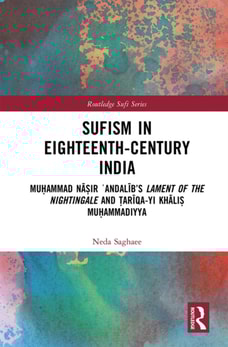
This book examines the works of Medieval Muslim philosophers interested in intercultural encounters and how receptive Islam is to foreign thought, to serve as a dialogical model, grounded in intercultural communications, for Islamic and Arabic education.
This book examines the works of Medieval Muslim philosophers interested in intercultural encounters and how receptive Islam is to foreign thought, to serve as a dialogical model, grounded in intercultural communications, for Islamic and Arabic education.
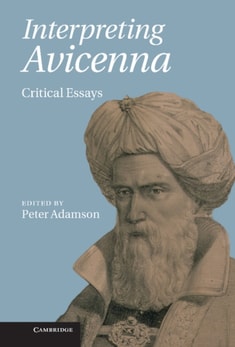
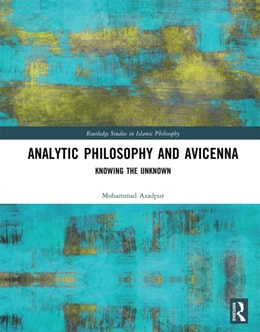
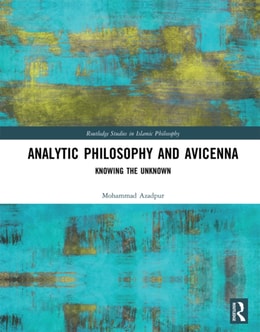
This work engages in a constructive, yet subtle, dialogue with the nuanced accounts of sensory intentionality and empirical knowledge offered by the Islamic philosopher Avicenna.
This work engages in a constructive, yet subtle, dialogue with the nuanced accounts of sensory intentionality and empirical knowledge offered by the Islamic philosopher Avicenna.
This book explores the significance of Ibn Khaldun's magnum opus, the Book of Examples, to our understanding of human history and the disciplines of anthropology, history, and sociology.
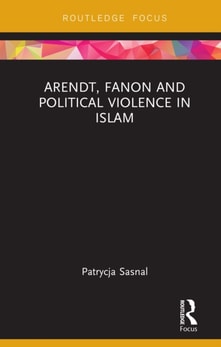
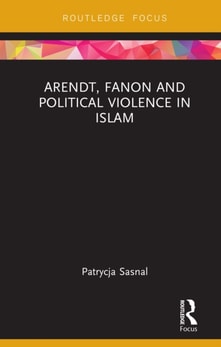
This book looks at contemporary political violence, in the form of jihadism, through the lens of a philosophical polemic between Hannah Arendt and Frantz Fanon: intellectual representatives of the global north and global south.
This book looks at contemporary political violence, in the form of jihadism, through the lens of a philosophical polemic between Hannah Arendt and Frantz Fanon: intellectual representatives of the global north and global south.
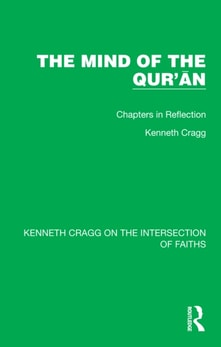
Originally published in 1973, this volume consists of a sequence of essays in religious thinking, responsive to the impact of Quranic style and emphasis.
Originally published in 1973, this volume consists of a sequence of essays in religious thinking, responsive to the impact of Quranic style and emphasis.
Originally published in 1978 Spirit Possession and Spirit Mediumship in Africa and Afro-America is an incredibly diverse and comprehensive bibliography on published works containing ethnographic data on, and analysis of, spirit possession and spirit mediumship in North and Sub-Saharan Africa and in some Afro-American communities in the Western Hemisphere.
Showing that Muslim societies are facing a crisis that is more cultural than religious, this book focuses on cultural representations through which social life is experienced in the Muslim world.
Showing that Muslim societies are facing a crisis that is more cultural than religious, this book focuses on cultural representations through which social life is experienced in the Muslim world.
Originally published in 1978 Spirit Possession and Spirit Mediumship in Africa and Afro-America is an incredibly diverse and comprehensive bibliography on published works containing ethnographic data on, and analysis of, spirit possession and spirit mediumship in North and Sub-Saharan Africa and in some Afro-American communities in the Western Hemisphere.
Al-Ghazali and the Idea of Moral Beauty rethinks the relationship between the good and the beautiful by considering the work of eleventh-century Muslim theologian Abu Hamid al-Ghazali (d.
Al-Ghazali and the Idea of Moral Beauty rethinks the relationship between the good and the beautiful by considering the work of eleventh-century Muslim theologian Abu Hamid al-Ghazali (d.
The objective of the following collected volume is to encourage a critical reflection on the relationship between "e;power"e; and "e;non-power"e; in our contemporary "e;world"e; and, proceeding from various philosophical traditions, to investigate the multifaceted aspects of this relationship.
The objective of the following collected volume is to encourage a critical reflection on the relationship between "e;power"e; and "e;non-power"e; in our contemporary "e;world"e; and, proceeding from various philosophical traditions, to investigate the multifaceted aspects of this relationship.
An attempt to shed light on some Islamic concepts of some prevailing expressions, based on the fact that culture is what gives humans the ability to think and implement, and culture has become an industry owned by Western or biased media, and the internal tearing of the Islamic civilizational identity is taking place and cultural trends are linked to false goals.
Exploring complex relations between Muslim visions and critical stances, this textbook is a compact introduction to Islam, dealing with the origins of its forms, from early developments to contemporary issues, including religious principles, beliefs and practices.
Exploring complex relations between Muslim visions and critical stances, this textbook is a compact introduction to Islam, dealing with the origins of its forms, from early developments to contemporary issues, including religious principles, beliefs and practices.
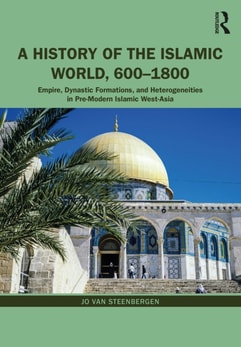
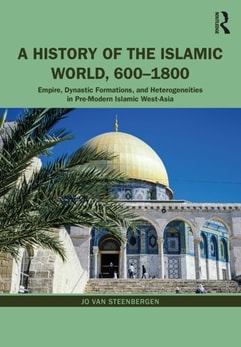
A History of the Islamic World, 600-1800 supplies a fresh and unique survey of the formation of the Islamic world and the key developments that characterize this broad region's history from late antiquity up to the beginning of the modern era.
A History of the Islamic World, 600-1800 supplies a fresh and unique survey of the formation of the Islamic world and the key developments that characterize this broad region's history from late antiquity up to the beginning of the modern era.
Peter Lamborn Wilson proposes a set of heresies, a culture of resistance, that dispels the false image of Islam as monolithic, puritan, and two-dimensional.
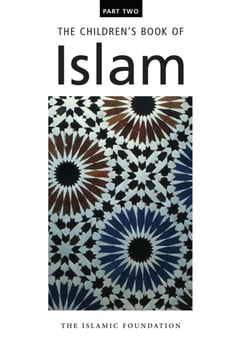
This book is a clear and lucid book that will provide children with a firm grounding in the Five Pillars of Islam: the Shahadah, Prayer, Charity, Fasting and the Hajj.
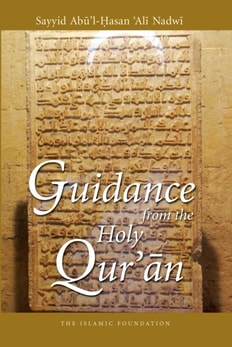
This book is a collection of Sayyid Nadwis writings and lectures which brings into sharper relief the eternal divine guidance for man embodied in the Quran.
An authoritative and accessible study guide that covers what the Book means to the believers and sets out the essential prerequisites of body, mind, and heart that serve to light up the inner life with the Qur'anic worldview; the etiquette of reciting, reading, and understanding the Qur'an; how to study the Qur'an collectively; and how to live by its teachings.
A Textbook of Hadith Studies provides an academic introduction to the Hadith, or the teachings of the Prophet Muhammad, which are second only to the Qur'an (Koran) in their authoritativeness within Islamic tradition.