Letters to Franca offers an extensive selection from the 500 or so extraordinary letters Louis Althusser addressed to Franca Madonia between 1961 and 1972, the most productive period in Althusser's life and the time when his most characteristic works were being elaborated and first received.
First published in 1989, Overcoming Foundations offers a challenge to both postmodernism and traditional doctrines of knowledge and value by undertaking a systematic philosophy without foundations.
Originally published in 1957 and as a fourth edition in 1970 this is an accessible history of Byzantium from Constantine the Great to its final conquest by the Ottoman Turks in 1453.
The Analects of Confucius is a compendium of lively banter and engaging exchanges between Confucius and his contemporaries, one that touches upon culture, fashion, arts, and society, making fun of celebrities and political figures of the day with juicy quotes from bestselling books as well as popular lyrics from the most widely-circulated songs, all of which, unfortunately, is lost on the modern reader — lost in translations that, out of good scholarly intention, seek to faithfully preserve historical reference.
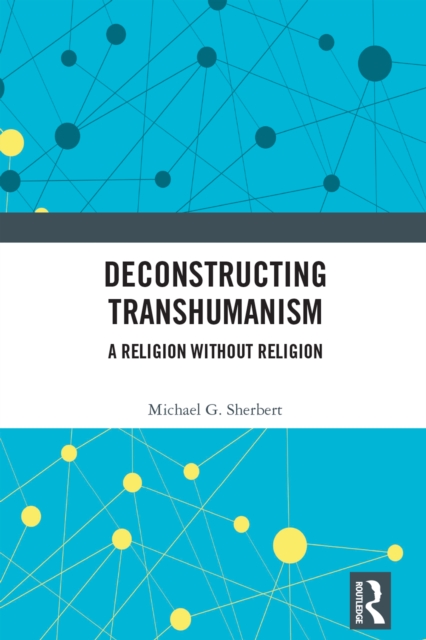
Deconstructing Transhumanism: A Religion Without Religion challenges the widely held view that transhumanism-a movement advocating for the enhancement of human life through technology-is purely secular and scientific.
The most current multidisciplinary and multivocal engagement with Sade's enduring influences on modernism and the philosophical need for continued analysis of his work and the questions it raises.
Die Philosophie der Aufklärung wird oft für ihren Rassismus und ihre Frauenfeindlichkeit kritisiert – allerdings beziehen sich die meisten Vorwürfe auf Kant und Rousseau.
This book examines Clement of Alexandria's interdisciplinary approach to nature contemplation-which he terms "e;physiology"e; and "e;physics"e;-showing its internal consistency even in the absence of a clear methodological outline.
This volume aims to make a significant contribution to the debate surrounding the renaissance of Kant studies in the last few decades, with a particular emphasis upon some 'problems of reason'.
Ancient Wisdom Meets Cutting-Edge LeadershipIn The Tao of Leadership, renowned media ecologist Jack Myers reveals the key to thriving in an AI-driven business world.
Mrinalini Mata nos explica, neste livro, que entre os princípios que devem reger a vida espiritual de um discípulo, a “lealdade ao guru é um dos passos mais importantes do discipulado”.
This book calls for the institution of an African feminist philosophy of language, challenging existing debates and encouraging a move away from the Western gaze.
Making the claim that reality is more like memory than a permanent substance, this original work draws on Derrida and Malabou to suggest a picture of the world as an assemblage of spectral resonances and disseminations.
"Blaise Pascal: pensar sin límites", de Alicia Villar Ezcurra, es una obra que profundiza en el legado intelectual de Blaise Pascal, abarcando sus múltiples facetas como matemático, filósofo y místico.
Charles Frederick Frantz provides a quantitative and qualitative analysis of Debussy's music through the lens of Bergson's philosophical perspective of duree, revealing his "e;revolution"e; in musical time.
Kant ist immer wieder der Vorwurf gemacht worden, den seine kritische Philosophie fundierenden Stämmedualismus von Sinnlichkeit und Verstand nicht begründet, sondern bloß vorausgesetzt zu haben.