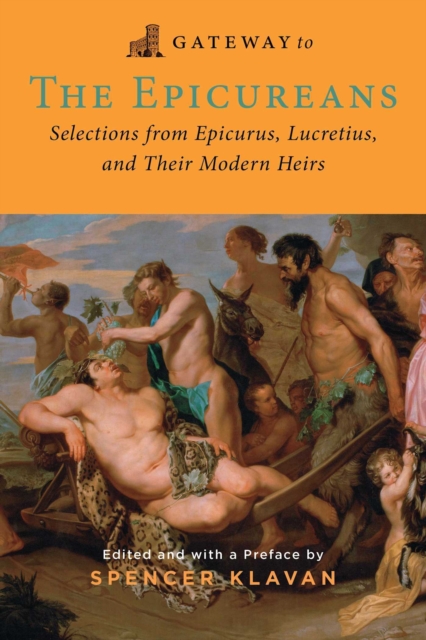
The Epicureans, Skeptics, and Stoics practiced philosophy not as a detached intellectual discipline but as a worldly art of grappling with issues of daily and urgent human significance.
From the author of the #1 New York Times bestseller On Bullshit, a landmark account of Descartes, reason, and truthIn this classic work, philosopher and bestselling author Harry Frankfurt provides a compelling analysis of the question that not only lies at the heart of Descartes's Meditations, but also constitutes the central preoccupation of modern philosophy: on what basis can reason claim to provide any justification for the truth of our beliefs?
Focusing on the new theories of human motivation that emerged during the transition from feudalism to the modern period, this is the first book of new essays on the relationship between politics and the passions from Machiavelli to Bentham.
A comprehensive and accessible account of the life and thought of Judaism's most celebrated philosopherMaimonides was the greatest Jewish philosopher and legal scholar of the medieval period, a towering figure who has had a profound and lasting influence on Jewish law, philosophy, and religious consciousness.
A beautiful reflection on the rhythm of God's justice and a call to engage with that rhythm in a way that takes us back toward healing, wholeness, and restoration.
Why modern and contemporary artand art conservationcan't be understood without taking account of the revolutionary impact of plasticsModern and contemporary art wouldn't exist without the invention of plastics.
How ancient skepticism can help you attain tranquility by learning to suspend judgmentAlong with Stoicism and Epicureanism, Skepticism is one of the three major schools of ancient Greek philosophy that claim to offer a way of living as well as thinking.
The Flame of Eternity provides a reexamination and new interpretation of Nietzsche's philosophy and the central role that the concepts of eternity and time, as he understood them, played in it.
Originally published in 1959, The Faith of a Heretic is the most personal statement of the beliefs of Nietzsche biographer and translator Walter Kaufmann.
How Maoism captured the imagination of French intellectuals during the 1960sMichel Foucault, Jean-Paul Sartre, Julia Kristeva, Phillipe Sollers, and Jean-Luc Godard.
The name Erasmus of Rotterdam conjures up a golden age of scholarly integrity and the disinterested pursuit of knowledge, when learning could command public admiration without the need for authorial self-promotion.

A colorful history of utilitarianism told through the lives and ideas of Jeremy Bentham, John Stuart Mill, and its other foundersIn The Happiness Philosophers, Bart Schultz tells the colorful story of the lives and legacies of the founders of utilitarianism-one of the most influential yet misunderstood and maligned philosophies of the past two centuries.
How a Greek philosopher's encounters with Buddhism in Central Asia influenced Western philosophyPyrrho of Elis went with Alexander the Great to Central Asia and India during the Greek invasion and conquest of the Persian Empire in 334-324 BC.
This book presents a radical and intuitive argument against the notion that intentional action, agency and autonomy are features belonging only to humans.
This book rethinks Plato's creation and use of myth by drawing on theories and methods from myth studies, religious studies, literary theory and related fields.
Winner of two 2025 CMA Book Awards from the Catholic Media Association: The Future of the Church (First Place), and Pastoral Ministry Catechetical (Third Place).
More than 50 years after the publication of Thomas Kuhn's seminal book, The Structure of Scientific Revolutions, this volume assesses the adequacy of the Kuhnian model in explaining certain aspects of science, particularly the social and epistemic aspects of science.
The purpose of this book is to present unpublished papers at the cutting edge of research on dialetheism and to reflect recent work on the applications of the theory.
Reading Illegitimacy in Early Iberian Literature presents illegitimacy as a fluid, creative, and negotiable concept in early literature which challenges society's definition of what is acceptable.
This book describes about unlike usual differential dynamics common in mathematical physics, heterogenesis is based on the assemblage of differential constraints that are different from point to point.
The question of the relation of Martin Heidegger's thought to politics has been a subject of controversy since the 1930s, when he became an advocate of the National Socialist regime in Germany.
This book investigates the concept of worldview, in its numerous aspects, and how worldviews impact, shape, and influence individuals, communities, societies, and cultures.
With an emphasis on exploring measurable aspects of ancient narratives, Maths Meets Myths sets out to investigate age-old material with new techniques.
Das Buch eröffnet einen völlig anderen Blick auf die Romantik: Anstelle von Nostalgie, unendlicher und unerfüllter Annäherung steht das Harmonische und Versöhnliche im Mittelpunkt.
Here is a universal biology that draws upon the contributions of Aristotle, Kant, and Hegel to unravel the mystery of life and conceive what is essential to living things anywhere they may arise.
"e;According to the words of Phaedrus in the Symposium of Plato, Love, sometimes named Eros, has no parents, no age, no history, and its origin remains unknown to anyone.
Reconfiguring Nietzsche's seminal impact on modernist literature and culture, this book presents a distinctive new reading of modernism by exploring his sustained philosophical engagement with nihilism and its inextricable tie to pain and sickness.
Originally published in 1987, Colin Campbell's classic treatise on the sociology of consumption has become one of the most widely cited texts in sociology, anthropology, cultural studies, and the history of ideas.
Examining Georges Canguilhem's enduring attention to the problem of error, from his early writings to Michel Foucault's first major responses to his work, this pathbreaking book shows that the historian of science was also a centrally important philosopher in postwar France.