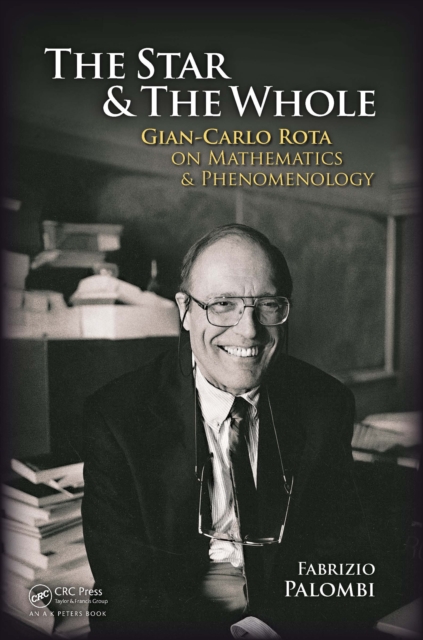
The Star and the Whole: Gian-Carlo Rota on Mathematics and Phenomenology, authored by Fabrizio Palombi, is the first book to study Rota's philosophical reflection.
In Being and Time, Martin Heidegger developed a way of considering human existence as 'being there', a process of interrelationships with aspects of the environment in which the very process itself constitutes the essence of human being.
This volume brings together Professor Cranz's published studies on Nicholas of Cusa with a set of seven papers left unpublished at the time of his death.
Phenomenology: The Basics is a concise and engaging introduction to one of the important philosophical movements of the twentieth century and to a subject that continues to grow and diversify.
This volume is the follow-up to Understanding Confucian Philosophy: Classical and Sung-Ming, which presented the first two Epochs of Confucian philosophy.
In Being and Time, Martin Heidegger developed a way of considering human existence as 'being there', a process of interrelationships with aspects of the environment in which the very process itself constitutes the essence of human being.
This book is about the human mind in ancient philosophy, with a focus on sense perception, a subject that Richard Sorabji has previously treated more in articles than in books.
The Elements of Greek Philosophy (1922) is an overview of the basic principles of Ancient Greek philosophy, tracing the developments of Greek thought from Thales of Miletus to Socrates, Plato and Aristotle.
A history of philosophy from the origins of reason in Ancient Greece to the most influential philosophers working today, this long-awaited single volume companion to Frederick Copleston's historic 11-volume series is a must-have for any aspiring philosopher.