First published in English in 1968, Kierkegaard's Authorship begins with a brief account of the life and meaning of Kierkegaard and concludes with the brief treatment of his relation to multifaceted existentialism.
First published in English in 1968, Kierkegaard's Authorship begins with a brief account of the life and meaning of Kierkegaard and concludes with the brief treatment of his relation to multifaceted existentialism.
In this incisive new work, Eli Friedlander demonstrates that Walter Benjamin's entire corpus, from early to late, comprises a rigorous and sustained philosophical questioning of how human beings belong to nature.
Diese Publikation handelt von der Beziehung zwischen dem Staat und dem Islam im allgemein-politischen und im schulischen Kontext, wobei der Islam neben anderen islamischen Institutionen in erster Linie von der Islamischen Glaubensgemeinschaft in Österreich (IGGÖ) vertreten wird.
We tend to suppose that the ancient Greeks had primitive ideas of the self, of responsibility, freedom, and shame, and that now humanity has advanced from these to a more refined moral consciousness.
The book positions Sanskrit poetics in a postcolonial context to understand its contemporary relevance and proposes a productive future direction for this system of knowledge.
We tend to suppose that the ancient Greeks had primitive ideas of the self, of responsibility, freedom, and shame, and that now humanity has advanced from these to a more refined moral consciousness.
Erhard Weigel (1625–1699) war zu Lebzeiten ein in ganz Europa berühmter Mathematiker, Astronom, Physiker, Pädagoge, Philosoph und Erfinder und steht seit mehreren Jahren wieder zunehmend im Blickpunkt wissenschaftshistorischer Forschung.
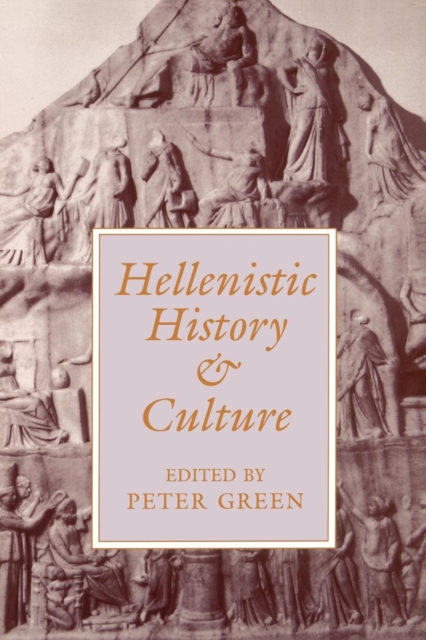
In a 1988 conference, American and British scholars unexpectedly discovered that their ideas were converging in ways that formed a new picture of the variegated Hellenistic mosaic.
In a 1988 conference, American and British scholars unexpectedly discovered that their ideas were converging in ways that formed a new picture of the variegated Hellenistic mosaic.
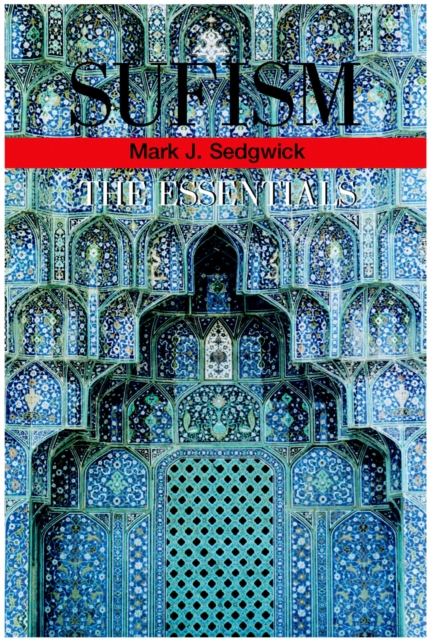
A succinct presentation of the essentials of Sufism and shows how Sufis live and worship, and whyFor more than a millennium, Sufism has been the core of the spiritual experience of countless Muslims.
This volume brings together philosophers and physicists to explore the parallels between Quantum Bayesianism, or QBism, and the phenomenological tradition.
By exploring the life and work of the influential feminist thinker Simone de Beauvoir, this book shows how each of us lives within political and social structures that we can--and must--play a part in transforming.
In the first English language translation of this classic late 20th-century text within French Catholic thought, Poetics of the Sensible brings together insights from Neoplatonism and phenomenology with a distinctive and innovative approach.
La presente «Contribución a la genealogía del pensamiento posmetafísico» es también «una historia de la filosofía siguiendo el hilo conductor del discurso sobre fe y saber».
In seinem Werk 'Geschichte der neuern Philosophie: Von Bacon bis Spinoza' nimmt Ludwig Feuerbach die Leser mit auf eine faszinierende Reise durch die Entwicklung der Philosophie von Francis Bacon bis Baruch Spinoza.
In this book, Nadir Lahiji introduces Kojin Karatani's theoretical-philosophical project and demonstrates its affinity with Kant's critical philosophy founded on 'architectonic reason'.
This volume engages with the work of Heidegger to argue that the modern environmental crisis is fundamentally a crisis of understanding Life, resulting from the symbolic codification of the world from the Logos of Greek philosophy to the rationality of the modern world and resulting in a metaphysics that privileges ontological thinking on the "e;question of being"e; over the environmental question and the concern for the conditions of life.