The Gospel, according to Pariba, Bishara Issa, peace be upon him, with the prophecy of Muhammad, the Messenger of God, may God bless him and grant him peace, translated a new comparison and an analytical critical study that reveals new facts in the religion of ancient Christianity and the good news of Jesus, peace be upon him, with the prophecy of our master Muhammad, peace and blessings be upon him, on a manuscript in the Italian in the National Library in Vienna and planned in Spanish in Fisher Bastrani Library.
Inhaltsverzeichnis: VORWORT TAGEBUCH 1785-1787 Text 1: Tagebuch ARBEITEN AUS DER GYMNASIALZEIT – EIN AUFSATZ AUS DEM TÜBINGER STIFT 1785-1788 Text 2: Unterredung zwischen Dreien Text 3: Einige Bemerkungen über die Vorstellung von Grösse Text 4: Ueber die Religion der Griechen und Römer Text 5: Ueber einige charakteristische Unterschiede der alten Dichter Text 6: Aus einer Rede beim Abgang vom Gymnasium Text 7: Über einige Vortheile, welche uns die Lektüre der alten klassischen Griechischen und Römischen Schriftsteller gewährt VIER PREDIGTEN 1792-1793 Text 8: [Erste Predigt] Text 9: [Zweite Predigt] Text 10: [Dritte Predigt] Text 11: [Vierte Predigt] STUDIEN 1792/93-1794 Text 12: wiefern ist Religion … Text 13: Aber die Hauptmasse … Text 14: Unsre Tradition … Text 15: Schon in der Bauart … Text 16: Religion ist eine der wichtigsten Angelegenheiten … Text 17: Ausser dem mündlichen Unterricht … Text 18: Nicht zu leugnen … Text 19: Die StaatsVerfassungen … Text 20: Wie wenig die objective Religion … Text 21: öffentliche Gewalt … Text 22: Über den Unterschied der Szene des Todtes – Text 23: Unter objektiver Religion … Text 24: Es sollte eine schwere Aufgabe … Text 25: Wenn man von der christlichen Religion … Text 26: Jetzt braucht die Menge … EIN MANUSKRIPT ZUR PSYCHOLOGIE UND TRANSZENDENTALPHILOSOPHIE 1794 Text 27: [Zur Psychologie und Transzendentalphilosophie] STUDIEN 1795 Text 28: Die transcendentale Idee … Text 29: Unkunde der Geschichte … Text 30: In einer Republik … DAS LEBEN JESU 1795 Text 31: [Das Leben Jesu] STUDIEN 1795-1796 Text 32: man mag die widersprechendste Betrachtungen … Text 33: Ein positiver Glauben … Text 34: Jedes Volk … BERICHT ÜBER EINE ALPENWANDERUNG – ELEUSIS (AN HÖLDERLIN) 1796 Text 35: Bericht über eine Alpenwanderung Text 36: Eleusis NICHT NÄHER DATIERBARES Text 7: Ueber Lessing's Briefwechsel mit seiner Frau Text 38: Menschen, frühe … Text 39: Der Streit über … NACHRICHTEN ÜBER VERSCHOLLENES De utilitate poeseos Bakkalaureats-Rede Magister-Specimina Predigt zum Konsistorial-Examen Schemata zu einer Evangelienharmonie Analyse von Schillers Fiesko Übersetzungen Präparationen zu alten Autoren Schul- und Kollegienhefte ANHANG Editionsprinzipien der Gesammelten Werke Schrifttypen, Zeichen, Abkürzungen, Siglen Editorischer Bericht Allgemeine Hinweise Zur Datierung der Texte Zu den einzelnen Texten Anmerkungen Personenverzeichnis
Inhaltsverzeichnis: DIFFERENZ DES FICHTE'SCHEN UND SCHELLING'SCHEN SYSTEMS DER PHILOSOPHIE Vorerinnerung Mancherlei Formen, die bey dem jetzigen Philosophiren vorkommen Darstellung des Fichte'schen Systems Vergleichung des Schelling'schen Princips der Philosophie mit dem Fichte'schen Reinhold KRITIKEN UND ANZEIGEN AUS DER ERLANGER LITERATUR-ZEITUNG Bouterweks Anfangsgründe der spekulativen Philosophie Zwei Schriften Werneburgs Gerstäckers Deduktion des Rechtsbegriffs Krugs Entwurf eines neuen Organon's der Philosophie KRITISCHES JOURNAL DER PHILOSOPHIE Ersten Bandes erstes Stück Einleitung.
Im Wintersemester 1816/17 hat Hegel in Heidelberg über Enzyklopädie der philosophischen Wissenschaften vorgetragen und bald darauf - im Juni 1817 - einen Grundriß seines Systems unter diesem Namen veröffentlicht.
Inhaltsverzeichnis: ENCYCLOPÄDIE DER PHILOSOPHISCHEN WISSENSCHAFT IM GRUNDRISSE Vorrede zur zweiten Ausgabe Vorrede zur ersten Ausgabe Inhalts-Anzeige Einleitung ERSTER THEIL.
Hegels »Grundlinien der Philosophie des Rechts« zählen zu den klassischen und wirkungsmächtigsten Werken der neuzeitlichen Rechts- und Staatsphilosophie.
In der Entwicklungsgeschichte der Philosophie Hegels klafft zwischen den Jenaer Jahren der Grundlegung (1801-1806) und den Heidelberger und Berliner Jahren der Entfaltung (1816-1831) eine Lücke von einem Jahrzehnt: die beiden Bamberger Jahre (1807-1808), deren wenige Texte bereits in den Bänden 5 und 12 der »Gesammelten Werke« ediert sind, und vor allem die Nürnberger Jahre, in denen Hegel am Gymnasium Rektor und Professor der philosophischen Vorbereitungswissenschaften war (1808-1816).
First published in 1974 Beyond the Gods argues that true mystics transcend religious boundaries, and that Eastern mysticism has increasing relevance for the troubled minds and spirits of the West.
First Published in 1980 (English Translation) Towards a Transformation of Philosophy presents selected essays from Karl -Otto Apel's two- volume German collection that was published in 1973 under the title Transformation der Philosophie.
Intercultural Phenomenology explores the nature of reality by engaging in a cross-cultural dialogue between two of the most influential philosophical traditions of the 20th century.
Intercultural Phenomenology explores the nature of reality by engaging in a cross-cultural dialogue between two of the most influential philosophical traditions of the 20th century.
This volume critically explores the cultural significance and fate of the "e;literary"e; in the European and the Indian traditions as it traces the history of the reception of works that have had a deep hold on the lives and sensibilities of people across time and cultures.
First Published in 1980 (English Translation) Towards a Transformation of Philosophy presents selected essays from Karl -Otto Apel's two- volume German collection that was published in 1973 under the title Transformation der Philosophie.
Grete (Henry-)Hermann war nicht nur eine Philosophin, die mit Physikern wie Werner Heisenberg und anderen Wissenschaftlern auf Augenhöhe über die Interpretation der Quantenphysik diskutierte.
This volume critically explores the cultural significance and fate of the "e;literary"e; in the European and the Indian traditions as it traces the history of the reception of works that have had a deep hold on the lives and sensibilities of people across time and cultures.
This book explores the relevance of Sartre's work in various areas of contemporary philosophy, including the imagination, philosophy of language, scepticism, social ontology, logic, film, practical rationality, emotions, and psychoanalysis.
This book explores the relevance of Sartre's work in various areas of contemporary philosophy, including the imagination, philosophy of language, scepticism, social ontology, logic, film, practical rationality, emotions, and psychoanalysis.
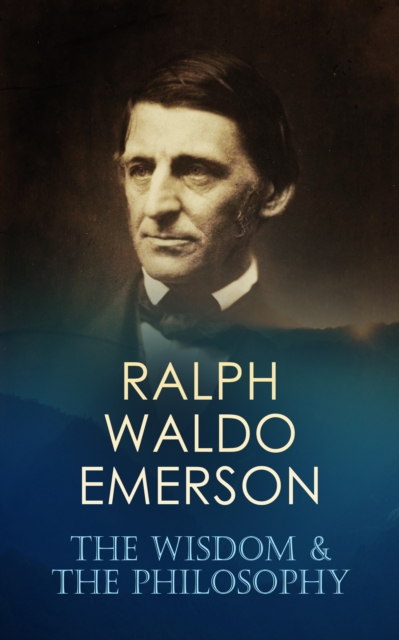
Ralph Waldo Emerson: The Wisdom & The Philosophy gathers the central energies of Emerson's thought: self-reliance, moral intuition, nature as revelation, and the sovereignty of the individual mind.
First published in 1974 Beyond the Gods argues that true mystics transcend religious boundaries, and that Eastern mysticism has increasing relevance for the troubled minds and spirits of the West.
Alchemies of Blood and Afro-Diasporic Fiction focuses on the resurgence of biological racism in 21st-century public discourse, the ontological and material turns in the academy that have occurred over the same time period, and how Afro-diasporic fiction has responded to both with alternative visions of bloodlines, kinship, and community.
Alchemies of Blood and Afro-Diasporic Fiction focuses on the resurgence of biological racism in 21st-century public discourse, the ontological and material turns in the academy that have occurred over the same time period, and how Afro-diasporic fiction has responded to both with alternative visions of bloodlines, kinship, and community.
A sus obras sobre historia y fenomenología de la religión añade Gershom Scholem en este libro un nuevo análisis de los conceptos básicos del judaísmo y de su evolución dentro de la mística judía y, en particular, de la cábala.