El movimiento de la Ilustración se consideró como el sol de la razón que disiparía la oscuridad de la superstición y reduciría a la nada a la religión.
Eugenio Garin afirmaba que "no cabe duda de que es imposible asir el sentido del Renacimiento italiano ni comprender su peso en la historia, si no se aferra el secreto de su profunda unidad vivencial de ciencia y arte, de un tormentato pensamiento crítico unido a una fe religiosa renovada por el retorno a los orígenes".
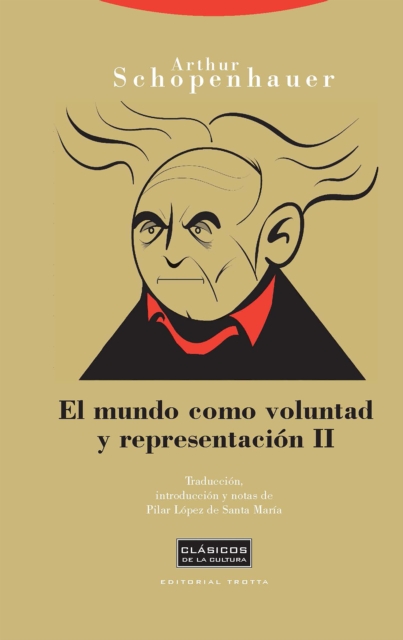
Pese al fracaso editorial que había supuesto la primera edición de El mundo como voluntad y representación, Schopenhauer consiguió que en 1844 saliera a la luz una segunda edición, aumentada por un segundo volumen de mayor extensión que el primero y en el que incluyó los complementos a los cuatro libros que componían la obra original.
A clear and comprehensive guide to practicing the foundational Buddhist teachings of the four noble truthsand how these truths can lead to the liberating insight of the ';wisdom gone beyond.
La pregunta por los componentes básicos de la sociedad, aquello que la constituye en última instancia, es una cuestión clásica y, a la vez, constante en las ciencias sociales y humanas.
On a slow autumn afternoon, an atmospheric physicist working at the Malta Weather Station receives a surprising email from a colleague working in the United Kingdom: something troubling has apparently been detected during one of their research flights.
On a slow autumn afternoon, an atmospheric physicist working at the Malta Weather Station receives a surprising email from a colleague working in the United Kingdom: something troubling has apparently been detected during one of their research flights.
This book collects fifteen major philosophical essays spanning more than twenty years by acclaimed Italian philosopher and author of State of Exception.
This book explores Iris Murdoch as a philosopher who, through her distinctive methodology, exploits the advantages of having a mind on the borders of literature and politics in her early career writings (pre-The Sovereignty of Good).
This book argues that conscious experience is sometimes extended outside the brain and body into certain kinds of environmental interaction and tool use.
This book explores Iris Murdoch as a philosopher who, through her distinctive methodology, exploits the advantages of having a mind on the borders of literature and politics in her early career writings (pre-The Sovereignty of Good).
This book argues that conscious experience is sometimes extended outside the brain and body into certain kinds of environmental interaction and tool use.
Santideva's 8th century Mahayana Buddhist classic, the Guide to the Practices of Awakening (Bodhicaryavatara), has been a source of philosophical inspiration in the Indian and Tibetan traditions for over a thousand years.
Santideva's 8th century Mahayana Buddhist classic, the Guide to the Practices of Awakening (Bodhicaryavatara), has been a source of philosophical inspiration in the Indian and Tibetan traditions for over a thousand years.
Although Foucault departs from Marxism, his own approach constitutes a form of consistent materialism which has theoretical implications for the analysis of social and educational discursive systems.