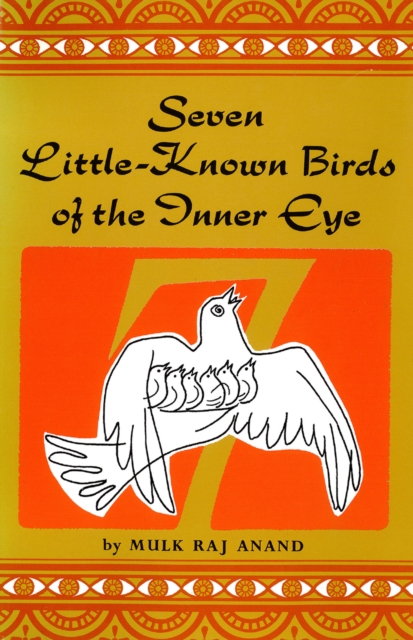
In this fascinating, informal approach to art appreciation, an eminent Indian scholar reveals the crucial difference between merely looking at and really seeing painting and sculpture, drawing and architecture.
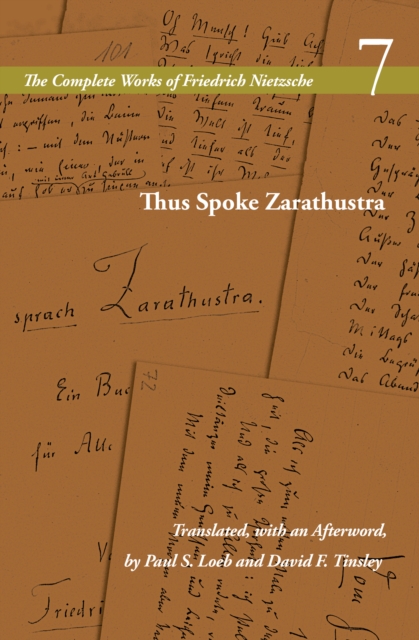
Thus Spoke Zarathustra stands alone among Nietzsche's published works as a poetic and narrative rendering of his most sophisticated ideas through the medium of Zarathustra's uniquely prophetic voice.
Thus Spoke Zarathustra stands alone among Nietzsche's published works as a poetic and narrative rendering of his most sophisticated ideas through the medium of Zarathustra's uniquely prophetic voice.
This volume brings together leading scholars from the phenomenological tradition to address questions regarding the relation of social ontology and phenomenology.
This volume brings together leading scholars from the phenomenological tradition to address questions regarding the relation of social ontology and phenomenology.
This book explains the enduring significance of topos, an Aristotelian translation of the concept of place, by exploring how place shapes the kinds of arguments we make, texts we produce, the arts and technology we use.
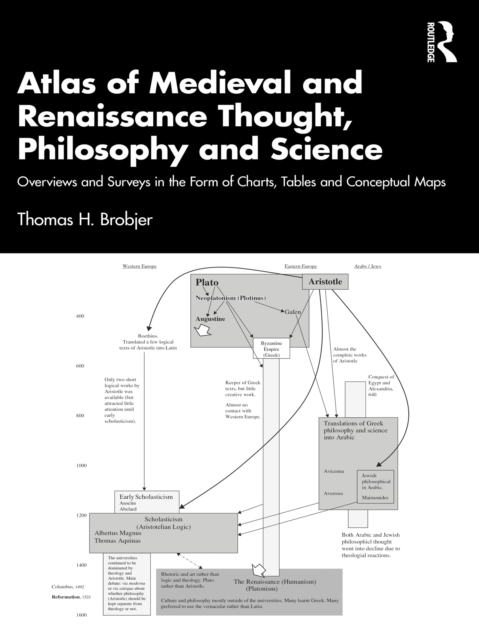
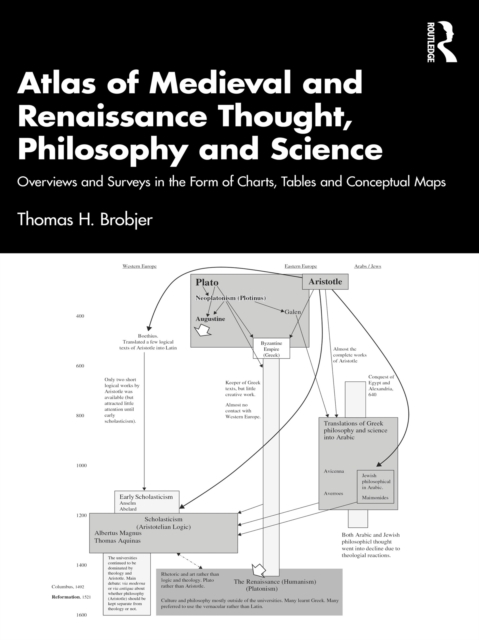
This conceptual Atlas of Medieval and Renaissance Thought, Philosophy and Science presents visual overviews, thematic outlines, surveys and summaries of the many thematic aspects of this long period of European intellectual history, c.
Hans Magnus Enzensbergers (1929-2022) Lebenswerk ist von den Auftritten des „zornigen jungen Mannes“ (Alfred Andersch) in den 1950er und 60er Jahren bis hin zu den dezidiert ironischen Brosamen des „Herrn Zett“ der 2010er Jahre ausgespannt zwischen (Anti-)Programmatik und Ideologiekritik.
Identifying the theological background for the later classical exposition of pragmatism by William James illuminates a method that can shift the parameters of contemporary philosophy of religion discourse and contribute to the development of novel solutions to perennial problems.
This conceptual Atlas of Medieval and Renaissance Thought, Philosophy and Science presents visual overviews, thematic outlines, surveys and summaries of the many thematic aspects of this long period of European intellectual history, c.
This book brings together an interdisciplinary range of scholars from across the spectrum of disciplines, generations, and geopolitical divides to revisit Jacques Derrida's account of law, violence, and justice.
Hans Magnus Enzensbergers (1929-2022) Lebenswerk ist von den Auftritten des „zornigen jungen Mannes“ (Alfred Andersch) in den 1950er und 60er Jahren bis hin zu den dezidiert ironischen Brosamen des „Herrn Zett“ der 2010er Jahre ausgespannt zwischen (Anti-)Programmatik und Ideologiekritik.
Merleau-Ponty's phenomenological notion of motivation advances a compelling alternative to the empiricist and rationalist assumptions that underpin modern epistemology.
The key to mitigating the environmental crisis isn't just based on science; it depends upon a profound philosophical revision of how we think about and behave in relation to the world.
World-renowned analytic philosophers John McDowell and Robert Brandom, dubbed "e;Pittsburgh Neo-Hegelians,"e; recently engaged in an intriguing debate about perception.
In The Tenets of Cognitive Existentialism, Dimitri Ginev draws on developments in hermeneutic phenomenology and other programs in hermeneutic philosophy to inform an interpretative approach to scientific practices.
Zen Masters of Japan is the second book in a series that traces Zen's profoundly historic journey as it spread eastward from China and Japan, toward the United States.
This classic exploration of the intellectual life has fully retained its unique value since initial publication in 1904, and is a valuable addition to any discerning reader's collection.
This book explains the enduring significance of topos, an Aristotelian translation of the concept of place, by exploring how place shapes the kinds of arguments we make, texts we produce, the arts and technology we use.
These lectures by one of the most influential and original philosophers of the twentieth century constitute a sustained argument for the philosophical basis of romanticism, particularly in its American rendering.
The key to mitigating the environmental crisis isn't just based on science; it depends upon a profound philosophical revision of how we think about and behave in relation to the world.
This book offers a timely intervention in the discourses around transhumanism, posthumanism, and phenomenology, aspiring to inaugurate a turning in Western thought in the direction of a more phenomenologically oriented consideration of what it means to be human and of what it might mean to be “posthuman.
This book brings together an interdisciplinary range of scholars from across the spectrum of disciplines, generations, and geopolitical divides to revisit Jacques Derrida's account of law, violence, and justice.
Inspired by the humanist and Catholic martyr Thomas More, David Albertson and Jason Blakely imagine a new politics of hopeIn Thomas More's Utopia, a traveler from the New World delivers a shocking message: on a lost island beyond the horizon, people live far better lives than in Europe.
SANS DIEU – Pourquoi Dieu n'existe pas est une réflexion philosophique et critique sur l'une des plus anciennes questions de l'humanité : pourquoi les hommes croient-ils en Dieu — et que reste-t-il lorsque cette croyance est examinée avec lucidité ?
Tras el éxito de "Yoga con humor", Julia Arteaga nos muestra las claves para que nadie tenga dudas a la hora de empezar a practicar yoga o mantener esta sana disciplina dentro de su rutina diaria.
Oxford Studies in Philosophy of Mind presents cutting-edge work in the philosophy of mind, combining invited articles and articles selected from submissions.
Oxford Studies in Philosophy of Mind presents cutting-edge work in the philosophy of mind, combining invited articles and articles selected from submissions.
The Unity of Stoic Metaphysics argues that the Stoics were sophisticated metaphysical thinkers responding to Plato's Sophist and forging a bold new path between materialism and idealism, with a one-world metaphysics best characterized as non-reductive physicalism.
The widespread influence of Buddhism is due in part to the skill with which a way of liberation was refined by it's teachers and became accessible to people of diverse cultures.
There are two common responses to skepticism, the epistemological claim that knowledge is at least non-existent and perhaps also unachievable, and both are to be avoided.