The Flame of Eternity provides a reexamination and new interpretation of Nietzsche's philosophy and the central role that the concepts of eternity and time, as he understood them, played in it.
Originally published in 1959, The Faith of a Heretic is the most personal statement of the beliefs of Nietzsche biographer and translator Walter Kaufmann.
How Maoism captured the imagination of French intellectuals during the 1960sMichel Foucault, Jean-Paul Sartre, Julia Kristeva, Phillipe Sollers, and Jean-Luc Godard.
The name Erasmus of Rotterdam conjures up a golden age of scholarly integrity and the disinterested pursuit of knowledge, when learning could command public admiration without the need for authorial self-promotion.
A colorful history of utilitarianism told through the lives and ideas of Jeremy Bentham, John Stuart Mill, and its other foundersIn The Happiness Philosophers, Bart Schultz tells the colorful story of the lives and legacies of the founders of utilitarianism-one of the most influential yet misunderstood and maligned philosophies of the past two centuries.
How a Greek philosopher's encounters with Buddhism in Central Asia influenced Western philosophyPyrrho of Elis went with Alexander the Great to Central Asia and India during the Greek invasion and conquest of the Persian Empire in 334-324 BC.
This book presents a radical and intuitive argument against the notion that intentional action, agency and autonomy are features belonging only to humans.
This book rethinks Plato's creation and use of myth by drawing on theories and methods from myth studies, religious studies, literary theory and related fields.
More than 50 years after the publication of Thomas Kuhn's seminal book, The Structure of Scientific Revolutions, this volume assesses the adequacy of the Kuhnian model in explaining certain aspects of science, particularly the social and epistemic aspects of science.
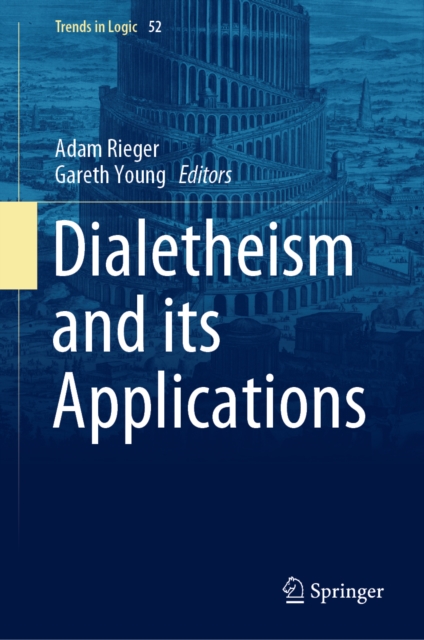
The purpose of this book is to present unpublished papers at the cutting edge of research on dialetheism and to reflect recent work on the applications of the theory.
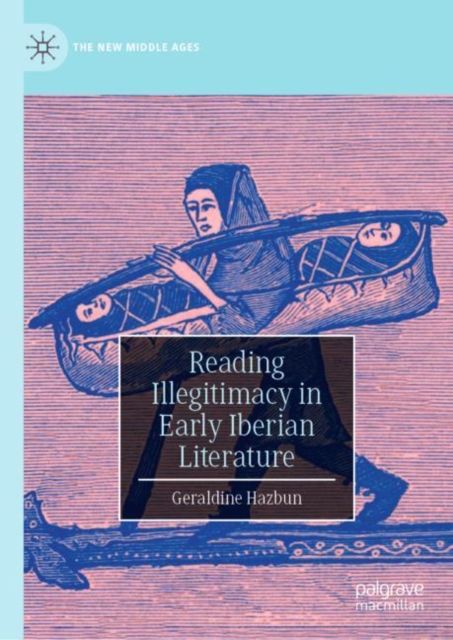
Reading Illegitimacy in Early Iberian Literature presents illegitimacy as a fluid, creative, and negotiable concept in early literature which challenges society's definition of what is acceptable.
This book describes about unlike usual differential dynamics common in mathematical physics, heterogenesis is based on the assemblage of differential constraints that are different from point to point.
The question of the relation of Martin Heidegger's thought to politics has been a subject of controversy since the 1930s, when he became an advocate of the National Socialist regime in Germany.
This book investigates the concept of worldview, in its numerous aspects, and how worldviews impact, shape, and influence individuals, communities, societies, and cultures.
With an emphasis on exploring measurable aspects of ancient narratives, Maths Meets Myths sets out to investigate age-old material with new techniques.
Das Buch eröffnet einen völlig anderen Blick auf die Romantik: Anstelle von Nostalgie, unendlicher und unerfüllter Annäherung steht das Harmonische und Versöhnliche im Mittelpunkt.
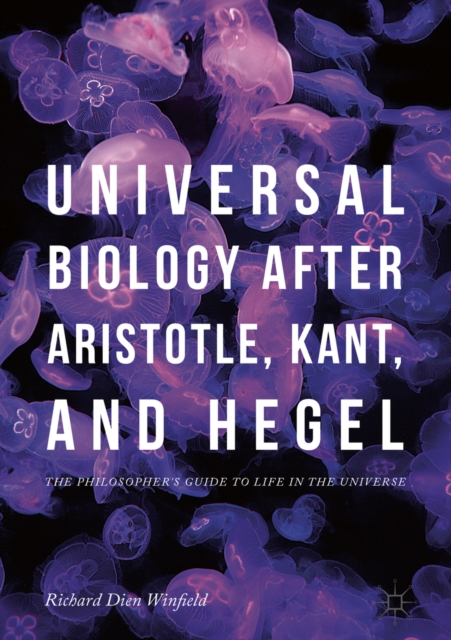
Here is a universal biology that draws upon the contributions of Aristotle, Kant, and Hegel to unravel the mystery of life and conceive what is essential to living things anywhere they may arise.
In Confucian Feminism Li-Hsiang Lisa Rosenlee expands the theoretical horizons of feminism by using characteristic Confucian terms, methods, and concerns to interrogate the issue of gender oppression and liberation.
"e;According to the words of Phaedrus in the Symposium of Plato, Love, sometimes named Eros, has no parents, no age, no history, and its origin remains unknown to anyone.
This volume reflects on different regional and national experiences of the Covid 19 pandemic, with contributions from India, Thailand, Singapore, Australia, Italy, United States, and Canada.
Reconfiguring Nietzsche's seminal impact on modernist literature and culture, this book presents a distinctive new reading of modernism by exploring his sustained philosophical engagement with nihilism and its inextricable tie to pain and sickness.
Originally published in 1987, Colin Campbell's classic treatise on the sociology of consumption has become one of the most widely cited texts in sociology, anthropology, cultural studies, and the history of ideas.
Examining Georges Canguilhem's enduring attention to the problem of error, from his early writings to Michel Foucault's first major responses to his work, this pathbreaking book shows that the historian of science was also a centrally important philosopher in postwar France.
Presenting the first comprehensive, in-depth study of hyperintensionality, this book equips readers with the basic tools needed to appreciate some of current and future debates in the philosophy of language, semantics, and metaphysics.
This work examines the rise of postmodernism in management scholarship and argues that the prevalence of postmodernist thought reflects a lack of understanding by management researchers of the core principles upon which Western business endeavour is based.
This book outlines and circumvents two serious problems that appear to attach to Kant's moral philosophy, or more precisely to the model of rational agency that underlies that moral philosophy: the problem of experiential incongruence and the problem of misdirected moral attention.
In this book, Reinhold Kramer explores a variety of important social changes, including the resistance to objective measures of truth, the rise of "e;How-I-Feel"e; ethics, the ascendancy of individualism, the immersion in cyber-simulations, the push toward globalization and multilateralism, and the decline of political and religious faiths.
This multidisciplinary collection of essays provides a critical and comprehensive understanding of how knowledge has been made, moved and used, by whom and for what purpose.
This book argues that Hip Hop's early history in the South Bronx charts a course remarkably similar to the conceptual history of artistic creation presented in Hegel's Lectures on Aesthetics.
This volume brings together diverse Asian religious perspectives to address critical issues in the encounter between tradition and modern western evolutionary thought.