An in-depth comparison of Wittgenstein and Heidegger shows how the views of both philosophers emerge from a fundamental attempt to dispense with the transcendent.
Through his innovative study of language, noted Heidegger scholar Lawrence Hatab offers a proto-phenomenological account of the lived world, the "e;first"e; world of factical life, where pre-reflective, immediate disclosiveness precedes and makes possible representational models of language.
The volume is inspired by Gilles Deleuze's philosophical project, which builds on the critique of European Humanism and opens up inspiring new perspectives for the renewal of the field.
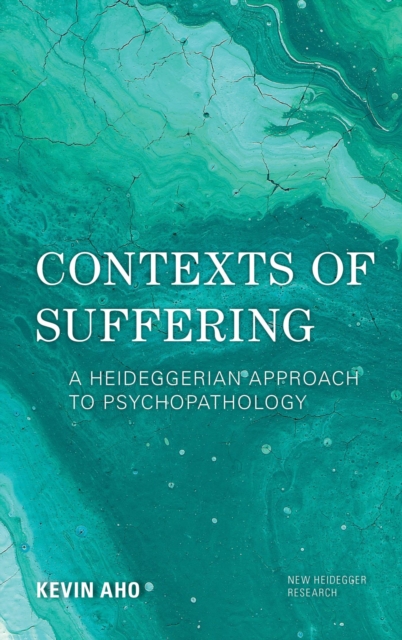
Contexts of Suffering draws on Martin Heidegger's phenomenology and his analysis of human existence to challenge core assumptions in contemporary psychiatry by contextualizing mental illness and illuminating its existential and experiential qualities.
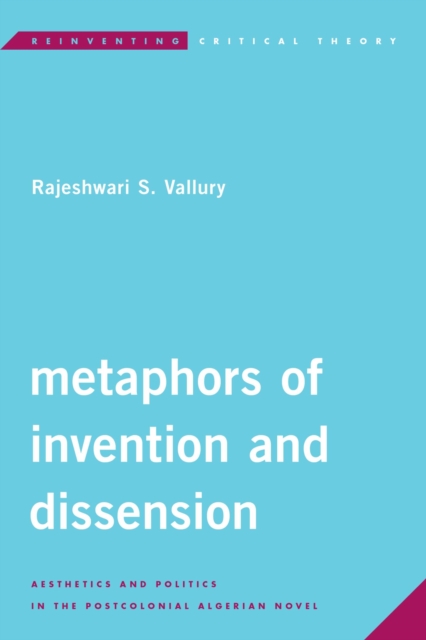
Metaphors of Invention and Dissension explores the relationship between aesthetics and politics in the postcolonial Algerian novel, examining six novels written by two Algerian authors of French expression, Tahar Djaout and Rachid Mimouni.
One of the most important French philosophers working today, Francois Laruelle has developed an innovative and powerful repertoire of concepts across an oeuvre spanning four decades and more than twenty books.
Although feminist phenomenology is traditionally rooted in philosophy, the issues with which it engages sit at the margins of philosophy and a number of other disciplines within the humanities and social sciences.
In the reincarnation myth in Book X of Plato's Republic, the unnamed first soul, who has lived a good life and has been rewarded in the afterlife, chooses a new life and fate, and chooses catastrophically badly.
This book aims to put modern continental philosophy, specifically the sub-fields of phenomenology, existentialism, hermeneutics, deconstruction, critical theory and genealogy, into conversation with the field of contemporary theology.
Merleau-Ponty's status as a philosopher of perception is well-established, but his distinctive contributions to the philosophy and phenomenology of language have yet to be fully appreciated.
Philosophical debates, many of them involving the appropriation of modern Western philosophical doctrines, are a crucial element shaping the intellectual and practical behaviour of many thinkers in the Islamicate world and their audiences.
This unique volume of original essays presents in-depth analyses of representative periods, problems, and debates within the long and rich history of Korean philosophy.
Walter Benjamin and the Post-Kantian Tradition engages with Benjamin as a theorist of a historical and philosophical problematic of modernity: a problematic that he finds manifested, in different philosophical guises, within scientific empiricism, neo-Kantianism and German Romanticism.
His tenth book, The Progressive Revolution (Volume V)-continues his legal, historical and literary series based on Natural Law, Natural Rights and the original political philosophy of the constitutional Framers and original jurisprudence of the U.
From Balewa's declaration, 'Today is Independence Day,' to Azikiwe's impassioned plea, 'Let us bind the nation's wound and let us heal the breaches of the past so that in forging our nation there shall emerge on this continent a hate-free, fear-free, and greed-free people,' to Buhari's patriotic fervor, 'This generation [of Nigerians].
Animal Minds, Animal Souls, Animal Rights explores the thinking of philosophers and theologians about controversies concerning animal consciousness and animal rights.
This collection of essays and thoughts covers such areas as basic Christian thought, which includes traditional family morality and a great concern for alleviating poverty and promoting social justice, political thought comparing the need for a system which includes both socialist and capitalist elements, and the need for values in our society, which has come to emphasize money, power, and greed as philosophical goals and values, though they are not.
Essays on Aesthetic Genesis is a collection of essays written on Jeff Mitscherling's work in realist phenomenology, Aesthetic Genesis: The Origin of Consciousness in the Intentional Being of Nature.
Erman Kaplama explores the principle of transition (Ubergang) from metaphysics to physics developed by Kant in his unfinished magnum opus, Opus Postumum.
The Continuing Legacy of Simone Weil analyzes the core work of Simone Weil and her views on the nature of the human condition, humanity's relationship with God, and the objective state of our world.
In today's world, we are witnessing both the spread of a hopeful secular humanism and the persistence of cultural traditions that mindlessly glorify humans and are paving the path to environmental collapse.
Aligning Values and Politics argues that empowering individuals for self-actualization is an indispensable tool for attaining freedom; therefore, politics must align with the promotion of self-actualization.
An examination of the role of ostension—the bodily manifestation of intention—-in word learning, and an investigation of the philosophical puzzles it poses.