The Survival of Beauty and Art is a direct followup to Faas' The Genealogy of Aesthetics (Cambridge, 2002), his Nietzschean critique of the Idealist western tradition.
La actual disolución de las fronteras de los géneros artísticos va acompañada de experimentos estéticos que renuevan la vieja pretensión vanguardista de borrar la clásica brecha entre arte y vida.
This book provides a stylistic and cognitive poetic account of ekphrastic poetry (poetry whose subject matter is predominantly artworks and images), examining the linguistic processes through which works of art can become literary objects.
A collection of newly composed essays, some with a historical focus and some with a contemporary focus, which addresses the problem of explaining the appeal of artworks whose appreciation entails negative or difficult emotions on the appreciator's part - what has traditionally been known as "the paradox of tragedy".
Representing a new generation of theorists reaffirming the radical dimensions of art, Gail Day launches a bold critique of late twentieth-century art theory and its often reductive analysis of cultural objects.
This sourcebook presents nearly 200 specially-translated Greek and Roman texts from Homer to Plutarch, revealing the place of the animal in the moral consciousness of the Classical era.
The Invisible Dragon made a lot of noise for a little book When it was originally published in 1993 it was championed by artists for its forceful call for a reconsideration of beauty-and savaged by more theoretically oriented critics who dismissed the very concept of beauty as naive, igniting a debate that has shown no sign of flagging.
Uno de los asuntos sobre los que el hombre se pregunta a lo largo de su historia es el de la procedencia de la creación artística y la naturaleza de la inspiración.
Literary Aesthetics of Trauma: Virginia Woolf and Jeanette Winterson investigates a fundamental shift, from the 1920s to the present day, in the way that trauma is aesthetically expressed.
Friedrich von Hardenberg und Friedrich Schlegel verdanken wir zwei der berühmtesten Denkfiguren der Romantik: die ‚blaue Blume‘ und die ‚progressive Universalpoesie‘.
This unique collection of essays focuses on various aspects of Plato's Philosophy of Art, not only in The Republic , but in the Phaedrus, Symposium, Laws and related dialogues.
This book considers the presence of media illiteracy in a world in which we are supposedly consumed by media, live a media life, in a media ecosystem, surrounded by mediated communication.
Dieses eBook: "Lälius oder von der Freundschaft" ist mit einem detaillierten und dynamischen Inhaltsverzeichnis versehen und wurde sorgfältig korrekturgelesen.
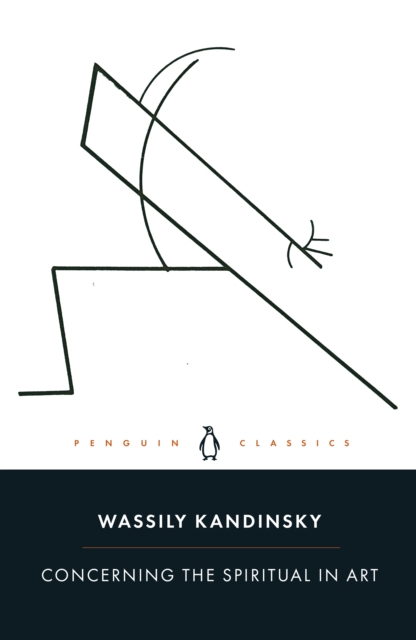
A seminal text in the history of modern art, from one of the most famous artists of the twentieth century Art is the language that speaks to the soul Why do we make art?
El presente escrito, surgido a partir de una reflexión sobre la situación política actual, y nutriéndose del pensamiento del filósofo francés personalista Jacques Maritain, se propone demostrar que sin el concepto de persona humana todas las acciones del hombre pierden por completo su sentido originario.
En nombre de un ataque a las nociones de "totalidad" e "identidad", un gran número de teóricos contemporáneos se ocuparon de echar los proyectos utópicos y dialécticos del marxismo por el desagüe del posmodernismo y la "pospolítica".
En busca de las palabras reúne los textos críticos y filosóficos sobre literatura y arte escritos por Oscar del Barco a lo largo de más de cuarenta años.
Starting from the premise that after modernism and postmodernism in the Anthropocene an artwork cannot rest upon its separation from the planet, this volume develops new ethical practice and thought with respect to art, philosophy and moving images.
No pocos libros se han dedicado a intentar despejar invariantes que permitan reunir a un conjunto de autores diversos en una misma orientación de pensamiento.
En el prólogo a "L'uso dei corpi", Giorgio Agamben retoma la figura de Guy Debord bajo la afectividad de una vida clandestina, o mejor, de una vida privada vivida como clandestina, una vida singular que rehúye y resiste las formas de la legalidad y de lo público.
Reading Baudelaire with Adorno examines Charles Baudelaire's oeuvre - including verse poems, prose poems, and critical writings - in dialogue with the aesthetic theory of Theodor Adorno, for whom the autonomy of the artwork critically resists any attempt to view it merely as a product of its socio-historic context.
Reading Baudelaire with Adorno examines Charles Baudelaire's oeuvre - including verse poems, prose poems, and critical writings - in dialogue with the aesthetic theory of Theodor Adorno, for whom the autonomy of the artwork critically resists any attempt to view it merely as a product of its socio-historic context.
Unfreezing Music Education argues that discussing the conflicting meanings of music should occupy a more central role in formal music education and music teacher preparation programs than is currently the case.
The twenty-first century has witnessed a pervasive militarization of aesthetics with Western military institutions co-opting the creative worldmaking of art and merging it with the destructive forces of warfare.
Blanchot and his writings on three major poets, Mallarm , H lderlin, and Char, provide a decisive new point of departure for English language criticism of his philosophical writings on narrative in this study by leading Blanchot scholar, Kevin Hart.
Blanchot and his writings on three major poets, Mallarm , H lderlin, and Char, provide a decisive new point of departure for English language criticism of his philosophical writings on narrative in this study by leading Blanchot scholar, Kevin Hart.
Questions about how to negotiate belief and non-belief in social and public spheres are attracting an increasing amount of attention from academics in a range of disciplines, and from concerned members of the public.
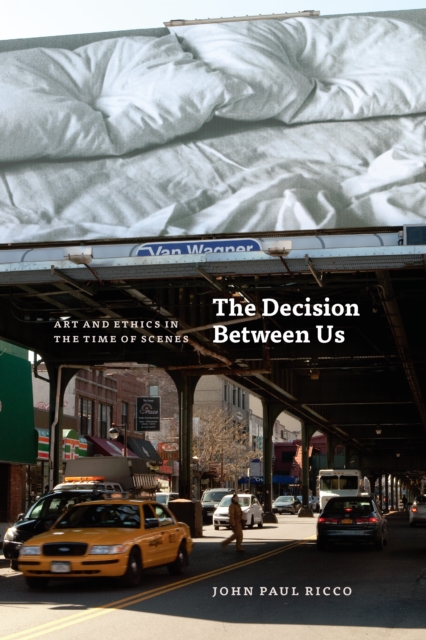
The Decision Between Us combines an inventive reading of Jean-Luc Nancy with queer theoretical concerns to argue that while scenes of intimacy are spaces of sharing, they are also spaces of separation.