This book undertakes to show how the exercise of reading Tolstoy's "e;The Death of Ivan Ilyich"e; involves articulating for ourselves, as readers, what it means to liberate life through death.
This book outlines how the protagonists in The Nibelung's Ring, The Lord of the Rings, and Game of Thrones attempt to construct identities and expand their consciousness manifestations.
This book proposes, following Antonin Artaud, an investigation exploring the virtual body, neurology and the brain as fields of contestation, seeking a clearer understanding of Artaud's transformations that ultimately leads into examining the relevance Artaud may have for an adequate theory of the current media environment.
This book demonstrates the way in which William Blake aligned his idiosyncratic concept of the Selfhood - the lens through which the despiritualised subject beholds the material world - with the atomistic materialism of the Epicurean school as it was transmitted through the first-century BC Roman poet and philosopher Lucretius' De Rerum Natura.
In this book, Shay Welch expands on the contemporary cognitive thinking-in-movement framework, which has its roots in the work of Maxine Sheets-Johnstone but extends and develops within contemporary embodied cognition theory.
An engaging account of how Shaftesbury revolutionized Western philosophyAt the turn of the eighteenth century, Anthony Ashley Cooper, the third Earl of Shaftesbury (1671-1713), developed the first comprehensive philosophy of beauty to be written in English.
Offering an original contribution to the field of luxury and fashion studies, this edited collection takes a philosophical perspective, addressing the idea that humans need luxury.
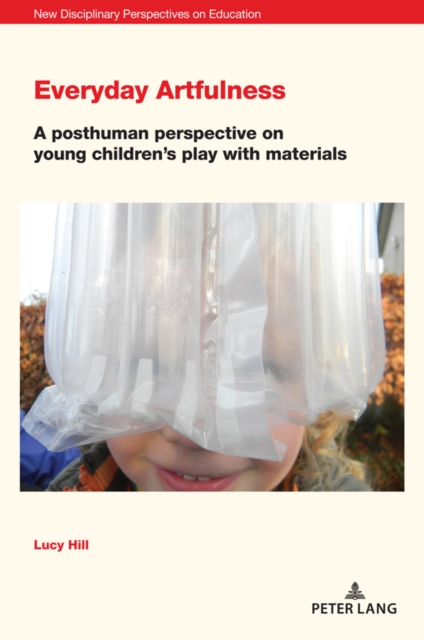
This book uses an artistic lens to see and understand differently, young children’s everyday play with materials in their early childhood education and care setting.
The Environment of Compassion explores questions of what it means to be in relationship to nature, if and how it is a religious experience, and how understanding humans as part of nature alters theology.
A lo largo de la historia, el arte ha dedicado un espacio importante a la presencia del animal, su simbolismo y la tematizacion de los vinculos afectivos que tienen lugar entre especies, elaboraciones que resuenan hasta nuestros dias.
This book argues that the theory of force elaborated in Immanuel Kant's aesthetics (and in particular, his theorization of the dynamic sublime) is of decisive importance to poetry in the nineteenth century and to the connection between poetry and philosophy over the last two centuries.
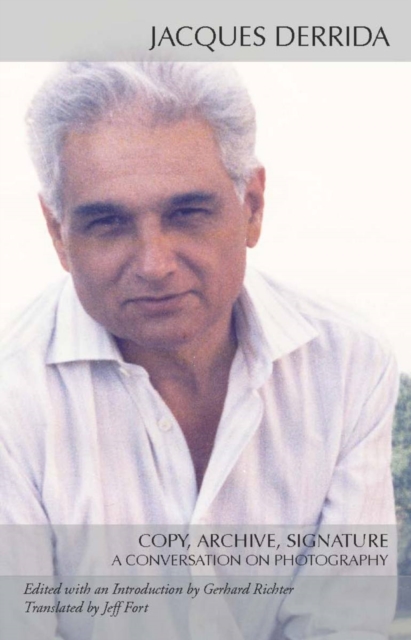
This book makes available for the first time in English-and for the first time in its entirety in any language-an important yet little-known interview on the topic of photography that Jacques Derrida granted in 1992 to the German theorist of photography Hubertus von Amelunxen and the German literary and media theorist Michael Wetzel.
From the 1970s cult TV show, Monty Pythons Flying Circus, to the current hit musical Spamalot, the Monty Python comedy troupe has been at the center of popular culture and entertainment.
This handbook provides the first comprehensive overview of philosophical thinking about the aesthetics of the natural and human-made environments, exploring the topic's foundations, key ideas, and current debates.
Originally published in 1995 as part of the Ethnoscapes: Current Challenges in the Environmental Social Sciences series, reissued now with a new series introduction, On the Aesthetics of Architecture is a result of an interdisciplinary study in architectural theory, psychology and philosophy and the author's experience as a practicing architect.
What if Immanuel Kant floated down from his transcendental heights, straight through Alice's rabbit hole, and into the fabulous world of Lewis Carroll?
More than the persistent beat of a song or the structural frame of poetry, rhythm is a deeply imbedded force that drives our world and is also a central component of the condition of human existence.
Over the past two centuries Western culture has largely valorized a particular kind of "e;good"e; music-highly serious, wondrously deep, stylistically authentic, heroically created, and strikingly original-and, at the same time, has marginalized music that does not live up to those ideals.
Immanuel Kant's Critique of Judgment, Thierry de Duve argues in the first volume of Aesthetics at Large, is as relevant to the appreciation of art today as it was to the enjoyment of beautiful nature in 1790.
The Invisible Dragon made a lot of noise for a little book When it was originally published in 1993 it was championed by artists for its forceful call for a reconsideration of beauty-and savaged by more theoretically oriented critics who dismissed the very concept of beauty as naive, igniting a debate that has shown no sign of flagging.
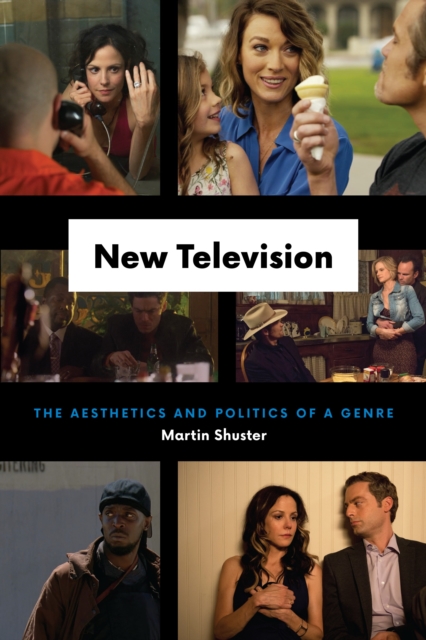
Even though it's frequently asserted that we are living in a golden age of scripted television, television as a medium is still not taken seriously as an artistic art form, nor has the stigma of television as "e;chewing gum for the mind"e; really disappeared.
An Unnatural Attitude traces a style of musical thought that coalesced in the intellectual milieu of the Weimar Republic-a phenomenological style that sought to renew contact with music as a worldly circumstance.
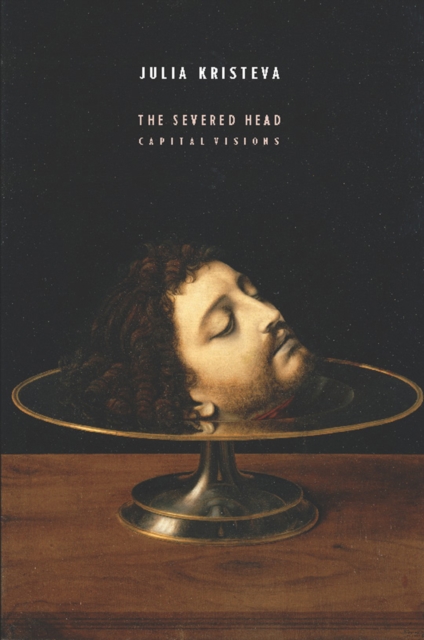
Informed by a provocative exhibition at the Louvre curated by the author, The Severed Head unpacks artistic representations of severed heads from the Paleolithic period to the present.
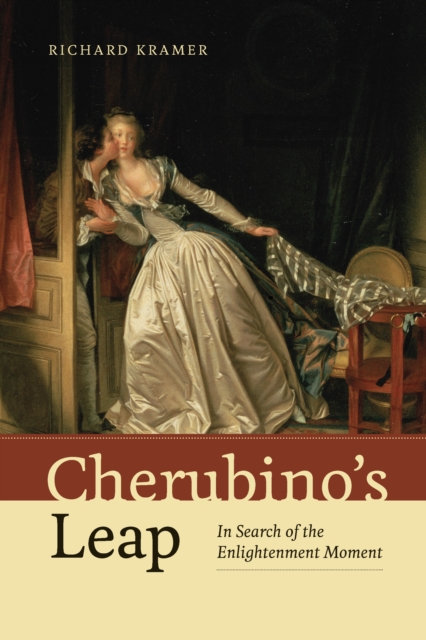
For the Enlightenment mind, from Moses Mendelssohn's focus on the moment of surprise at the heart of the work of art to Herder's imagining of the seismic moment at which language was discovered, it is the flash of recognition that nails the essence of the work, the blink of an eye in which one's world changes.