Cuteness is one of the most culturally pervasive aesthetics of the new millennium and its rapid social proliferation suggests that the affective responses it provokes find particular purchase in a contemporary era marked by intensive media saturation and spreading economic precarity.
Cuteness is one of the most culturally pervasive aesthetics of the new millennium and its rapid social proliferation suggests that the affective responses it provokes find particular purchase in a contemporary era marked by intensive media saturation and spreading economic precarity.
Originally published in 1905, Bosanquet's translation of Hegel's Philosophy of Fine Art brings Hegel's commentary and analysis of what constitutes beauty and fine art to an English audience as well as presenting his own viewpoints on the work and what is at the heart of true philosophical theory.
Originally published in 1905, Bosanquet's translation of Hegel's Philosophy of Fine Art brings Hegel's commentary and analysis of what constitutes beauty and fine art to an English audience as well as presenting his own viewpoints on the work and what is at the heart of true philosophical theory.
This book seeks to fill a void in contemporary aesthetics scholarship by considering the cognitive features that make the aesthetic and artistic worthy of philosophical study.
This book seeks to fill a void in contemporary aesthetics scholarship by considering the cognitive features that make the aesthetic and artistic worthy of philosophical study.
Modeling Visual Aesthetics, Emotion, and Artistic Style offers a comprehensive exploration of the increasingly significant topic of the complex interplay between human perception and digital technology.
In this book, Stephen Acreman follows the development and reception of a hitherto under-analyzed concept central to modern and postmodern political theory: the Kantian ein erweiterte Denkungsart, or enlarged mentality.
First published in 1983, this book examines a work whose intricacies have baffled and infuriated generations of readers and proposes a theory of Coleridge's writing habits that "e;explain(s) his explanation"e;.
First published in 1983, this book examines a work whose intricacies have baffled and infuriated generations of readers and proposes a theory of Coleridge's writing habits that "e;explain(s) his explanation"e;.
First published in 1969, this book places Coleridge's literary criticism against the background of his philosophical thinking, examining his theories about criticism and the nature of poetry.
First published in 1969, this book places Coleridge's literary criticism against the background of his philosophical thinking, examining his theories about criticism and the nature of poetry.
This volume brings philosophers, art historians, intellectual historians, and literary scholars together to argue for the philosophical significance of Michael Fried's art history and criticism.
This volume brings philosophers, art historians, intellectual historians, and literary scholars together to argue for the philosophical significance of Michael Fried's art history and criticism.
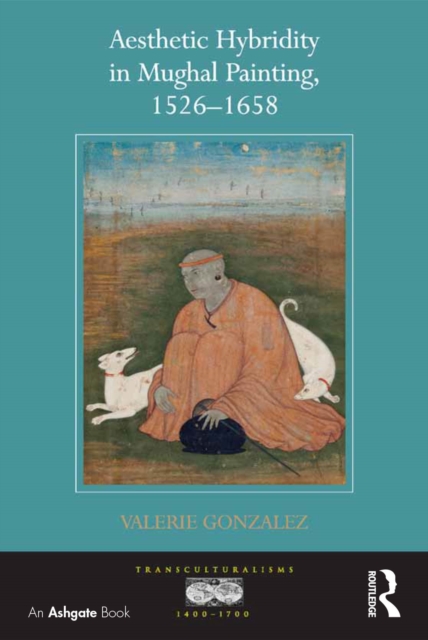
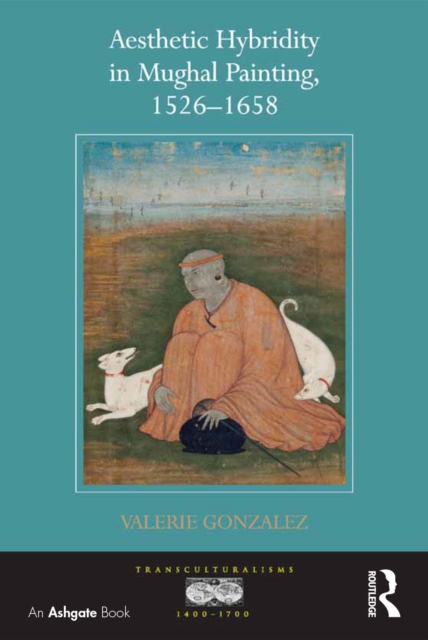
The first specialized critical-aesthetic study to be published on the concept of hybridity in early Mughal painting, this book investigates the workings of the diverse creative forces that led to the formation of a unique Mughal pictorial language.
The first specialized critical-aesthetic study to be published on the concept of hybridity in early Mughal painting, this book investigates the workings of the diverse creative forces that led to the formation of a unique Mughal pictorial language.
Taking the view that aesthetics is a study grounded in perception, the essays in this volume exhibit many sides of the perceptual complex that is the aesthetic field and develop them in different ways.
Taking the view that aesthetics is a study grounded in perception, the essays in this volume exhibit many sides of the perceptual complex that is the aesthetic field and develop them in different ways.
During the Scottish Enlightenment the relationship between aesthetics and ethics became deeply ingrained: beauty was the sensible manifestation of virtue; the fine arts represented the actions of a virtuous mind; to deeply understand artful and natural beauty was to identify with moral beauty; and the aesthetic experience was indispensable in making value judgments.