David Hume's philosophical work presents the reader with a perplexing mix of constructive accounts of empirically guided belief and destructive sceptical arguments against all belief.
Feminist Epistemology and Philosophy of Science: An Introduction is structured around six questions and the answers to them that have been offered by feminist epistemologists and philosophers of science.
Feminist Epistemology and Philosophy of Science: An Introduction is structured around six questions and the answers to them that have been offered by feminist epistemologists and philosophers of science.
This book offers a historical explanation of important philosophical problems in logic and mathematics, which have been neglected by the official history of modern logic.
This book is a unique contribution to scholarship of the poetics of Wallace Stevens, offering an analysis of the entire oeuvre of Stevens's poetry using the philosophical framework of Martin Heidegger.
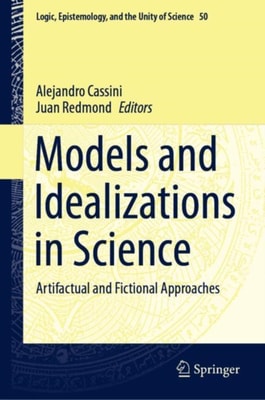
This book provides both an introduction to the philosophy of scientific modeling and a contribution to the discussion and clarification of two recent philosophical conceptions of models: artifactualism and fictionalism.
This highly interdisciplinary book, covering more than six fields, from philosophy and sciences all the way up to the humanities and with contributions from eminent authors, addresses the interplay between content and context, reductionism and holism and their meeting point: the notion of emergence.
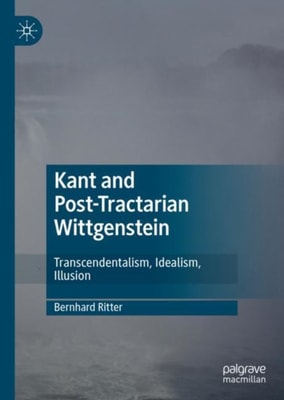
This book suggests that to know how Wittgenstein's post-Tractarian philosophy could have developed from the work of Kant is to know how they relate to each other.
This book offers insights relevant to modern history and epistemology of physics,mathematics and, indeed, to all the sciences and engineering disciplines emergingof 19th century.
In recent decades, the historical social sciences have moved away from deterministic perspectives and increasingly embraced the interpretive analysis of historical process and social and political change.
Disagreement is one of the deepest and most pervasive topics in philosophy; arguably its very bedrock, and is an ever-increasing feature of politics, ethics, public policy, science and many other areas.
ACMES (Algorithms and Complexity in Mathematics, Epistemology, and Science) is a multidisciplinary conference series that focuses on epistemological and mathematical issues relating to computation in modern science.
This edited collection that celebrates the legacy of Suellen Shay, is located in Higher Education Studies and Development in South Africa, the country where she lived and worked.
Philosophic Classics: From Plato to Derrida includes essential writings of the most important philosophers from almost two millennia of Western philosophy.
This book aims to redress the balance in the field of Contemporary Philosophy, considered predominantly male, by highlighting the philosophical achievements of various female figures during the period 1870-1970.
This book focuses on understanding and researching suicide and suicide prevention from historical, political, cultural, social, and philosophical perspectives, all of which are located in particular contexts of research and practice.
This volume brings together for the first time the diverse threads within the growing field of serendipity research, to reflect both on the origins of this emerging field within different disciplines as well as its increasing influence as its own field with foundational texts and emerging practices.
Markus Gabriel, Spiegel-Bestseller-Autor, zeigt in diesem Buch, dass das Denken Teil der biologischen Sinne ist, der nicht künstlich nachgebaut werden kann.
Made popular by John Rawls, ideal theory in political philosophy is concerned with putting preferences and interests to one side to achieve an impartial consensus and to arrive at a just society for all.
This book addresses two questions that are highly relevant for epistemology and for society: What is ignorance and how should we rationally deal with it?
This book discusses how scientific and other types of cognition make use of models, abduction, and explanatory reasoning in order to produce important or creative changes in theories and concepts.
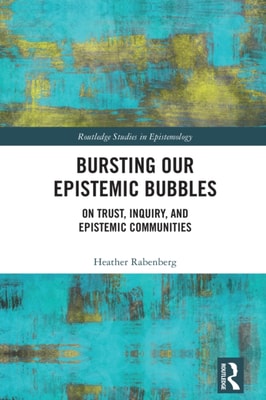
Due in large part to the increased personalization of various aspects of the Internet, many people have become insulated from the epistemic influence of people with views different from their own.
Epistemology, or "e;the theory of knowledge,"e; is concerned with how we know what we know, what justifies us in believing what we believe, and what standards of evidence we should use in seeking truths about the world and human experience.
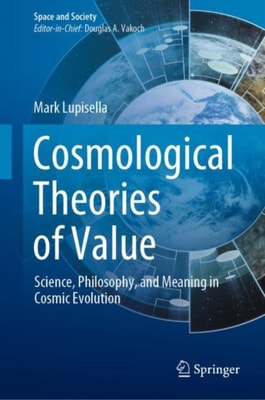
Building from foundations of modern science and cosmic evolution, as well as psychological and philosophical perspectives of value and meaning, this book explores some of humanity's biggest questions: Is the Universe about something ?
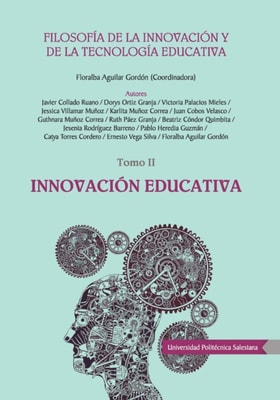
Los nueve capítulos de este tomo contienen aproximaciones teórico-conceptuales y reflexiones sobre la innovación educativa y el desarrollo de competencias para responder al nuevo contexto.