John MacFarlane debates how we might make sense of the idea that truth is relative, and how we might use this idea to give satisfying accounts of parts of our thought and talk that have resisted traditional methods of analysis.
Philosophy (especially philosophy of language and philosophy of mind), science (especially linguistics and cognitive science), and common sense all sometimes make reference to propositions--understood as the things we believe and say, and the things which are (primarily) true or false.
Many of the current debates about validity in psychiatry and psychology are predicated on the unexpected failure to validate commonly used diagnostic categories.
Many of the current debates about validity in psychiatry and psychology are predicated on the unexpected failure to validate commonly used diagnostic categories.
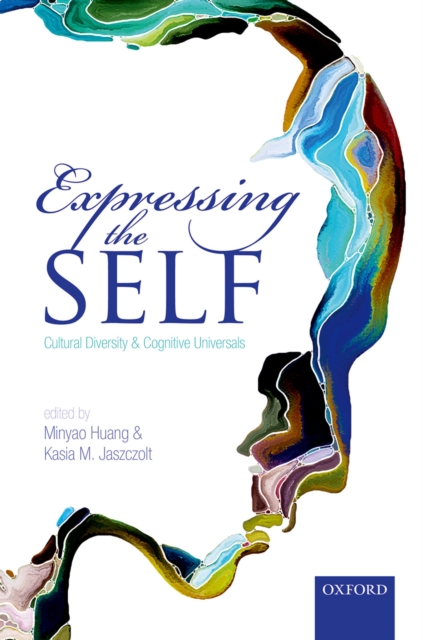
This book addresses different linguistic and philosophical aspects of referring to the self in a wide range of languages from different language families, including Amharic, English, French, Japanese, Korean, Mandarin, Newari (Sino-Tibetan), Polish, Tariana (Arawak), and Thai.
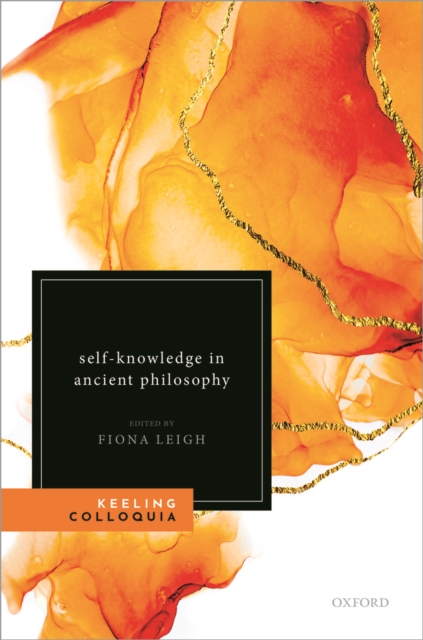
Self-knowledge - a person's knowledge of their own thoughts, character, and psychological states - has long been a central focus of philosophical enquiry.
It is natural to distinguish, for any thinking creature, those events and states that are internal to the creature -- its brain states, for example -- from those that are not.
This volume offers a collective critical engagement with the thought of Charles Travis, a leading contemporary philosopher of language and mind, and a scholar of the history of analytical philosophy.
This volume offers a collective critical engagement with the thought of Charles Travis, a leading contemporary philosopher of language and mind, and a scholar of the history of analytical philosophy.
Since Hilary Putnam offered multiple realization as an empirical hypothesis in the 1960s, philosophical consensus has turned against the idea that mental processes could be identified with brain processes, and multiple realization has become the keystone of the 'antireductive consensus' across philosophy of science broadly.
The New Mechanical Philosophy argues for a new image of nature and of science--one that understands both natural and social phenomena to be the product of mechanisms, and that casts the work of science as an effort to discover and understand those mechanisms.
The New Mechanical Philosophy argues for a new image of nature and of science--one that understands both natural and social phenomena to be the product of mechanisms, and that casts the work of science as an effort to discover and understand those mechanisms.
One of the most important research programmes in contemporary cognitive science is that of extended cognition, whereby features of a subject's cognitive environment can in certain conditions become constituent parts of the cognitive process itself.
This volume presents new essays on art, mind, and narrative inspired by the work of the late Peter Goldie, who was Samuel Hall Professor of Philosophy at the University of Manchester until 2011.
This collection of new essays on the systematic thought and intellectual legacy of the American philosopher Wilfrid Sellars (1912-1989) comes at a time when Sellars's influence on contemporary debates about mind, meaning, knowledge, and metaphysics has never been greater.
Philosophical reflection on the emotions has a long history stretching back to classical Greek thought, even though at times philosophers have marginalized or denigrated them in favour of reason.