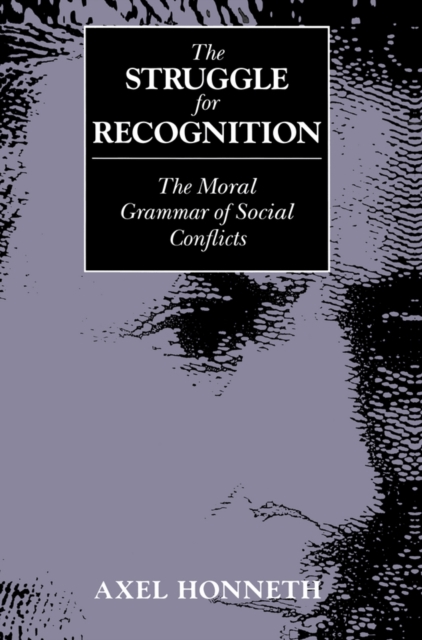
In this book Axel Honneth re-examines arguments put forward by Hegel and claims that the 'struggle for recognition' should be at the centre of social conflicts.
Habermas describes Knowledge and Human Interests as an attempt to reconstruct the prehistory of modern positivism with the intention of analysing the connections between knowledge and human interests.
In this wide-ranging work, now available in paperback, Habermas presents his views on the nature of the social sciences and their distinctive methodology and concerns.
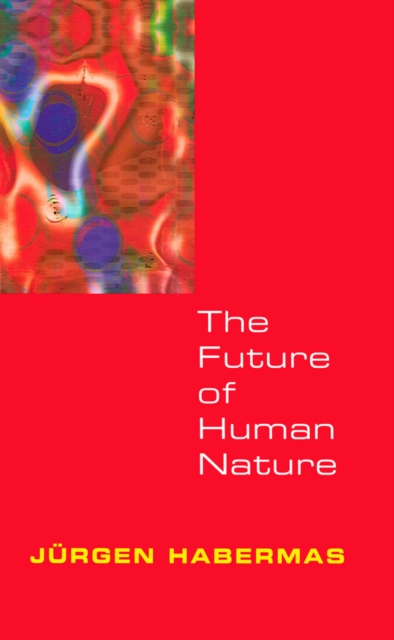
Recent developments in biotechnology and genetic research are raising complex ethical questions concerning the legitimate scope and limits of genetic intervention.
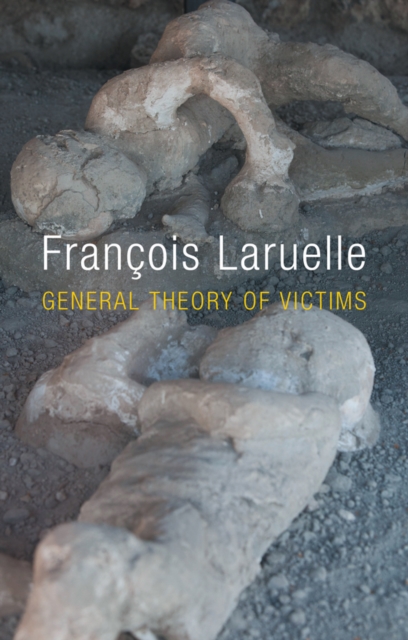
The most accessible expression of Fran ois Laruelle's non-philosophical, or 'non-standard', thought, General Theory of Victims forges a new role for contemporary philosophers and intellectuals by rethinking their relation to victims.
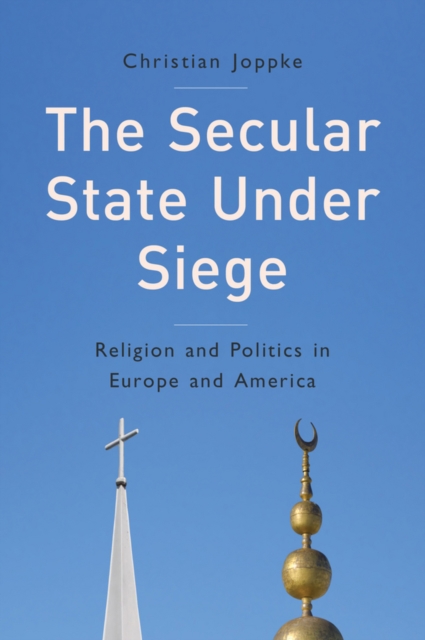
Throughout human history, religion and politics have entertained the most intimate of connections as systems of authority regulating individuals and society.
What would happen if we could stroll through the revolutionary history of the 20th century and, without any fear of the possible responses, ask the main protagonists - from Lenin to Che Guevara, from Alexandra Kollontai to Ulrike Meinhof - seemingly na ve questions about love?
Contemporary understanding of human subjectivity has come a long way since the Cartesian 'thinking thing' or Freud's view of the self struggling with its unconscious.
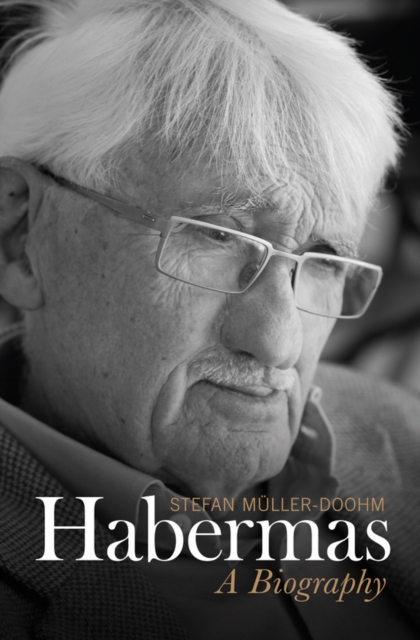
J rgen Habermas , wrote the American philosopher Ronald Dworkin on the occasion of the great European thinker s eightieth birthday, is not only the world s most famous living philosopher.
In a well-known text called The Communist Hypothesis , first published in 2007, the renowned philosopher Alain Badiou breathed fresh life into the idea of communism as an intellectual representation that provides a critical perspective on existing politics and offers a systemic alternative to capitalism.
We talk about irrationality when behaviour defies explanation or prediction, when decisions are driven by emotions or instinct rather than by reflection, when reasoning fails to conform to basic principles of logic and probability, and when beliefs lack coherence or empirical support.
With his insightful and wide-ranging theory of recognition, Axel Honneth has decisively reshaped the Frankfurt School tradition of critical social theory.
Everything in their respective positions divides them: Alain Badiou is the thinker of a revitalized communism and Alain Finkielkraut the mournful observer of the loss of values.
Regardless of who you are or how you live your life, you disagree with millions of people on an enormous number of topics from politics, religion and morality to sport, culture and art.
In the social sciences and in everyday speech we often talk about groups as if they behaved in the same way as individuals, thinking and acting as a singular being.
The development of Ranci re s philosophical work, from his formative years through the political and methodological break with Louis Althusser and the lessons of May 68, is documented here, as are the confrontations with other thinkers, the controversies and occasional misunderstandings.
The world is populated with many different objects, to which we often attribute properties: we say, for example, that grass is green, that the earth is spherical, that humans are animals, and that murder is wrong.
On 26 August 1974, Michel Foucault completed work on Discipline and Punish, and on that very same day began writing the first volume of The History of Sexuality.
From Gandhi's salt march to the US civil rights movement and Occupy Wall Street, nonviolent campaigns to promote democracy, human rights and social justice have long played an important transformative role in local, national and global politics.
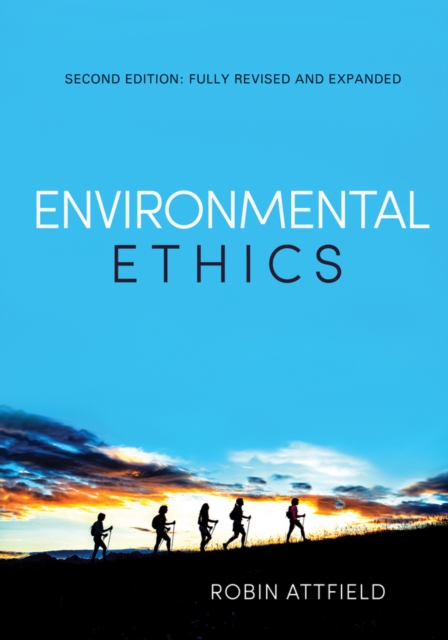
In this clear, concise, comprehensively revised and up-to-date introduction to environmental ethics, Robin Attfield guides the student through the key issues and debates in this field in ways that will also be of interest to a wide range of scholars and researchers.
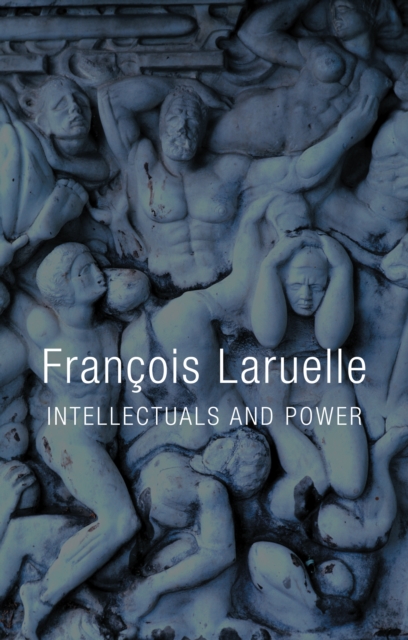
In this important new book, the leading philosopher Fran ois Laruelle examines the role of intellectuals in our societies today, specifically with regards to criminal justice.