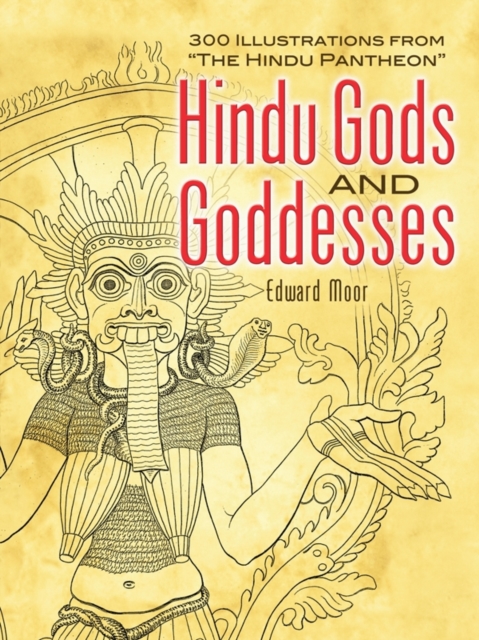
Reflecting the spirit of East Indian myths, legends, and fables, these illustrations were compiled by one of the nineteenth century's foremost Orientalists.
The timeless leadership wisdom of the Bhagavad Gita explained Although it was written well over two thousand years ago, the Bhagavad Gita ("e;Song of God"e;), a revered Hindu religious text, contains an immense wealth of ageless wisdom that speaks directly to the needs of today's business leaders.
The timeless leadership wisdom of the Bhagavad Gita explained Although it was written well over two thousand years ago, the Bhagavad Gita ("e;Song of God"e;), a revered Hindu religious text, contains an immense wealth of ageless wisdom that speaks directly to the needs of today's business leaders.
This examination of Hinduism in the context of modernity will be of interest to all students of Hinduism, as well as to those interested in the sociology and history of religion.
Womanhood in the Making is an ethnographic study of Brahman women's ritual practice that focuses on relations between religious practice, class and caste inequalities, and nationalist discourses.
Womanhood in the Making is an ethnographic study of Brahman women's ritual practice that focuses on relations between religious practice, class and caste inequalities, and nationalist discourses.
In South Asia goddesses are conceptualized and worshipped in a fascinatingrange of forms - from cosmic beings to bacterial manifestations, from human-like appearances to creatures with animal and insect semblances.
In South Asia goddesses are conceptualized and worshipped in a fascinatingrange of forms - from cosmic beings to bacterial manifestations, from human-like appearances to creatures with animal and insect semblances.
The Sanskrit narrative text Devi Mahatmya, "e;The Greatness of The Goddess,"e; extols the triumphs of an all-powerful Goddess, Durga, over universe-imperiling demons.
The Sanskrit narrative text Devi Mahatmya, "e;The Greatness of The Goddess,"e; extols the triumphs of an all-powerful Goddess, Durga, over universe-imperiling demons.
Many Peoples, Many Faiths places the world's religions in historical context, illustrating the complex dynamic of each religion over time, while also presenting current beliefs, practices, and group formations.
Many Peoples, Many Faiths places the world's religions in historical context, illustrating the complex dynamic of each religion over time, while also presenting current beliefs, practices, and group formations.
This book analyses the diverse ways in which women have been represented in the Puranic traditions in ancient India - the virtuous wife, mother, daughter, widow, and prostitute - against the socio-religious milieu around CE 300-1000.
This book analyses the diverse ways in which women have been represented in the Puranic traditions in ancient India - the virtuous wife, mother, daughter, widow, and prostitute - against the socio-religious milieu around CE 300-1000.
Within the broad Hindu religious tradition, there have been for millennia many subtraditions generically called Vaisnava, who insist that the most appropriate mode of religious faith and experience is bhakti, or devotion, to the supreme personal deity, Visnu.
Within the broad Hindu religious tradition, there have been for millennia many subtraditions generically called Vaisnava, who insist that the most appropriate mode of religious faith and experience is bhakti, or devotion, to the supreme personal deity, Visnu.
The aphorisms collected in this book, first published in 1953, were composed by Patanjali, a great Indian sage, over 1,500 years ago, and here translated into clear English prose.
The aphorisms collected in this book, first published in 1953, were composed by Patanjali, a great Indian sage, over 1,500 years ago, and here translated into clear English prose.
Originated by the great sage of modern India, Sri Aurobindo, integral yoga has been presented in this volume, first published in 1965, in the context of modern western thinking.
Originated by the great sage of modern India, Sri Aurobindo, integral yoga has been presented in this volume, first published in 1965, in the context of modern western thinking.
The talks presented in this volume, first published in 1977, were originally delivered during a retreat in New York, in which speakers from a variety of spiritual traditions were represented.
The talks presented in this volume, first published in 1977, were originally delivered during a retreat in New York, in which speakers from a variety of spiritual traditions were represented.
This book, first published in 1968, is a collection of twenty-five lectures by Swami Prabhavananda, the outstanding scholar and translator of Hindu scriptures.
This book, first published in 1962, is an analysis of the history of the philosophy of a country that has never distinguished philosophy from religion.