Stages on Life's Way, the sequel to Either/Or, is an intensely poetic example of Kierkegaard's vision of the three stages, or spheres, of existence: the esthetic, the ethical, and the religious.
Presented here in a new translation, with a historical introduction by the translators, Fear and Trembling and Repetition are the most poetic and personal of Soren Kierkegaard's pseudonymous writings.
Soren Kierkegaard, the nineteenth-century Danish philosopher rediscovered in the twentieth century, is a major influence in contemporary philosophy, religion, and literature.
Soren Kierkegaard, the nineteenth-century Danish philosopher rediscovered in the twentieth century, is a major influence in contemporary philosophy, religion, and literature.
Why the meaning of sin changed radically during the first centuries of ChristianityAncient Christians invoked sin to account for an astonishing range of things, from the death of God's son to the politics of the Roman Empire that worshipped him.
How the I Ching became one of the most widely read and influential books in the worldThe I Ching originated in China as a divination manual more than three thousand years ago.
The case for a thoughtful secularism from some of today's most distinguished scientists, philosophers, and writersCan secularism offer us moral, aesthetic, and spiritual satisfaction?
As a spiritual autobiography, Kierkegaard's The Point of View for My Work as an Author stands among such great works as Augustine's Confessions and Newman's Apologia pro Vita Sua.
"e;Without authority,"e; a phrase Kierkegaard repeatedly applied to himself and his writings, is an appropriate title for this volume of five short works that in various ways deal with the concept and practice of authority.
In his praise for Part I of Upbuilding Discourses in Various Spirits, the eminent Kierkegaard scholar Eduard Geismar said, "e;I am of the opinion that nothing of what he has written is to such a degree before the face of God.
Three Discourses on Imagined Occasions was the last of seven works signed by Kierkegaard and published simultaneously with an anonymously authored companion piece.
This volume provides the first English translation of all the known correspondence to and from Soren Kierkegaard, including a number of his letters in draft form and papers pertaining to his life and death.
After deciding to terminate his authorship with the pseudonymous Concluding Unscientific Postscript, Kierkegaard composed reviews as a means of writing without being an author.
Challenging the dominant scholarly consensus that Nietzsche is simply an enemy of religion, Tyler Roberts examines the place of religion in Nietzsche's thought and Nietzsche's thought as a site of religion.
Jesus' letter to the church in Laodicea in Revelation 3:1422, the last of his letters to the seven churches in the Roman province of Asia (present-day Turkey), is far more than a two-thousand-year-old message to the members of the early church.
How ancient thinkers grappled with competing conceptions of divine lawIn the thousand years before the rise of Islam, two radically diverse conceptions of what it means to say that a law is divine confronted one another with a force that reverberates to the present.
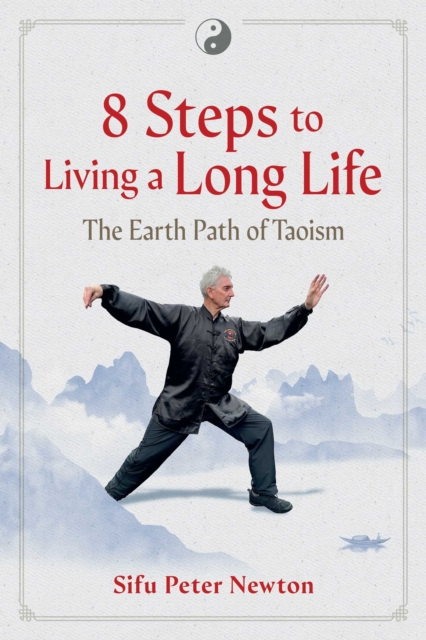
Shares an eight-step process based on the life-prolonging and health-enhancing methodology of the Earth Path of Taoism Includes practices focused on posture, breathing, mental health, energy flow, and meditation, as well as eight mind-body Daoyin longevity exercises, complete with illustrated instructions Explores what causes premature aging and how to avoid it, along with longevity secrets of the legendary Eight ImmortalsACCORDING TO THE ANCIENT CHINESE SAGES, the way to achieve health, longevity, and enlightenment starts with the Earth Path of Taoism, which advises us to nurture the body, calm the mind, and stir the spirit.
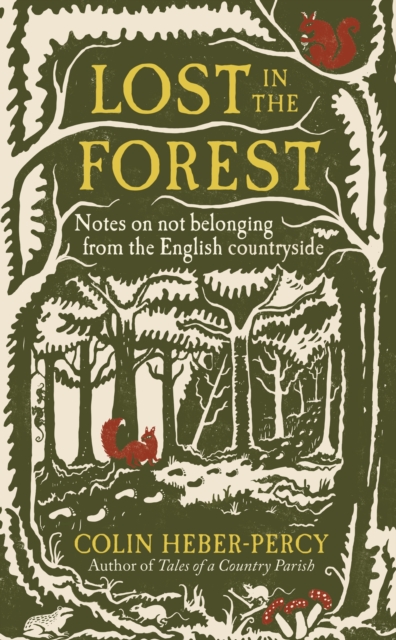
'A message of hope' TLS'Inspiring' Spectator'A sumptuous mix of poetry, story and deep philosophical truths' FERGUS BUTLER-GALLIE'Colin Heber-Percy is a reliable guide' REV RICHARD COLESThis book is a hymn to getting lost.
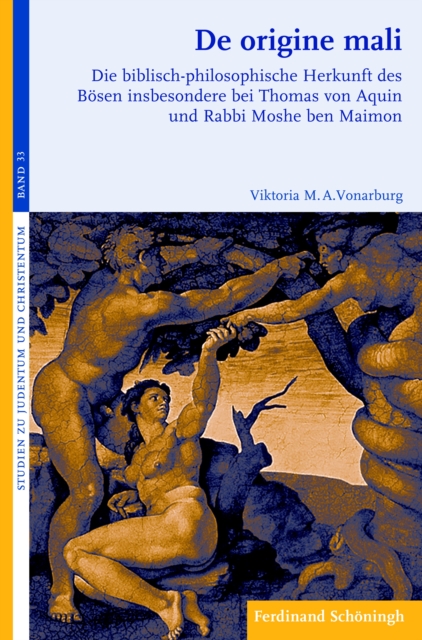
Die Autorin untersucht die Herkunft des Bösen, vor allem bei Thomas von Aquin und Maimonides, und analysiert das Zusammenspiel der natürlichen Begrenztheit des Geschaffenen und der menschlichen Freiheit.
This book rethinks Plato's creation and use of myth by drawing on theories and methods from myth studies, religious studies, literary theory and related fields.
This book presents the work of leading hermeneutical theorists alongside emerging thinkers, examining the current state of hermeneutics within the Pentecostal tradition.