This volume examines how far agribusiness corporations are responding to the opportunities and pressures resulting from emerging environmental awareness.
Race, Racism and Development places racism and constructions of race at the centre of an exploration of the dominant discourses, structures and practices of development.
For the first time in history, the majority of the world's population lives in cities, the result of a rapid process of urbanization that started in the second half of the twentieth century.
In this insightful new book, Moncrieffe argues that the traditionally narrow interpretation of accountability obscures relationships, power dynamics, structures, processes and complexities.
In Africa's Odious Debts, Boyce and Ndikumana reveal the shocking fact that, contrary to the popular perception of Africa being a drain on the financial resources of the West, the continent is actually a net creditor to the rest of the world.
Palestinian Women is the first book to examine and document the experiences and the historical narrative of ordinary Palestinian women who witnessed the events of 1948 and became involuntary citizens of the State of Israel.
Each year, millions of people are internally displaced and resettled in the wake of wars and floods or to make way for large-scale development projects, and this number is increasing.
Since its emergence in the 1970s, microfinance has risen to become one of the most high-profile policies to address poverty in developing and transition countries.
'The Deadly Ideas of Neoliberalism' explores the history of and current collision between two of the major global phenomena that have characterized the last 30 years: the spread of HIV/AIDS and other diseases of poverty and the ascendancy of neoliberal economic ideas.
'Development management' is an idea that blends the seemingly innocuous claims of managerialism with notions of modernity and utopian ideals of 'third world' progress.
This book is a concise and accessible introduction to development thinking, contemporary development theory and practice and - a critical analysis of the values that lie behind them.
In The Gender Politics of Development Shirin Rai provides a comprehensive assessment of how gender politics has emerged and developed in post-colonial states.
Across Africa land is being commodified: private ownership is replacing communal and customary tenure; Farms are turned into collateral for rural credit markets.
This book brings together two of today's leading concerns in development policy - the urgent need to prioritize poverty reduction and the particular circumstances of indigenous peoples in both developing and industrialized countries.
The pressing need to break the silence on non-consensual sex among young people an issue shrouded by denial, underreporting and stigma is self-evident.
Despite the mounting criticism that globalization is encountering, the developed countries continue to lose no opportunity to change the rules of the global economy in their favour, regardless of the impact on developing countries and the poor.
Participation has established itself as a significant approach to project implementation, policy-making and governance in developing and developed countries alike.
Democratic institutional forms and processes are increasingly widespread in Africa as dictatorial regimes have been forced to give way as a result of popular mobilization and external donor pressure.
The spread and consolidation of the women's movement in North and South over the past thirty years looks set to shape the course of social progress over the next generation.
The dawn of the twenty-first century has been accompanied by an upsurge of anti-capitalist campaigning, challenging the very basis of the New World Economic order.
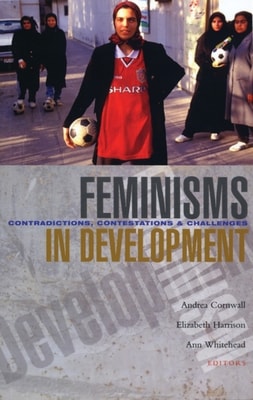
This collection of essays by leading feminist thinkers from North and South constitutes a major new attempt to reposition feminism within development studies.