First published in 2000, this volume, along with its counterpart, consist of contributions to the history of management and management thought which ask and assess how important managing democratic organizations is today, and how important it will prove to be moving forward, presenting both optimistic and pessimistic interpretations.
First published in 2000, this volume, along with its counterpart, consist of contributions to the history of management and management thought which ask and assess how important managing democratic organizations is today, and how important it will prove to be moving forward, presenting both optimistic and pessimistic interpretations.
The Renaissance of Letters traces the multiplication of letter-writing practices between the fourteenth and seventeenth centuries in the Italian peninsula and beyond to explore the importance of letters as a crucial document for understanding the Italian Renaissance.
The Renaissance of Letters traces the multiplication of letter-writing practices between the fourteenth and seventeenth centuries in the Italian peninsula and beyond to explore the importance of letters as a crucial document for understanding the Italian Renaissance.
In this lively and witty history of the study of political culture, Michael Brint examines the differences between the French sociological tradition from Montesquieu to Tocqueville; the German tradition of cultural philosophy from Kant to Weber; and the American scientific or behavioral tradition from Almond and Verba forward.
Tracing the nine formal social science disciplines - political science, sociology, economics, history, anthropology, philosophy, geography, psychology, and linguistics - through their cycles of growth, specialization, fragmentation and hybridization, Dogan and Pahre reject the notion of catch-all "e;interdisciplinary"e; research.
This book, first published in 1989, demonstrates that sociologists have much to gain from a strengthening of the connections between general theories about the changing character of modern western societies and specific studies of religion.
This book, first published in 1989, demonstrates that sociologists have much to gain from a strengthening of the connections between general theories about the changing character of modern western societies and specific studies of religion.
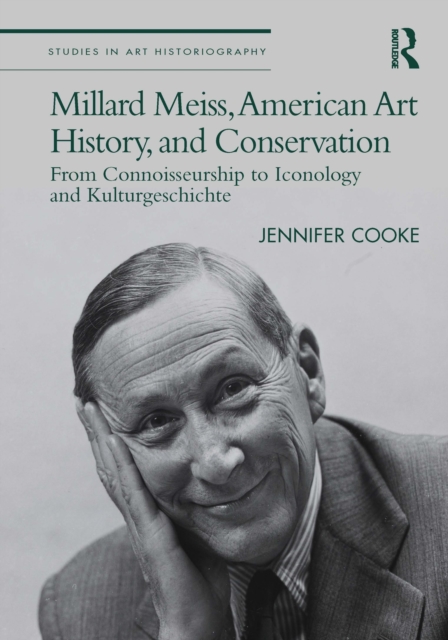
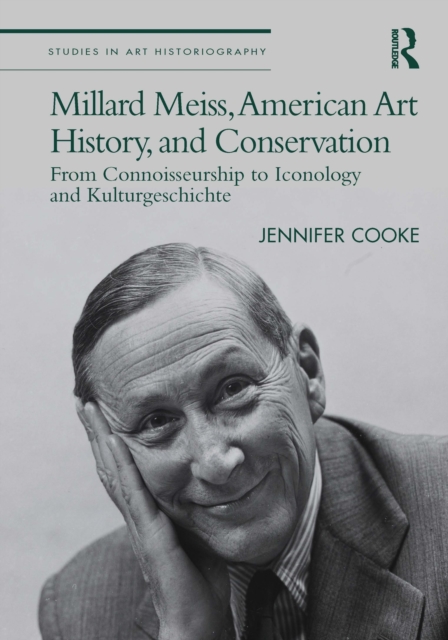
A member of the art history generation from the golden age of the 1920s and 1930s, Millard Meiss (1904-1975) developed a new and multi-faceted methodological approach.
A member of the art history generation from the golden age of the 1920s and 1930s, Millard Meiss (1904-1975) developed a new and multi-faceted methodological approach.
The book brings together contributions from curriculum history, cultural studies, visual cultures, and science and technology studies to explore the international mobilizations of the sciences related to education during the post-World War Two years.
The book brings together contributions from curriculum history, cultural studies, visual cultures, and science and technology studies to explore the international mobilizations of the sciences related to education during the post-World War Two years.
The new edition of this classic history of International Relations has been completely revised and updated throughout and remains a major guide to the intellectual lineage and development of the field.
The new edition of this classic history of International Relations has been completely revised and updated throughout and remains a major guide to the intellectual lineage and development of the field.
The aim of this book is to explore the body in various historical contexts and to take it as a point of departure for broader historiographical projects.
The aim of this book is to explore the body in various historical contexts and to take it as a point of departure for broader historiographical projects.
In this important volume, Joost Hengstmengel examines the doctrine of divine providence and how it served as explanation and justification in economic debates in the sixteenth, seventeenth and eighteenth centuries throughout Western Europe.
In this important volume, Joost Hengstmengel examines the doctrine of divine providence and how it served as explanation and justification in economic debates in the sixteenth, seventeenth and eighteenth centuries throughout Western Europe.
This book examines the epistemological, social and political dimensions of practising interdisciplinary approaches to enhance knowledge, pedagogy, and methodological aspects of research in the South Asian context.
In 18th-century Europe, before the "e;Counter-Enlightenment,"e; two coexisting perspectives emerged within the Enlightenment: the first was the belief that humans were endowed with the capacity to think independently, which led to the possibility of egalitarianism; the second was the restriction of the faculty's scope of application, which argued that the people must rely on intellectuals as their new shepherds.
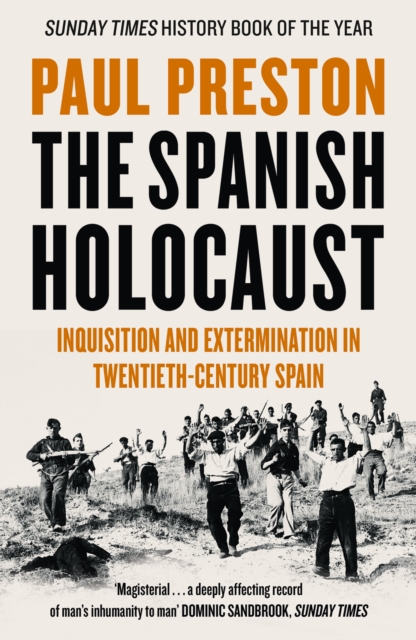
Selected as the Sunday Times History Book of the Year for 2012, this is a meticulous work of scholarship from the foremost historian of 20th-century Spain.
The Fontana History of Chemistry, which draws on both the author's own original research and that of other scholars, is an unrivalled work of synthesis.
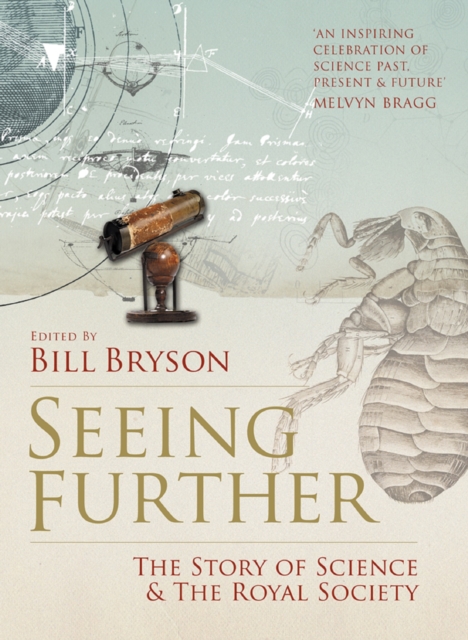
Edited and introduced by Bill Bryson, with contributions from Richard Dawkins, Margaret Atwood, Richard Holmes, Martin Rees, Richard Fortey, Steve Jones, James Gleick and Neal Stephenson amongst others, this beautiful, lavishly illustrated book tells the story of science and the Royal Society, from 1660 to the present.
This book provides a compelling exploration into the distinctive approaches East Asian scholars employ to articulate the peculiarities of Asia's modernity.
With the rise of modern behavioural economics and increasing interest in subjective well-being research, the question of the relationship between economics and psychology has again been brought to the fore.
With the rise of modern behavioural economics and increasing interest in subjective well-being research, the question of the relationship between economics and psychology has again been brought to the fore.