David Turner examines commonly held beliefs about learning, knowledge and intelligence, and critically assesses claims that certain drugs can improve learning and memory.
Technological advancements have revolutionised the field of learning in the past twenty years and are continuing to push the boundaries of institutions towards new forms of knowledge construction, social interaction and meaning making.
In this original book, David Halpin argues that an understanding of the Romantic roots of progressive education is a necessary condition for restoring to critical consciousness some important, but currently neglected, basic ideas about teaching and learning - ideas about the importance of imaginative experience and its promotion; ideas about the high status that should be conferred on childhood; ideas about the importance of love and friendship in schooling; ideas about the positive role that heroism can play in making learning more effective; and ideas about viewing teaching as a critical vocation.
Service-Learning and Educating in Challenging Contexts explores the potential of service-learning identified as a way to integrate community service with academic study to enrich the on-going professional development of educators, especially in schools that are located in challenging contexts.
Since the UN Convention on the Rights of the Child, there has been an increasing recognition globally that children need to have more say in their education.
In Rawls, Dewey, and Constructivism, Eric Weber examines and critiques John Rawls' epistemology and the unresolved tension - inherited from Kant - between Representationalism and Constructivism in Rawls' work.
Enables readers to understand the key issues underpinning e-learning with a view to enabling them to use it effectively in their professional practice.
Leveraging AI for Human-Centered Learning provides intentional approaches to the integration of artificial intelligence tools into middle and high school classrooms, specifically to foster equity and social-emotional wellbeing.
Content-hosting websites, videoconferencing apps, grade- or subject-focused social media accounts: with such a dizzying array of mechanical and virtual help at our disposal, it can be a challenge for educators to know where to even start.
In this lively and practical book, seasoned educator Jonathan Cassie shines a spotlight on gamification, an instructional approach that's revolutionizing K-12 education.
In this lively and practical book, seasoned educator Jonathan Cassie shines a spotlight on gamification, an instructional approach that's revolutionizing K-12 education.
Until now, the conversation around mobile devices in schools has been divided into two camps: those favoring 1:1 plans, in which each student is assigned a school-provided laptop or tablet, and supporters of Bring Your Own Device (BYOD) initiatives that shift the responsibility for providing and maintaining classroom mobile technology to students and their parents.
Until now, the conversation around mobile devices in schools has been divided into two camps: those favoring 1:1 plans, in which each student is assigned a school-provided laptop or tablet, and supporters of Bring Your Own Device (BYOD) initiatives that shift the responsibility for providing and maintaining classroom mobile technology to students and their parents.
Of the 21st century skills vital for success in education and the workplace, the 4Cs-critical thinking, communication, collaboration, and creativity-have been highlighted as crucial competencies.
Of the 21st century skills vital for success in education and the workplace, the 4Cs-critical thinking, communication, collaboration, and creativity-have been highlighted as crucial competencies.
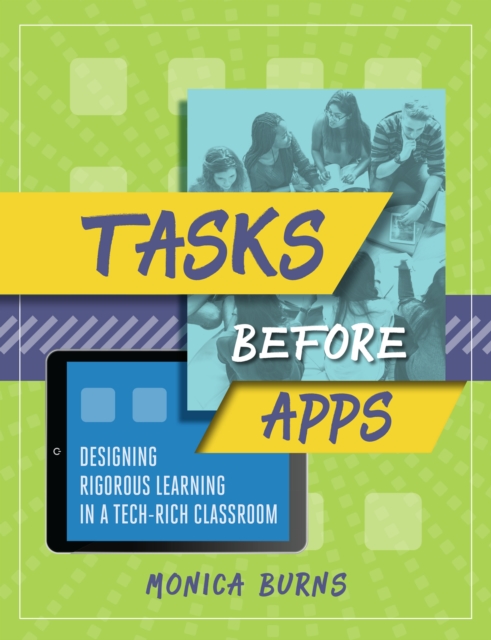
More than a decade into the 21st century, teachers continue to struggle with designing digital assignments as a viable tool for learning and with assessing the demonstration of that learning through student-created products.
More than a decade into the 21st century, teachers continue to struggle with designing digital assignments as a viable tool for learning and with assessing the demonstration of that learning through student-created products.
How can you create an authentic learning environment-one where students ask questions, do research, and explore subjects that fascinate them-in today's standards-driven atmosphere?
How can you create an authentic learning environment-one where students ask questions, do research, and explore subjects that fascinate them-in today's standards-driven atmosphere?
The book examines the value proposition of technology and its relationship with business innovation, social preferences and its role as a mechanism of labour savings or revenue generation.
Comparative Information Technology: Languages, Societies and the Internet, which is the fourth volume in the 12-volume series Globalisation, Comparative Education and Policy Research, offers a critique of the nexus between ICT and its impact on society, individuals and educational institutions.
Technology-enhanced learning is a timely topic, the importance of which is recognized by educational researchers, practitioners, software designers, and policy makers.
In our rapidly globalizing world students are able to access learning through mobility, through computer mediated experiences, and through the diverse perspectives of their peers and teachers.