The edited and peer reviewed volume presents selected papers of the conference "e;Beyond knowlegde: the legacy of competence"e; organized by EARLI SIG Learning and Instruction with Computers in cooperation with SIG Instructional Design.
A Dutch policy scientist once said the information and knowledge in the twenty-first century has the shelf life of fresh fish, and learning in this age often means learning where and how to find something and how to relate it to a specific situation instead of knowing everything one needs to know.
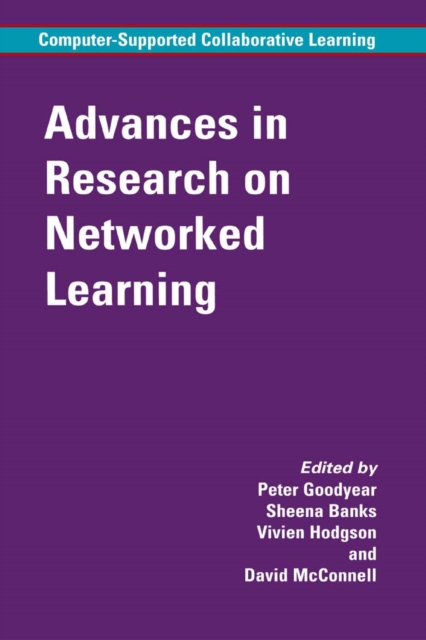
Networked learning is learning in which information and communications technology (ICT) is used to promote connections: between one learner and other learners; between learners and tutors; between a learning community and its learning resources.
PAUL SMEYERS AND MARC DEPAEPE THE FRAMEWORK OF THE COLLABORATIVE PROJECT This is the third book that resulted from the close collaboration within the Research Community 'Philosophy and History of the Discipline of Education: Evaluation and Evolution of the Criteria for Educational Research', established by the Research Foun- 1 dation Flanders, Belgium (Fonds voor Wetenschappelijk Onderzoek - Vlaanderen).
As has been well illustrated in the other books in this series, the notion of self-study of teaching and teacher education practices has been taken up by teachers and teacher educators as they have searched for new ways of better understanding the complex work of teaching and learning.
The conference proceedings of:International Conference on Industrial Electronics, Technology & Automation (IETA 05)International Conference on Telecommunications and Networking (TeNe 05)International Conference on Engineering Education, Instructional Technology, Assessment, and E-learning (EIAE 05)include a set of rigorously reviewed world-class manuscripts addressing and detailing state-of-the-art research projects in the areas of: Industrial Electronics, Technology and Automation, Telecommunications, Networking, Engineering Education, Instructional Technology and e-Learning.
Computers have long been used in education and today their use is having an ever greater impact on society thanks to the increasing educational success of the Internet and easier access to it.
MARTENS Bob and BROWN Andre Co-conference Chairs, CAAD Futures 2005 Computer Aided Architectural Design is a particularly dynamic field that is developing through the actions of architects, software developers, researchers, technologists, users, and society alike.
Teaching about technology, at all levels of education, can only be done properly when those who teach have a clear idea about what it is that they teach.
Trust highly experienced teachers and authors Mo Everett, Richard Howe and Sonia Stuart to guide learners through the redeveloped Level 1/ Level 2 Cambridge National in IT (J836).
A Step by Step Guide on How to Use and Master Snapchat -Messaging-Settings and Setup-Bitmojis-Snaps- Adding Text, Viewing, Saving, Sending, & Filters-Story Creation-Curated Stories-Money Transfers+ MUCH MORE!
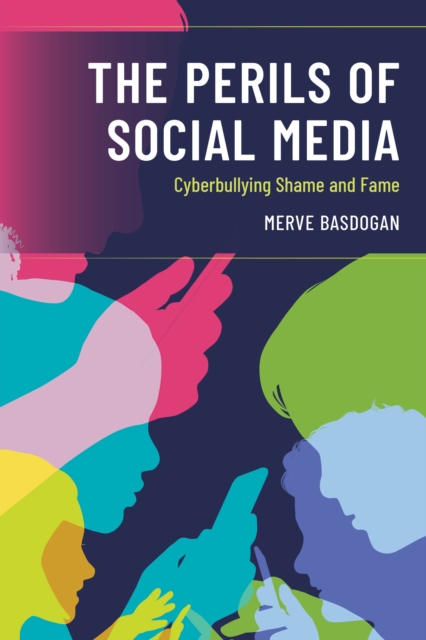
The Perils of Social Media: Cyberbullying Shame and Fame provides an in-depth examination of cyberbullying, characterized by persistent hostile behavior conducted through electronic or digital media.
Technology-enhanced, collaborative and blended learning settings can promote more effective approaches to teaching, learning and assessment when context, agency and individual characteristics are taken into account.
Technology-enhanced, collaborative and blended learning settings can promote more effective approaches to teaching, learning and assessment when context, agency and individual characteristics are taken into account.
Advances in simulation technology have enabled an interesting amount of training and instruction to be conducted on training simulators instead of on real systems.
Advances in simulation technology have enabled an interesting amount of training and instruction to be conducted on training simulators instead of on real systems.
Designing Web-Based Applications for 21st Century Writing Classrooms brings together, for the first time, a group of scholars and teachers who have been developing, on their own initiative, web-based solutions to technical and professional writing instructional problems.
This book continues the work of Kelli Cargile Cook and Keith Grant-Davie's first collection, which won the 2006 National Council of Teachers of English award for Best Collection of Essays in Technical or Scientific Communication.
This book continues the work of Kelli Cargile Cook and Keith Grant-Davie's first collection, which won the 2006 National Council of Teachers of English award for Best Collection of Essays in Technical or Scientific Communication.
As colleges and universities across the country continue to deal with regular decreases in state funding, technical communication programs, in particular, are being forced to "e;do more with less.
As colleges and universities across the country continue to deal with regular decreases in state funding, technical communication programs, in particular, are being forced to "e;do more with less.
Designing Web-Based Applications for 21st Century Writing Classrooms brings together, for the first time, a group of scholars and teachers who have been developing, on their own initiative, web-based solutions to technical and professional writing instructional problems.
Online Education is a comprehensive exploration of blended and fully online teaching platforms, addressing history, theory, research, planning, and practice.
Online Education is a comprehensive exploration of blended and fully online teaching platforms, addressing history, theory, research, planning, and practice.
This book highlights the ways in which insights from technology-mediated project-based language learning research can contribute to our understanding of both learner interaction in specific cultural contexts but also of the role of technology in language learning more generally.
This book highlights the ways in which insights from technology-mediated project-based language learning research can contribute to our understanding of both learner interaction in specific cultural contexts but also of the role of technology in language learning more generally.
In "e;Online Education: Global Questions, Local Answers"e;, 24 college educators focus on the most important questions to be addressed by all scholar-teachers and administrators committed to developing high-quality online education programs.
In "e;Online Education: Global Questions, Local Answers"e;, 24 college educators focus on the most important questions to be addressed by all scholar-teachers and administrators committed to developing high-quality online education programs.