With this volume, the author demonstrates how a collective goods approach to higher education research can alleviate problems of rising costs, declining resources, and growing concerns about undergraduate learning.
With this volume, the author demonstrates how a collective goods approach to higher education research can alleviate problems of rising costs, declining resources, and growing concerns about undergraduate learning.
This edited volume brings together experts from across the field of education to explore how traditional pedagogic and didactic forms and processes are changing, or even disappearing, as a result of new technologies being used for education and learning.
This edited volume brings together experts from across the field of education to explore how traditional pedagogic and didactic forms and processes are changing, or even disappearing, as a result of new technologies being used for education and learning.
Originally published in 1982 Resource-Based Learning for Higher and Continuing Education was written with the needs in mind of educationists who are responsible for the support of resource-based learning in higher and continuing education.
Originally published in 1982 Resource-Based Learning for Higher and Continuing Education was written with the needs in mind of educationists who are responsible for the support of resource-based learning in higher and continuing education.
In and out of formal schooling, online and off, today's learners must consume and integrate a level of information that is exponentially larger and delivered through a wider range of formats and viewpoints than ever before.
First published in 2001, this volume demonstrates how computer-based learning has the potential to provide a highly motivating learning experience, that it also has the potential to achieve exactly the opposite, and that the difference between these two extremes is the quality of the learning design.
Originally published in 1982 this volume examines some of the themes and issues involved in the combined use of broadcasting, distance teaching methods and local tutorial or counselling provision for adult basic education.
Originally published in 1982 this volume examines some of the themes and issues involved in the combined use of broadcasting, distance teaching methods and local tutorial or counselling provision for adult basic education.
This volume provides a comprehensive account of project-based language learning (PBLL) which showcases key theoretical approaches, empirical research, technological tools, and research-based frameworks to help further PBLL implementation and research.
Universal Access Through Inclusive Instructional Design explores the ways that educators around the world reduce barriers for students with disabilities and other challenges by planning and implementing accessible, equitable, high-quality curricula.
Universal Access Through Inclusive Instructional Design explores the ways that educators around the world reduce barriers for students with disabilities and other challenges by planning and implementing accessible, equitable, high-quality curricula.
Originally published in 1981 this volume provides a detailed analysis of the factors - strategic, pedagogic, operational, organisational and financial -which should be taken into account in the planning and running of large-scale, centralised distance education systems at the higher education level.
Originally published in 1981 this volume provides a detailed analysis of the factors - strategic, pedagogic, operational, organisational and financial -which should be taken into account in the planning and running of large-scale, centralised distance education systems at the higher education level.
Communication and Learning in an Age of Digital Transformation provides cross-disciplinary perspectives on digitization as social transformation and its impact on communication and learning.
Communication and Learning in an Age of Digital Transformation provides cross-disciplinary perspectives on digitization as social transformation and its impact on communication and learning.
Originally published in 1987, this book focuses on the areas of labour and employment education, the environment and ecological education, peacemaking and peace education, intercultural relations and multicultural education, education in the developing world and the changing role of the university and technological innovation.
Originally published in 1987, this book focuses on the areas of labour and employment education, the environment and ecological education, peacemaking and peace education, intercultural relations and multicultural education, education in the developing world and the changing role of the university and technological innovation.
The Role of Assistive Technology in Fostering Inclusive Education uses evidence-based research to explore issues related to implementation of ICT-based Assistive Technology (ICT-AT) in education.
The Role of Assistive Technology in Fostering Inclusive Education uses evidence-based research to explore issues related to implementation of ICT-based Assistive Technology (ICT-AT) in education.
Originally published in 1989, this book differed from others on the topic of microcomputers and education at the time, in that it focuses on the influence that microcomputer technology has on children in their early years, specially pre-school and elementary ages.
Originally published in 1989, this book differed from others on the topic of microcomputers and education at the time, in that it focuses on the influence that microcomputer technology has on children in their early years, specially pre-school and elementary ages.
In this engaging book, Armand Doucet, a globally respected and recognized teacher, provides a clear roadmap for championing classroom-focused change in a technology-advanced society.
In this engaging book, Armand Doucet, a globally respected and recognized teacher, provides a clear roadmap for championing classroom-focused change in a technology-advanced society.
The new edition of Digital Learning: The Key Concepts is the perfect reference for anyone seeking to navigate the myriad of named concepts, approaches, issues and technologies associated with digital learning.
The new edition of Digital Learning: The Key Concepts is the perfect reference for anyone seeking to navigate the myriad of named concepts, approaches, issues and technologies associated with digital learning.
In today's rapidly evolving digital landscape, blockchain and artificial intelligence (AI) are at the forefront of transforming various industries, and education is no exception.
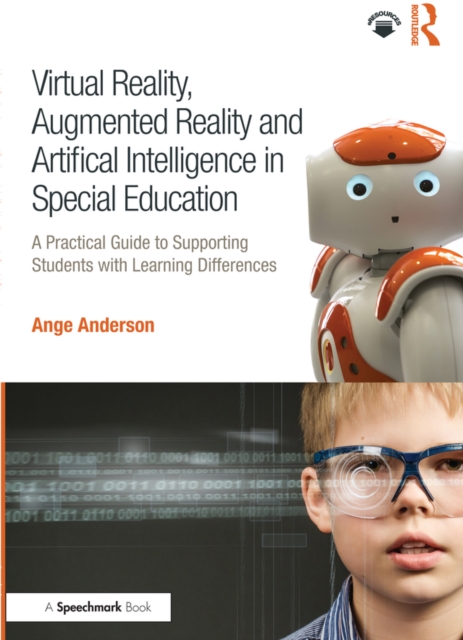
New technologies and ongoing developments in the fields of Virtual reality, augmented reality and artificial intelligence are changing the ways in which we facilitate learning.
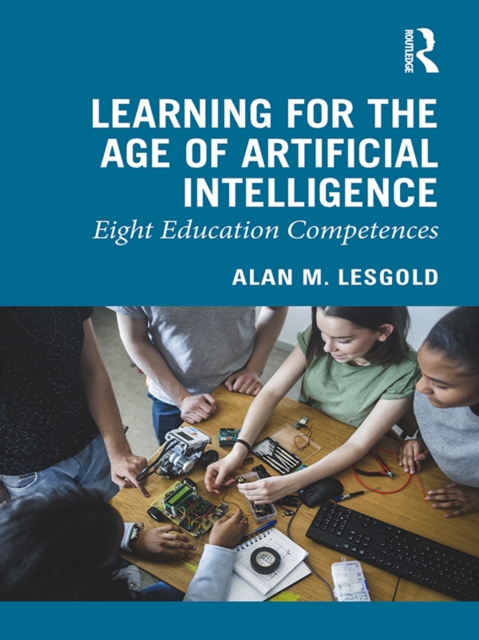
Learning for the Age of Artificial Intelligence is a richly informed argument for curricular change to educate people towards achievement and success as intelligent machine systems proliferate.
Learning for the Age of Artificial Intelligence is a richly informed argument for curricular change to educate people towards achievement and success as intelligent machine systems proliferate.
With e-learning technologies evolving and expanding at high rates, organizations and institutions around the world are integrating massive open online courses (MOOCs) and other open educational resources (OERs).
With e-learning technologies evolving and expanding at high rates, organizations and institutions around the world are integrating massive open online courses (MOOCs) and other open educational resources (OERs).
Exploring how digital resources are being used to engage students in learning and improve educational quality, Digital Agency in Higher Education promotes an awareness of relations and interplay between humans and digital artifacts.
This book provides theoretical and empirical discussions around the impact of MOOCs and other pedagogical strategies for online learning in international contexts.