Traditionally, internationalization efforts in higher education have been rooted in (neo)liberal transactional models that restrict or compromise the space for meaningful exchanges of socio-cultural capital.
Although educators continue to face the issue of maintaining quality teaching practices, academic managers and educational developers face significant challenges when changing in higher education teaching strategies.
Online education is a long-term goal at most higher-education institutions in the United States, but very few faculty members have sufficient training or knowledge of online pedagogy.
Strategic Role of Tertiary Education and Technologies for Sustainable Competitive Advantage explores how education enables social and economic development through the targeted training of human capital and the evaluation and dissemination of knowledge resources across generations.
Over the past fifty years, debates concerning race and college admissions have focused primarily on the policy of affirmative action at elite institutions of higher education.
Over the past fifty years, debates concerning race and college admissions have focused primarily on the policy of affirmative action at elite institutions of higher education.
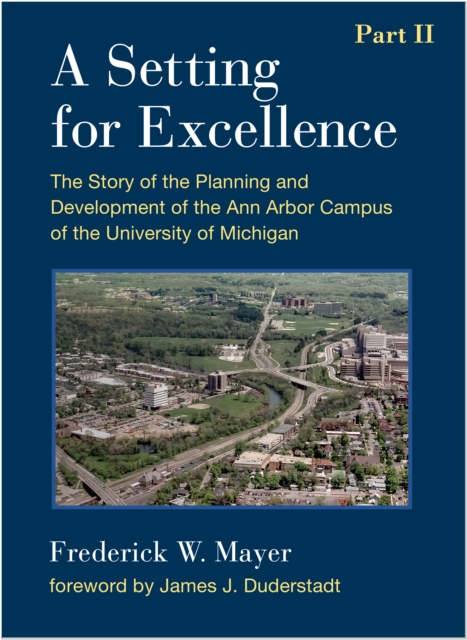
Campus planning is often a crucial underlying set of goals for university administrations, even if, over time, the mix of new and old buildings, changes in usage patterns and activities of students, and evolution of styles present challenges to a cohesive campus plan.
In Fraud and Misconduct in Research, Nachman Ben-Yehuda and Amalya Oliver-Lumerman introduce the main characteristics of research misconduct, portray how the characteristics are distributed, and identify the elements of the organizational context and the practice of scientific research which enable or deter misconduct.
In Fraud and Misconduct in Research, Nachman Ben-Yehuda and Amalya Oliver-Lumerman introduce the main characteristics of research misconduct, portray how the characteristics are distributed, and identify the elements of the organizational context and the practice of scientific research which enable or deter misconduct.
Student retention, engagement, and success are some of the biggest challenges that administrators and university leaders face in higher education settings.
Higher education is a driving force behind enhancing competitiveness for economies in the global market; however, a myriad of obstacles can pose significant challenges to students seeking such opportunities.
As the paradigm of education in academia continues to shift towards more diversity and inclusion, educators need to consider incorporating a "e;both-and"e; mindset when designing relevant education models in adult education.
As higher educational learning enters a new age, Historically Black Colleges and Universities (HBCUs) are seeking innovative ways to establish strategies to compete with other academic institutions.
The development and implementation of effective teacher education programs requires evaluating current processes and optimizing them for future improvements.
This title is an IGI Global Core Reference for 2019 as it highlights the profound shift from traditional teacher-centered methods to learner-centered methods.
Cheating in educational institutions and society not only threatens the overall quality of the education, as well as its dissemination of knowledge, but it also affects the current social fabric.
Institutions of higher education across the world are expected to contribute to the resolution of economic, social, and environmental problems and to respond to them.
Social demonstrations that take place on university campuses have profound effects on students as well as the environments in which those students live and learn.
One of the most important issues academic organizations face is how the administration and faculty handle cultural and varied differences in higher education.
Inclusive teacher preparation varies greatly in format and practice, yet programs grapple with the same underlying challenges: which practices work and where do they work.
While research into intercultural teaching has grown exponentially during the past two decades, the research has primarily resorted to the use of quantitative data collection instruments and the interpretation of scores calculated through them.
Campus planning is often a crucial underlying set of goals for university administrations, even if, over time, the mix of new and old buildings, changes in usage patterns and activities of students, and evolution of styles present challenges to a cohesive campus plan.