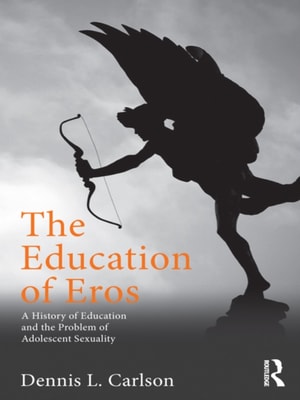
The Education of Eros is the first and only comprehensive history of sexuality education and the "e;problem"e; of adolescent sexuality from the mid-20th century to the beginning of the 21st.
The Education of Eros is the first and only comprehensive history of sexuality education and the "e;problem"e; of adolescent sexuality from the mid-20th century to the beginning of the 21st.
This volume offers a progressive approach to secondary teaching and teacher training, with particular emphasis upon students and teachers collaborating to negotiate curriculum design--goals, content, methods, and assessment.
This volume offers a progressive approach to secondary teaching and teacher training, with particular emphasis upon students and teachers collaborating to negotiate curriculum design--goals, content, methods, and assessment.
Education Reform and Social Change is about addressing and changing the structures, policies, and practices of schools that differentially advantage white, middle class, native English speakers over students of color for whom English may be a second or additional language.
Education Reform and Social Change is about addressing and changing the structures, policies, and practices of schools that differentially advantage white, middle class, native English speakers over students of color for whom English may be a second or additional language.
This book examines the influence of neoliberal ideas and practices on the way knowledge has been conceptualized, produced, and disseminated over the last few decades at different levels of public education and in various national contexts around the world.
This book examines the influence of neoliberal ideas and practices on the way knowledge has been conceptualized, produced, and disseminated over the last few decades at different levels of public education and in various national contexts around the world.
Originally written at a time of crisis in the education system of Britain - occasioned by cuts, contradictions and change - many of the issues discussed in this book are still relevant today.
Originally written at a time of crisis in the education system of Britain - occasioned by cuts, contradictions and change - many of the issues discussed in this book are still relevant today.
This study illuminates how the everyday activity of teachers raises profound economic, cultural, ethical, political and research issues, and provides a new and fruitful way of examining the practice of teaching.
This study illuminates how the everyday activity of teachers raises profound economic, cultural, ethical, political and research issues, and provides a new and fruitful way of examining the practice of teaching.
This volume discusses how the lay-person responds to written appeals to his intelligence and feelings with particular emphasis on education and culture.
This volume discusses how the lay-person responds to written appeals to his intelligence and feelings with particular emphasis on education and culture.
The manner in which we variously come to an understanding of our world presents problems for us all, but the unified method by which we ought best to acquire such knowledge represents the particular problem of contemporary education.
The manner in which we variously come to an understanding of our world presents problems for us all, but the unified method by which we ought best to acquire such knowledge represents the particular problem of contemporary education.
This book examines the concepts of equality, class, culture, work and leisure and explores their interrelationship through the discussion of some current problems, especially the problems posed for schools for the 'culturally deprived.
This book examines the concepts of equality, class, culture, work and leisure and explores their interrelationship through the discussion of some current problems, especially the problems posed for schools for the 'culturally deprived.
Aimed at the layperson, this book discusses education for the man or woman in the street and the advantages to society of having an educated population, with the aim of not just convincing people of the importance of education but persuading them to take participate actively in education.
Aimed at the layperson, this book discusses education for the man or woman in the street and the advantages to society of having an educated population, with the aim of not just convincing people of the importance of education but persuading them to take participate actively in education.
It is becoming increasingly clear that members of a host nation as well as newcomers have to learn what it means to live democratically in a multi-ethnic world and to accept diversity without fear or rancor.
Inevitably a product of the time in which it was published this book discusses important questions of neuro-psychology as well as setting out the early 'nature versus nurture' debate.
Inevitably a product of the time in which it was published this book discusses important questions of neuro-psychology as well as setting out the early 'nature versus nurture' debate.
It is becoming increasingly clear that members of a host nation as well as newcomers have to learn what it means to live democratically in a multi-ethnic world and to accept diversity without fear or rancor.
When first published this book had a significant influence on the campaign for comprehensive schools and it spoke to generations of working-class students who were either deterred by the class barriers erected by selective schools and elite universities, or, having broken through them to gain university entry, found themselves at sea.
When first published this book had a significant influence on the campaign for comprehensive schools and it spoke to generations of working-class students who were either deterred by the class barriers erected by selective schools and elite universities, or, having broken through them to gain university entry, found themselves at sea.
What unites the contributors to this book is an opposition to Thatcherite policies on education and an agreement upon the need for the development of democracy in education.
What unites the contributors to this book is an opposition to Thatcherite policies on education and an agreement upon the need for the development of democracy in education.
The editors have compiled this critical and comparative study of changes which took place in the New Zealand education system in the second half of the twentieth century.