The games in this book provide benefits for the whole child, meaning each game benefits all three domains of child development: cognitive, social/emotional, and physical.
With over 200 games, this indispensable book will help develop areas important for the growth of your 12- to 24-month-old--such as language, creativity, coordination, confidence, problem-solving, gross motor skills, and many more.
Interprofessional working is one of the key subjects taught across early years, education, health and social care programmes, as a result of the move towards a more integrated practice for children.
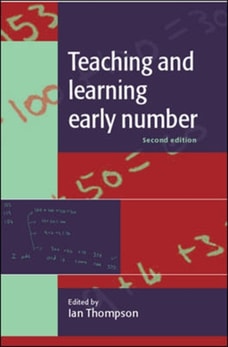
"e;This richly varied text offers generous support for every aspect of the teacher's role, while constantly reminding us that mathematical activity is not a de-contextualised skill that children possess, but part of their identity, their way of being in the world, engaged with the world, energetically - and playfully - trying to make sense of it.
This book presents research findings and conclusions that has been developed as algorithms or intelligent new methods solving problems in the fields of air pollution, climate and health, natural hazards and risks, water resources, human activities and management and informatics, remote sensing, high-performance computing and GIS for environmental monitoring and management.
Atmospheric reactive nitrogen (N) emissions, as an important component of global N cycle, have been significantly altered by anthropogenic activities, and consequently have had a global impact on air pollution and ecosystem services.
In this new collection, children's literature scholars from twelve different countries contribute to the ongoing debate on the importance of picturebook research, focusing on aesthetic and cognitive aspects of picture books.
Presents 100+ interventions using creative and expressive arts counseling techniques in school settingsExpressive arts therapies are a rich resource for use with children and adolescents, who are often unresponsive to traditional talk therapy, and highly useful to school counselors who must overcome cultural, language, and ability barriers that are increasingly present in diverse and multicultural school settings.
A groundbreaking account of how collaborative, expressive learning environments are often denied to children of color Early childhood can be a time of rich discovery, a period when educators have an opportunity to harness their students' fascination to create unique learning opportunities.
Environments are a complex interaction of physical elements, including sensory components, design and organization, aesthetics, nurturing attributes, and pedagogical resources.
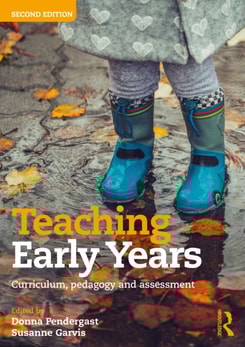
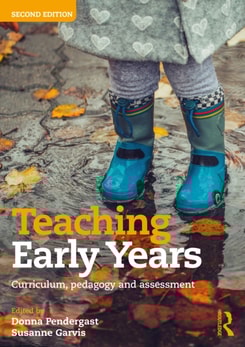
Edited by Donna Pendergast and Susanne Garvis, this new edition of Teaching Early Years provides a comprehensive overview of and introduction to educating children from birth to eight years.
Edited by Donna Pendergast and Susanne Garvis, this new edition of Teaching Early Years provides a comprehensive overview of and introduction to educating children from birth to eight years.
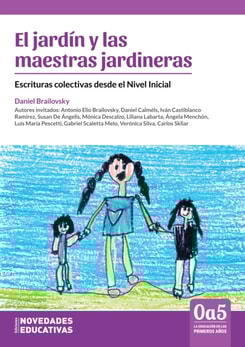
En cada capítulo de este libro, Daniel Brailovsky entrelaza su voz y escritura con otros y otras, abordando preguntas contemporáneas de la educación inicial: ¿qué espacios de infancia se brindan a la niñez?
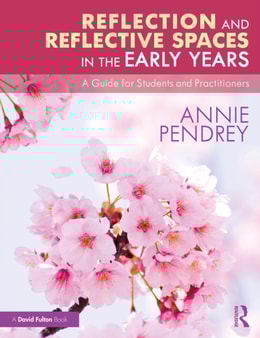
Reflection and Reflective Spaces in the Early Years will support readers in developing their own reflective practice and creating reflective environments for the young children and families they work with.
Reflection and Reflective Spaces in the Early Years will support readers in developing their own reflective practice and creating reflective environments for the young children and families they work with.
Article 12 of the United Nations Convention on the Rights of the Child (UNCRC, 1989) articulates every child's right to have their voice heard in matters that affect them.
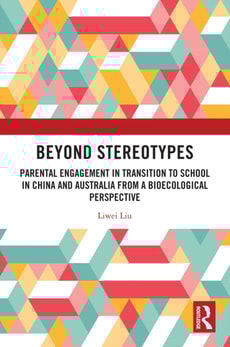
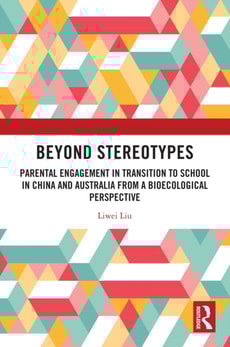
This book investigates parental engagement in the transition to school in China and Australia, which were taken as representatives of Eastern and Western cultures, respectively.
This book investigates parental engagement in the transition to school in China and Australia, which were taken as representatives of Eastern and Western cultures, respectively.