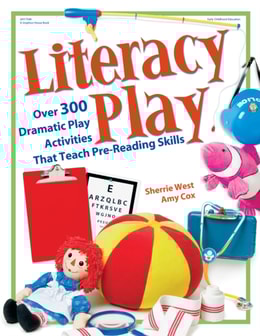
Literacy Play is chock-full of creative dramatic play activities that teach important pre-reading skills while bringing childrens imaginations to life!
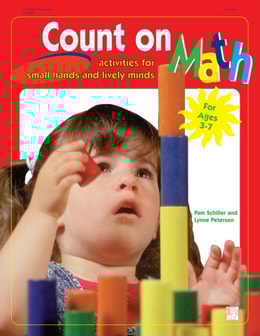
The activities in this book reflect childrens real world math experiences--counting candles on a birthday cake, sorting and classifying toys, making sure there is a one-to-one correspondence between children and cookies.
What can you add to your early childhood classroom that will immerse children in rich learning, reduce challenging behaviors, and develop confidence as well as critical thinking and problem-solving skills?
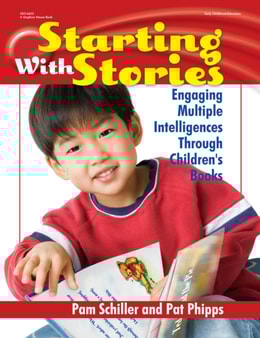
Featuring one hundred well-loved and easily available children's books, Starting with Stories has more than 1,500 activities to actively engage every learning style.
Effective Practice in the Early Years supports students of degrees and foundation degrees in Early years, Early Childhood and related disciplines studying professional practice in the early years.
Effective Practice in the Early Years supports students of degrees and foundation degrees in Early years, Early Childhood and related disciplines studying professional practice in the early years.
Children Learn by Observing and Contributing to Family and Community Endeavors, the latest in the Advances in Child Development and Behavior Series provides a major step forward in highlighting patterns and variability in the normative development of the everyday lives of children, expanding beyond the usual research populations that have extensive Western schooling in common.
The book breaks new ground by placing 'outdoor learning' in a theoretical, historical and social context of changing understandings of children, childhood and the use of the outdoors.
Leading Change in the Early Years focuses on the type of leadership skill needed for leading the reform and change agendas that challenge the early years sector.
Understanding Early Childhood is a comprehensive textbook which offers broad and insightful perspectives across a range of themes on the ways in which we understand and study young children.
Children develop and learn best when their environment is tailored to their individual needs, supported through careful observation, informed assessment and dynamic planning - a cycle which is the bedrock of good early years practice.
Outdoor play is a significant and essential aspect of a young child's development and enjoys a renewed emphasis in early years practice, in keeping with the core principles embedded within the early years tradition.
Parents and Professionals in Early Childhood Settings addresses the complex and sometimes controversial issues that emerge from the care and education of young children.
Thinking about early childhood education will offer an academic and critical approach to the wealth of theories that underpin elements of current practice in early childhood care and education.
This indispensible guide uses a unique glossary format to explore some of the key themes in play in early childhood, many of which regularly arise for students, tutors, parents and practitioners.
This book explores changes in the nature of the relationship between play, media and commercial culture through a comparison of play in the 1950s/60s and the present day, examining the continuities and discontinuities in play over time.
The term quality is frequently used in early years practice - both in professional discussions and in key policy and literature - but often without question or an agreed understanding of what quality is and as though it is an entirely unproblematic concept.
Making Music in the Primary School is an essential guide for all student and practising primary school teachers, instrumental teachers and community musicians involved in music with children.
This book uniquely describes the work of two Early Years Professionals, drawing on their narrative accounts as they robustly describe and analyse their work with young children.
In this accessible and thought-provoking text, the author examines the behaviour of babies and young children in a developmental context, and takes into account the shifts and changes over time as young children grow and mature.
Sandra Smidt sets out to explain what play is and why it is so important as one of the key ways of learning, particularly - but not solely - for young children.
This book explores the contribution of and art and creativity to early education, and examines the role of the atelier (an arts workshop in a school) and atelierista (an educator with an arts background) in the pioneering pre-schools of Reggio Emilia.