Das Werk beschreibt verständlich und auf dem neuesten wissenschaftlichen Stand das aktuelle Wissen zur Vermeidung von Infektionskrankheiten in Kindertagesstätten.
Dieses essential stellt praxisnah dar, wie den vielfältigen, zum Teil gegensätzlichen Herausforderungen des gymnasialen Lehramtsstudiums im Fach Mathematik begegnet werden kann.
Dieser neue ISTRON-Band für die Lehrerbildung beschäftigt sich mit der Konzeption, Organisation und Betreuung von Modellierungsprojekten für Schülerinnen und Schüler.
Ziel des Sammelbandes ist es, den Gegenstand Kinderzeichnung im Rahmen der qualitativen Forschung stärker zu konturieren, die Spezifik und Eigenständigkeit der Datensorte Kinderzeichnung und deren empirischen Mehrwert an exemplarischen Forschungsprojekten aufzuzeigen und darüber hinaus mögliche Analyse- und Interpretationswege darzulegen.
In diesem Essential wird an Beispielen erläutert, wie und mit welchen Herausforderungen gute realitätsbezogene Aufgaben und Unterrichtseinheiten gefunden und genutzt werden können.
Der Sammelband verfolgt das Ziel, gegenwärtige ästhetische Praktiken und die damit verbundenen konkreten ästhetischen Objekte und theoretischen Diskurse auf ihre implizite pädagogische Struktur hin zu befragen.
Mit diesem Buch legen die Herausgeber einen umfassenden Überblick über den aktuellen Forschungsstand zur Digitalisierung des Lehrens und Lernens im schulischen Mathematikunterricht vor.
Katja Urbatsch und Evamarie König liefern in diesem essential praktische Informationen für diejenigen, die darüber nachdenken, als Erste in ihrer Familie zu studieren, oder bereits mit dem Studium begonnen haben.
In diesem Ratgeber finden Sie Informationen, die Ihnen bei der Beantwortung der Frage helfen können, ob Sie Mathematik studieren sollen, und wenn ja, an welcher Universität und mit welcher Schwerpunktsetzung.
Ein Blick in aktuelle Bildungsstandards und Lehrpläne zeigt: Die Nutzung digitaler Medien im Mathematikunterricht wird immer stärker eingefordert und geht heute weit über den Einsatz wissenschaftlicher Taschenrechner hinaus.
Dieses Buch lädt mit 20 „alltäglichen“ Experimenten die ganze Familie zum Forschen und Entdecken im häuslichen Umfeld ein: Die teils offenen Fragen fordern zu genauem Beobachten und systematischer Auseinandersetzung mit den mathematischen und naturwissenschaftlichen Zusammenhängen auf; die Erkenntnisse und die dazugehörigen wissenschaftlichen Konzepte werden im Anschluss beschrieben und eingeordnet, regen aber zugleich dazu an, eigenständig weitere Fragestellungen zu entwickeln.
In dieser Einführung in die Didaktik des Mathematikunterrichts der Primarstufe werden zunächst inhaltliche Grundlagen der drei Bereiche Arithmetik, Geometrie und Sachrechnen angesprochen.
In diesem Buch werden wesentliche Fragen der elementaren Geometrie auf der Kugeloberfläche und ihre Anwendungen auf die Erd- und Himmelskugel (mathematische Geografie und Astronomie) so aufgegriffen und beantwortet, dass sie als Hintergrundwissen für einen realitätsnahen Geometrieunterricht in der Sekundarstufe zur Verfügung stehen.
Martina Geisen untersucht in einer explorativen qualitativen Studie die förderdiagnostischen Kompetenzen von Grund- und Förderschullehrpersonen im inklusiven Mathematikunterricht am Beispiel des Sachrechnens.
Mithilfe praxiserprobter, sorgfältig ausgearbeiteter Lerneinheiten vermitteln die Autoren in diesem essential fundamentale mathematische Techniken, die weit über die Grundschulzeit hinaus von Bedeutung sind.
Im vorliegenden Band wird verdeutlicht, welche Kompetenzen Lehrkräfte haben sollten, um Schülerinnen und Schülern im Unterricht mathematisches Modellieren zu vermitteln.
Das vorliegende Buch bietet den Leserinnen und Lesern einen fundierten Überblick über die Methoden der Physikdidaktik und bietet eine Hilfestellung, hochspannende Themen in den Physikunterricht einzubinden.
Der vorliegende Band enthält alle Aufgaben und Lösungen aus den sieben Anfangsjahren 1992–1999 der Fürther Mathematik-Olympiade, getrennt nach Jahrgangsstufen und Lösungsstrategien.
Sie möchten mit Ihren Schülerinnen und Schülern einen persönlichen Beitrag zur Erhaltung der Insektenvielfalt oder der Biodiversität insgesamt leisten?
Dieses Buch entwickelt Qualifikationsstandards im Bereich der Lehrerfortbildung im Fach Mathematik und versammelt Best-Practice-Beispiele aus allen Bereichen der Arbeit des Deutschen Zentrums für Lehrerbildung Mathematik (DZLM), der zentralen Anlaufstelle für Lehrerfortbildungen in der Mathematik.
Das essential beschreibt die Planung und Konzeption sowie den Bau und Einsatz eines kleinen Beschleunigers, der in erster Linie Schul- und Lehrzwecken dient.
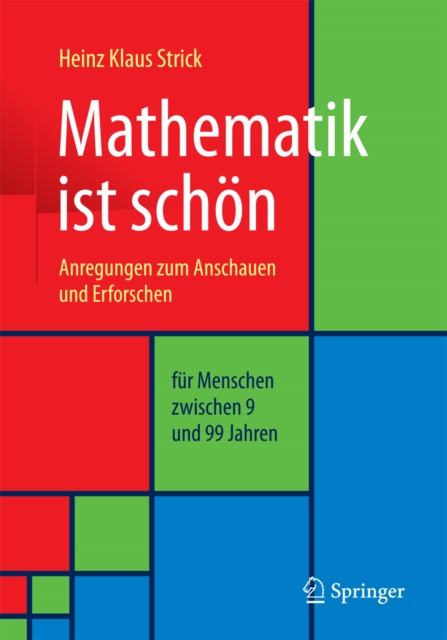
Genau wie der Vorgänger Mathematik ist schön und der Nachfolger Mathematik ist wunderwunderschön macht dieses Buch in 12 Kapiteln zahlreiche Angebote, sich mit (weiteren) bekannten oder weniger bekannten Fragestellungen aus der Mathematik zu beschäftigen.
With the help of tried and tested, carefully elaborated learning units, the authors convey fundamental mathematical techniques in this essential, which are important far beyond primary school.
Mithilfe videobasierter Beobachtungen geht Ann-Katrin Denn in diesem Buch der Frage nach, ob Mädchen und Jungen im Unterrichtsgespräch des Mathematikunterrichts in der Grundschule von Lehrpersonen unterschiedlich eingebunden werden (bspw.
Im Zentrum des Sammelbands steht der Bildungsübergang von Bachelor- in Masterstudien, welcher durch die Studienstrukturreform des europäischen Hochschulraums seit über 20 Jahren besteht.
In naturwissenschaftlich und technisch geprägten Gesellschaften gilt ein angemessenes Wissenschaftsverständnis als wichtiger Teil von Allgemeinbildung und Scientific Literacy.
Wie der Vorgängerband Mathematik ist schön macht auch dieses Buch in 12 Kapiteln wieder zahlreiche Angebote, sich mit (weiteren) bekannten oder weniger bekannten Fragestellungen aus der Mathematik zu beschäftigen.
Diese praxisorientierte Kurzanleitung richtet sich an Lehrende in medizinischen Studiengängen, die ihre Lehrkompetenz aufbauen oder verbessern wollen - mit vielen Tipps zum direkten Transfer in die eigene Lehre.