Although cultural issues have a powerful influence on the failure and success of mentoring programs and relationships, there is scant research on this area and little in the way of guidelines that practitioners can use to help assure mentoring success.
(Orginally published in 2010)The seventh monograph of AMTE highlights examples of important scholarship of and for the mathematics teacher education community.
Curriculum and Teaching Dialogue (CTD) is a publication of the American Association of Teaching and Curriculum (AATC), a national learned society for the scholarly field of teaching and curriculum.
(Sponsored by SIG-Research on the Education of Asian and Pacific Americans of the American Educational Research Association and National Association for Asian and Pacific American Education)This research anthology is the fifth volume in a series sponsored by the Special Interest Group - Research on the Education of Asian and Pacific Americans (SIG - REAPA) of the American Educational Research Association and National Association for Asian and Pacific American Education.
Liminal Spaces and Call for Praxis(ing) follows the theme of the Curriculum & Pedagogy conference that highlighted issues of power, privilege, and supremacy across timelines and borders.
The power of teacher inquiry is revealed when educators examine their practices with the purpose of making necessary changes to improve the learning opportunities of their multilingual students, and working conditions in schools.
A Critical Examination of Language and Community is the sixth volume of the Readings in Language Studies series published by the International Society for Language Studies, Inc.
This edited volume brings together conceptual and empirical work from various professional fields to inform a perspective on mentoring that goes beyond what is needed for today and orients toward what is needed for the future in order to promote healthy and productive organizations.
This publication features Hiatt-Michael's research and practice during thirty-four years as Professor of Education at the Graduate School of Education and Psychology, Pepperdine University.
The Early Years of Leadership: The Journey Begins is distinctive for many reasons, chief among which is a strong commitment to honoring practitioners' stories and empirical research.
Foundations of Leadership explores the foundations of leadership by confronting common assumptions and provides language for engaging in the leadership process as a leader and a follower.
edTPA is the most widely-used performance assessment for pre-service teachers in the United States, and a requirement in many states for teaching licensure.
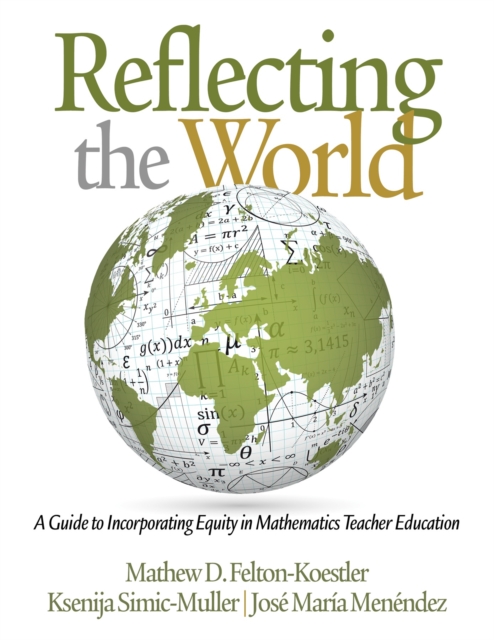
Reflecting the World: A Guide to Incorporating Equity in Mathematics Teacher Education is a guide for mathematics teacher educators interested in incorporating equity concerns into their teaching.
The American Educational History Journal is a peer-reviewed, national research journal devoted to the examination of educational topics using perspectives from a variety of disciplines.
Students continue to be bombarded with technology, social media and demands on their attention, this book represents fifteen years of data collection presented within two case studies.
Learning the Left examines the ways in which young people and adults learned (and continue to learn) the tenets of liberal politics in the United States through the popular media and the arts from the turn of the twentieth century to the present.
Two major real-world problems prompted this study: maintaining the Catholic identity of the Catholic schools, and increasing interest in character education.
For many academics preparing to enter into the world of teaching and scholarly work in higher education institutions, formal graduate education provides discipline specific content.
The primary thrust of the proposed volume is to provide information for higher education minority serving institutions (MSIs) and other institutions and individuals interested in providing and/or improving mentoring programs and services to a variety of target groups.
Storied Lives: Emancipatory Educational Inquiry-Experience, Narrative, & Pedagogy in the International Landscape of Diversity contains exemplary research practices, strategies, and findings gleaned from the contributions to the 15 issues of the Journal of Critical Inquiry Into Curriculum and Instruction (JCI~>CI).
This book, Blurring the Lines, has immediate appeal to policy-makers, and analysis in public and private sectors, as well as legal scholars and practitioners.
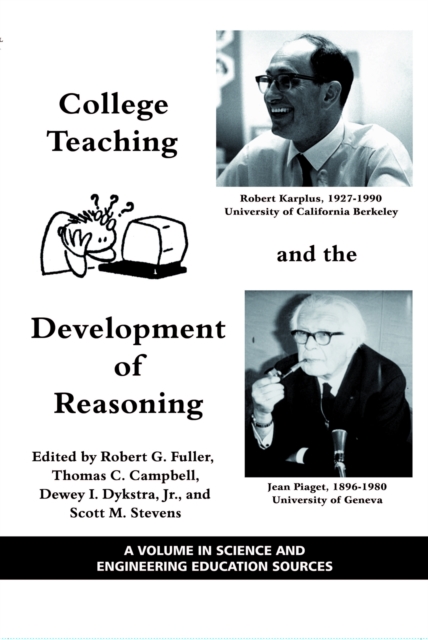
This book is intended to offer college faculty members the insights of the development of reasoning movement that enlighten physics educators in the late 1970s and led to a variety of college programs directed at improving the reasoning patterns used by college students.
Regularly, schools and their personnel enact school disciplinary practices without considering how to harness the engagement of students, practitioners, and communities to enact transformative changes that reduce if not eliminate punitive school discipline approaches.
(Orginally published in 2008)The 14 chapters in this monograph provide support for mathematics teacher educators in both their Practical Knowledge and their Professional Knowledge.
Amidst the contentious debates about teacher effectiveness, most people believe that unions, education colleges, charter networks, consulting agencies, textbook publishers, test producers, professional associations, teachers, and researchers disagree with one another about the most essential school reforms.