James Petras shows that the current stage of capital globalization and the weakening of the ability of established popular groups to defend themselves have generated an important organized response on the part of those whose standard of living is most undermined and threatened by the process.
In The Next Agenda, editors Robert Borosage and Roger Hickey of the Campaign for America's Future have gathered essays written by some of America's most progressive thinkers and activists that lay out ideas and reforms to address the serious issues facing us today.
This first volume will showcase the richness and diversity of the Owenite movement, which spanned decades (from Owen's first published books in 1813-16 to the late 1840s), political allegiances, genders and continents.
This first volume will showcase the richness and diversity of the Owenite movement, which spanned decades (from Owen's first published books in 1813-16 to the late 1840s), political allegiances, genders and continents.
The third volume includes a range of pamphlets, lectures and other documents which help illustrate the intellectual and political activities and environment which shaped the British mainstream left of the twentieth and twenty-first centuries.
The third volume includes a range of pamphlets, lectures and other documents which help illustrate the intellectual and political activities and environment which shaped the British mainstream left of the twentieth and twenty-first centuries.
First published in 1998, illuminating the principles and practices which impelled British Labour's international attitudes, this book focuses on relationships between social democratic and communist organisations in the troubled scene of Europe between the wars.
First published in 1998, illuminating the principles and practices which impelled British Labour's international attitudes, this book focuses on relationships between social democratic and communist organisations in the troubled scene of Europe between the wars.
In Authoritarian Socialism Arthur Lipow raises important issues about the nature of democracy and defines the intellectual roots of the authoritarian side of the socialist tradition in America and distinguishes it from democratic socialism.
Using a variety of methodological approaches, this timely book offers a thorough examination of the impact and implications of religious fundamentalism in developing nations.
In February 1900 a group of men representing trade unionists, socialists, Fabians and Marxists gathered in London to make another attempt at establishing an organisation capable of getting working-class men elected to Parliament.
The Republican People's Party (RPP), also know as the CHP (Cumhuriyet Halk Partisi), stands as the main opposition party - one of two major political currents, second only to the Erdooan's AK Party.
The Labour Church was an organisation fundamental to the British socialist movement during the formative years of the Independent Labour Party (ILP) and Labour Party between 1891 and 1914.
A provocative new history of liberalism that also provides a road map for today's liberalsFreedom from Fear offers a striking new account of the dominant political and social theory of our time: liberalism.
The familiar problems of democratic capitalism have given way to a deep crisis challenging the basic forms of governance introduced around the late 18th century and then gradually expanded and developed until the late 20th century.
On the 100th anniversary of the Russian Revolution, the epic story of an enormous apartment building where Communist true believers lived before their destructionThe House of Government is unlike any other book about the Russian Revolution and the Soviet experiment.
Over the past century, democracy spread around the world in turbulent bursts of change, sweeping across national borders in dramatic cascades of revolution and reform.
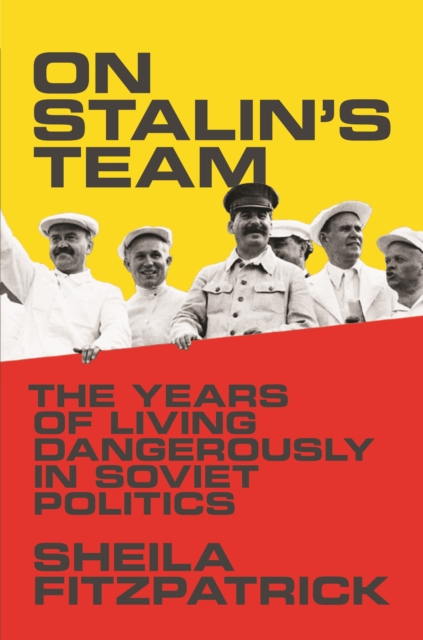
The first chronicle of Stalin's inner political and social circle-from a leading Soviet historianStalin was the unchallenged dictator of the Soviet Union for so long that most historians have dismissed the officials surrounding him as mere yes-men and political window dressing.
From Communists to Foreign Capitalists explores the intersections of two momentous changes in the late twentieth century: the fall of Communism and the rise of globalization.
Maria Todorova's book is devoted to the 'golden age' of the socialist idea, broadly surveying the period in and around the time of the Second International.