This book examines the role of deceptive tactics in the criminal victimization process, showing how various forms of manipulative aggression can help disguise dangerous advances.
A philosopher's personal meditation on how painful emotions can reveal truths about what it means to be truly humanUnder the light of ancient Western philosophies, our darker moods like grief, anguish, and depression can seem irrational.
This insightful and innovative book sheds light on the complexity of the concept of guilt, while exploring aspects of guilt that have previously been overlooked in psychoanalytic theory and discourse.
Die Freude, Freund:innen wiederzusehen, die Angst, einen geliebten Menschen zu verlieren – unsere Empfindungen scheinen automatisch in uns aufzutauchen, sich in unserem Gesicht und in unserem Verhalten auszudrücken und unabhängig von unserem Willen einfach zu «geschehen».
This insightful and innovative book sheds light on the complexity of the concept of guilt, while exploring aspects of guilt that have previously been overlooked in psychoanalytic theory and discourse.
This book proposes a comprehensive discussion of the issue of linguistic feeling, the subject's metalinguistic capacity to intuitively apprehend the normative - lexical, syntactic, morphological, phonological.
This book proposes a comprehensive discussion of the issue of linguistic feeling, the subject's metalinguistic capacity to intuitively apprehend the normative - lexical, syntactic, morphological, phonological.
Pathways to Hope features metaphors Harish Malhotra uses to help his patients in therapy and to teach medical students open-ended interview techniques.
As the first science-based introduction to the topic, this latest addition to The Psych 101 Series discusses one of the most pivotal new psychological concepts of the twenty-first century: emotional intelligence (EI).
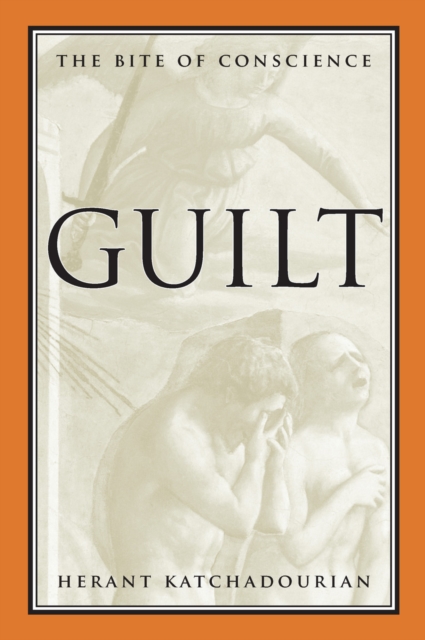
This is the first study of guilt from a wide variety of perspectives: psychology, psychiatry, psychoanalysis, evolutionary psychology, anthropology, six major religions, four key moral philosophers, and the law.
This volume is a sequel to the landmark work that established an exciting new field of study, Stress, Appraisal and Coping (Lazarus and Folkman, 1984).
The Psychology of Mattering: Understanding the Human Need to be Significant is the first comprehensive examination of mattering that is discussed in terms of associated motives, cognitions, emotions and behaviors.
In this 10,000-word essay, written to complement Iain McGilchrist's acclaimed The Master and His Emissary, the author asks why - despite the vast increase in material well-being - people are less happy today than they were half a century ago, and suggests that the division between the two hemispheres of the brain has a critical effect on how we see and understand the world around us.
Compete, acquire, succeed, enjoy: the pressures of living in today’s materialistic world seem predicated upon jealousy—the feelings of rivalry and resentment for possession of whatever the other has.
Empathy: A History tells the fascinating and largely unknown story of the first appearance of empathy in 1908 and tracks its shifting meanings over the following century.
This book analyzes the emerging concept of diversity intelligence, which values the differences in employees without attempting to make everyone alike.
Positive Behaviour Support Strategies for Students with Aggressive Behaviours equips parents, educators and professionals with the knowledge and skills to assess, manage and prevent challenging behaviours in children who have been diagnosed with Conduct Disorder or exhibit persistent aggressive behaviour.
Resources of empathy, humor, and creativity are needed by both the therapist and the patient to transform chronic, eruptive expressions of anger and transcend the tendency to violence.
Reminding women that motherhood is an option, not a given (much less an instinct), New York psychotherapist Phyllis Ziman Tobin contends that choosing to be or not to be a mother is the defining rite of passage for today's woman.
In his 2012 book Time Cure, psychologist Philip Zimbardo introduced a groundbreaking therapeutic approach for PTSD sufferers, co-developed with Rosemary Sword.
Examining the popular discourse of nerves and stress, this book provides a historical account of how ordinary Britons understood, explained and coped with the pressures and strains of daily life during the twentieth century.
You've done what you can: you've seen your doctor, made an appointment with a therapist, picked up the prescription for the antidepressant and swallowed that first strange pill.
A decade ago Brian Cahill became the victim of the greatest tragedy any parent can endure with the loss of his firstborn son, a veteran police officer in the aftermath of a painful divorce, to suicide.
A soft-spoken student who was once a violent hit man, an elderly man tormented by memories of wartime imprisonment, a fortune-teller who finds his therapist inscrutable, a woman who can't get satisfaction from her mother or her therapist .
This series promotes theory and research in the growing area of occupational stress, health and well being, and in the process, showcases the work of the best researchers and theorists who contribute to this area.