Chemical Analysis for Forensic Evidence provides readers with the fundamental framework of forensic analytical chemistry, describing the entire process, from crime scene investigation to evidence sampling, laboratory analysis, quality aspects, and reporting and testifying in court.
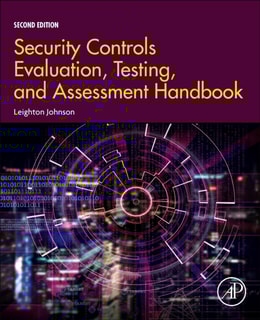
Security Controls Evaluation, Testing, and Assessment Handbook, Second Edition, provides a current and well-developed approach to evaluate and test IT security controls to prove they are functioning correctly.
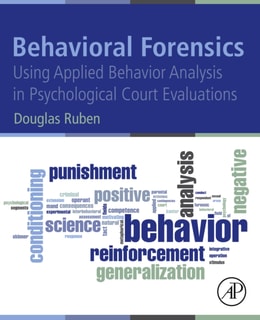
Behavioral Forensics: Using Applied Behavior Analysis in Psychological Court Evaluations presents the first compendia on the application of behavioral principles for the assessment and analysis of criminal behavior in court-ordered psychological evaluations.
Preventing Domestic Homicides: Lessons Learned from Tragedies focuses on the diverse nature of domestic homicides and what has been learned about the most effective prevention strategies from emerging research and the work of domestic violence death review committees in Canada, the US, the UK, NZ and AU.
Trends of Environmental Forensics in Pakistan covers a variety of topics, including discussions on alterations in soil chemistry that are related to the malicious effects of pesticides, variations in biosphere and hydrosphere due to deviating toxicological responses, evidence and datasets to highlight potential crimes, and the advent of biological warfare and its effects across the globe, and exclusively in Pakistan.
Shooting Incident Reconstruction, Third Edition, offers a thorough explanation of matters from simple to complex to help the reader understand the factors surrounding ballistics, trajectory, and shooting scenes.
Threat and Violence Interventions: The Effective Application of Influence evaluates threat and violence risk for various levels of mental health practitioners, law enforcement officers, security professionals, human resource professionals, attorneys, and academics in forensic psychology, sociology, criminology and law.
Mass Identifications: Statistical Methods in Forensic Genetics summarizes the state-of-the-art in the field, including methods and recent development in genetics (sequencing).
The Chief Security Officer's Handbook: Leading Your Team into the Future offers practical advice on how to embrace the future, align with your organizations mission, and develop a program that meets the needs of the enterprise.
Power: Police Officer Wellness, Ethics, and Resilience collectively presents the numerous psychic wounds experienced by peace officers in the line of duty, including compassion fatigue, moral injury, PTSD, operational stress injury, organizational and operational stress, and loss.
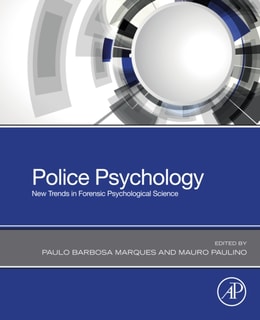
Police Psychology: New Trends in Forensic Psychological Science is a relatively new specialty that can be broadly defined as the application of psychological principles and methods to assist law enforcement.
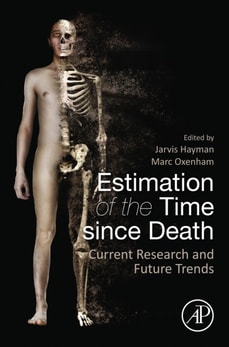
Estimation of the Time Since Death is a current comprehensive work on the methods and research advances into the time since death and human decomposition.
Handbook of Loss Prevention and Crime Prevention, Sixth Edition, continues to serve as the preeminent, comprehensive resource for devising practical, modern solutions for securing people and property.
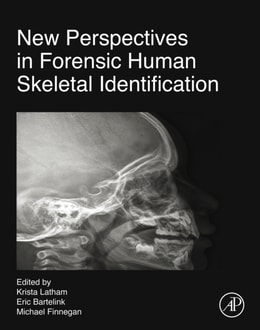
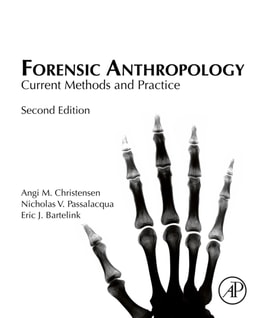
New Perspectives in Forensic Human Skeletal Identification provides a comprehensive and up-to-date perspective on human identification methods in forensic anthropology.
Investigations in Sex Estimation: A Comparison of Morphological and Metrical Methods is a collective comparison of the many morphological and metric methods currently used on adult and juvenile human remains.
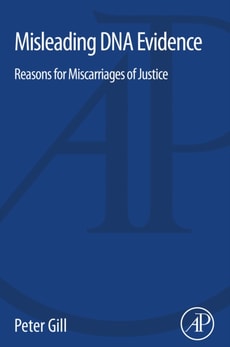
Misleading DNA Evidence: A Guide for Scientists, Judges, and Lawyers presents the reasons miscarriages of justice can occur when dealing with DNA, what the role of the forensic scientist is throughout the process, and how judges and lawyers can educate themselves about all of the possibilities to consider when dealing with cases that involve DNA evidence.
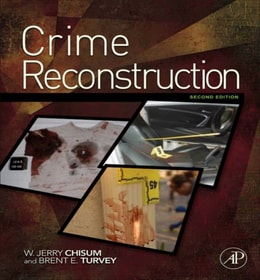
Crime Reconstruction, Second Edition is an updated guide to the interpretation of physical evidence, written for the advanced student of forensic science, the practicing forensic generalist and those with multiple forensic specialists.
Statistics and Probability in Forensic Anthropology provides a practical guide for forensic scientists, primarily anthropologists and pathologists, on how to design studies, how to choose and apply statistical approaches, and how to interpret statistical outcomes in the forensic practice.
Dental Wear in Evolutionary and Biocultural Contexts provides a single source for disseminating the current state-of-the-art research regarding dental wear across a variety of hominoid species under a number of temporal and spatial contexts.
Practicing Forensic Criminology draws on examples from actual court cases and expert witness reports and testimony to demonstrate the merits and uses of substantive criminological knowledge in the applied setting of civil law and the courts.
Child Abuse and Neglect: Forensic Issues in Evidence, Impact and Management provides an overview of all aspects of child abuse and neglect, approaching the topic.
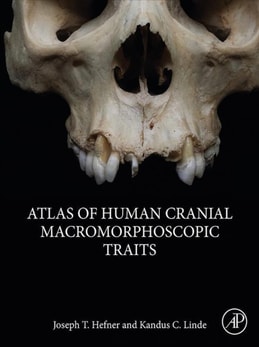
Atlas of Human Cranial Macromorphoscopic Traits synthesizes macromorphoscopic traits and their analysis in an accessible manner, providing detailed descriptions and examples of the various character state manifestations intended for use in classrooms, laboratories, and in the field.
Criminal Psychology: Forensic Examination Protocols is a compact practitioner's guide to essential forensic concepts and protocols related to the evaluation and assessment of crime and criminals.
Forensic Taphonomy and Ecology of North American Scavengers compiles research on vertebrate scavenging behavior from numerous academic fields, including ecology and forensic anthropology.
Engineering Standards for Forensic Application presents the technologies and law precedents for the application of engineering standards to forensic opinions, discussing Fundamentals, Disciplines, Engineering Standards, The Basics and the Future of Forensics.
Forensic Examination of Signatures explains the neuroscience and kinematics of signature production, giving specific details of research carried out on the topic.
The Forensic Crime Scene: A Visual Guide, Second Edition presents knowledgeable chapters on crime scene investigation, the various types of documentation, scene reconstruction, and the value of evidence and proper evidence collection.
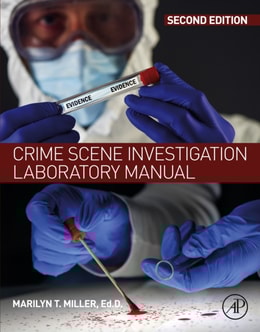
Crime Scene Investigation Laboratory Manual, Second Edition, is written by a former crime scene investigator and forensic scientist who provides practical, straightforward, and immediately applicable best practices.
New Perspectives in Forensic Human Skeletal Identification provides a comprehensive and up-to-date perspective on human identification methods in forensic anthropology.
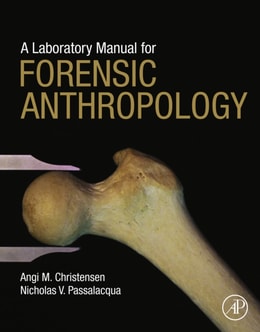
A Laboratory Manual for Forensic Anthropology approaches forensic anthropology as a modern and well-developed science, and includes consideration of forensic anthropology within the broader forensic science community, with extensive use of case studies and recent research, technology and challenges that are applied in field and lab contexts.
Dismemberments: Perspectives in Forensic Anthropology and Legal Medicine is the only volume in the field to address the complexities of interpreting dismemberment trauma, the different tools used, and the sociocultural motives behind dismemberments.
Psychopathy and Criminal Behavior: Current Trends and Challenges fills a gap in the market by covering new topics and angles not addressed in other literature.
Unlike other books, courses and training that expect an analyst to piece together individual instructions into a cohesive investigation, Investigating Windows Systems provides a walk-through of the analysis process, with descriptions of the thought process and analysis decisions along the way.
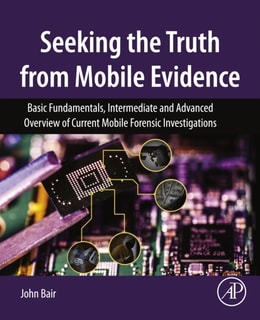
Seeking the Truth from Mobile Evidence: Basic Fundamentals, Intermediate and Advanced Overview of Current Mobile Forensic Investigations will assist those who have never collected mobile evidence and augment the work of professionals who are not currently performing advanced destructive techniques.
Preventing Domestic Homicides: Lessons Learned from Tragedies focuses on the diverse nature of domestic homicides and what has been learned about the most effective prevention strategies from emerging research and the work of domestic violence death review committees in Canada, the US, the UK, NZ and AU.
Ortner's Identification of Pathological Conditions in Human Skeletal Remains, Third Edition, provides an integrated and comprehensive treatment of the pathological conditions that affect the human skeleton.
5G NR: The Next Generation Wireless Access Technology, Second Edition, follows the authors' highly celebrated books on 3G and 4G and provides a new level of insight into 5G NR.
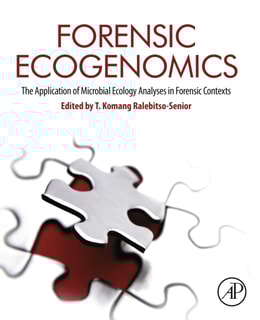
Forensic Ecogenomics: The Application of Microbial Ecology Analyses in Forensic Contexts provides intelligence on important topics, including environmental sample provenance, how to indicate the body decomposition timeline to support postmortem interval (PMI) and postmortem submersion interval (PMSI) estimates, and how to enhance identification of clandestine and transit grave locations.