Finally - a people management guide that goes way beyond the typical "e;problem employee"e; books to help you understand and manage the entire emotional culture of your organization.
Finally - a people management guide that goes way beyond the typical "e;problem employee"e; books to help you understand and manage the entire emotional culture of your organization.
From the early 2000s, a new discourse emerged, in Africa and the international donor community, that higher education was important for development in Africa.
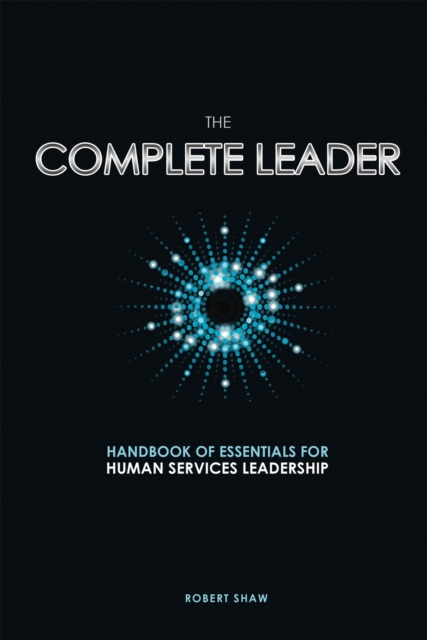
The Complete Leader: Handbook of Essentials for Human Services Leadership gives leaders within human services organizations with lay or professional leadership responsibilities, over 25 essential practices for human services.
The tools and capabilities available to today's HR professionals provide a unique position that, when used correctly, can lead to that all-importantand highly covetedrole at the leadership table.
This series publishes monograph length conceptual papers designed to promote theory and research on important substantive and methodological topics in the field of human resources management.
Research in learning and behavioral disabilities, employing a variety of methods and techniques, has provided a wealth of information relevant to practitioners.
As international development presents enormous moral, political and ethical challenges, so researching and understanding it requires negotiation of its contested contours.
In The Work-Family Challenge contributors from the United Kingdom, Europe and the United States explore the possibilities of challenging traditional employment structures to take account of contemporary work and family realities.
This major handbook covers all aspects of counselling within an organizational context, The authors provide a thorough examination of all the key areas and concerns in the field, including: models of counselling in organizations; assessing the organization for counselling provision; introducing counselling into the organization; how the organization can impact on the counselling process; understanding and working with the organization as a counsellor; evaluating counselling provision within organizations; and training and supervising counsellors working with organizations.
By examining human resource management (HRM) techniques and processes from the `receiving end', Experiencing Human Resource Management provides a rich and valuable view of HRM initiatives and strategies.
Writing for Publication deals with a number of generic issues around academic writing (including intellectual property rights) and then considers writing refereed journal articles, books and book chapters in detail as well as other, less common, forms of publication for academics.
Setting out the basics of designing, conducting and analysing an evaluation study in healthcare, the authors take a practical approach, assuming no previous knowledge or experience of evaluation.
'This is an excellent resource for those interested in studying organizations in both formal and informal contexts' - ChoiceTaking readers through the practical history of ethnography from its anthropological origins through to its use in a ever-widening variety of organizational, academic and business contexts, this book covers the whole research project process, starting with research design, and dealing with such practical issues as gaining access, note-taking, project management, analysing one's data and negotiating an exit strategy.
Management Learning introduces the context and history of management learning and offers a critical framework within which the key debates can be understood.
`A brilliant piece of work, adroitly fitted to the present state of affairs in program evaluation, devoted to a defensible and under-attended proposition - that we should understand programs through their recipients' - Robert Stake, University of Illinois, Urbana-Champaign`This book makes an important and unique contribution to evaluation' - Michael Quinn Patton, The Union Institute, MinneapolisPersonalizing Evaluation challenges the mainstream approach to program evaluation by inverting the traditional relationship between program and person.