208 Squadron based at RAF Valley in Anglesey will be celebrating its 100th anniversary in October 2016, making it one of the few RAF squadrons to achieve this unique distinction whilst still part of the RAF’s current order of battle.
The events in Jet Age Man took place during the early Cold War, an era that will go down as a period when civilization teetered on the edge of the abyss.
This all-new work chronicles the experiences of Paul French who, upon leaving the British Army's 21 SAS (V), sought adventure and excitement in C Squadron of the Rhodesian SAS.
Jimmy Sheddan was one of the many New Zealanders who joined the RNZAF, then left his native land to come to England to fight the enemies of Great Britain and her Empire during World War Two.
When Canadian troops and British Commandos made their now famous ‘reconnaissance in force’ against the harbor town of Dieppe on 19th August 1942, they were supported and protected by the largest array of Royal Air Force aircraft ever seen in WWII until that time.
Born in London of an English father and Australian mother and educated in Switzerland, Billy Drake was to become one of the most illustrious RAF fighter pilots of World War II, indeed of all time.
This book is largely an eye-witness account of the heavy bomber contribution to the success of the D-Day landings and therefore to the winning of the war in Europe.
Under Himmler's Command addresses two areas of World War II hitherto neglected - Heinrich Himmler as a military commander, and the German staff officer corps during the last months of the war on the Eastern Front.
This book captures the experience of the South African Air Force helicopter pilot as never before; from 'rookie' to seasoned combat aviator in one of history's most intense counterinsurgency conflicts - the South African Border War.
The imperial Austrian navy which fought and won the signal victory of Lissa on 20 July 1866, during the so-called Seven Weeks' War of 1866, has in recent years been subjected to more detailed scrutiny than has hitherto been its lot, and it is with an eye to following this trend that we present the following translation of part of the memoirs of one of its officers.
Most studies of the 1940 Western Campaign have tended to focus on a narrow range of topics, principally those relating the German forces or the epic of Dunkirk.
Translated from German, In a Raging Inferno is the first English-language book ever to recount the story of the Hitler Youth and its combat role at the end of World War II.
With the interest shown in "The Royal Corps of Signals: Unit History (1920-2001) and their Antecedents", it was decided to extend the work to include some of the principal Commonwealth Signal Corps, and to provide supplemental data regarding British Signals that has come to light since the original volume was published.
Once I Had a Comrade is the story of the author's German father-in-law, Karl Roth, who grew up during the tumultuous 1930s in the Franconian town of Schweinfurt, located in northern Bavaria, and of his regiment, 36th Panzer Regiment.
Since the publication of The Rifles Are There in 2005, which dealt with the 1st and 2nd Battalions Royal Ulster Rifles in the Second World War, it was felt by many that a follow up volume dealing with the Korean conflict was overdue.
A follow-up to Finding the Few, this companion volume deals with the postwar discovery and recovery of wartime Luftwaffe aircrew who were downed and lost over the UK, most of them during 1940s.
In the later years of the Second World War Germany was subjected to a tremendous onslaught by the bomber commands of both the RAF and USAAF, as well as being assaulted by land.
Raymond Baxter, WW2 fighter pilot, postwar radio and TV commentator at major events from motor races to great State occasions, was later the famous presenter of television’s Tomorrow’s World.
Over the last 70 years, in countless books and essays, Hermann Göring has been defined by his crimes and excess during the Third Reich and the Second World War.
The first volume in the new Helion Library of the Great War, a series designed to bring into print rare books long out-of-print, as well as producing translations of important and overlooked material that will contribute to our knowledge of this conflict.
In the wake of the Red Army's signal victory at Stalingrad, which began when its surprise counteroffensive encircled German Sixth Army in Stalingrad region in mid-November 1942 and ended when its forces liquidated beleaguered Sixth Army in early February 1943, the Soviet High Command (Stavka) expanded its counteroffensive into a full-fledged winter offensive which nearly collapsed German defenses in southern Russia.
In the first of a two-volume study, the author presents an extremely detailed record of the Organisation, doctrine and equipment of US Army infantry divisions during the latter part of World War II.
An Active Service' traces a young Sid Dowland from civilian life into the tough environment of the Guards Depot in the 1930's and then on to a Guards service Battalion in London and prewar Egypt.
Here is an outstanding personal memoir penned by a German infantry officer recalling his experiences during the initial days and weeks of the war in the West, July-September 1914.
The Black Devils March is an account of how the 1st (and only) Polish Armoured Division in the West under the leadership of General Stanislaw Maczek, arose out of the ashes of defeat and while attempting to avoid the internal politics of the Polish Government in Exile, was able to return to Europe in August 1944 on the side of the Western Allies.
Evgeniy Mariinskiy, a Soviet fighter ace and Hero of the Soviet Union, shot down 20 enemy planes in aerial combat over the Eastern Front between 1943 and 1945.
In his historical series Hinze provides the only comprehensive account of events on the central and southern portions of the German Eastern Front during the years of German retreat.
Based on the written testimonies and personal archives of two veterans of the 508th Parachute Infantry Regiment attached to the famous US 82nd Airborne Division, this book tells the story of two young Americans who unwittingly became actors in one of the greatest crusades against tyranny the world has ever known.
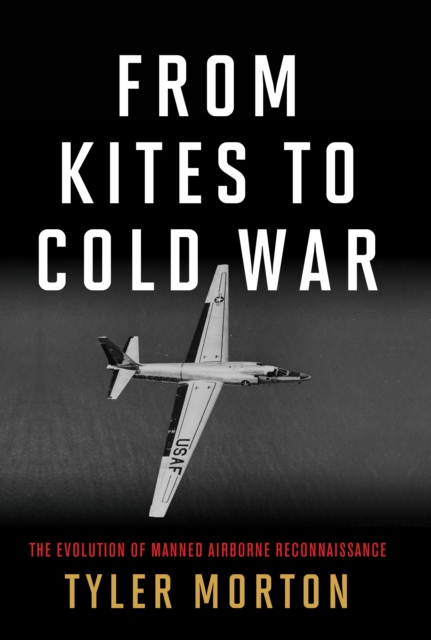
With heightened tensions mounting in the Cold War, President Dwight Eisenhower's request for more accurate intelligence information on the Soviet Union was the spark that ignited the U-2 project.
At the beginning of the Second World War the Nazi hierarchy at an early stage, had fully recognized the importance of controlling the depiction of military conflict in order to ensure the continued morale of their combat troops by providing a bridge between the soldiers and their families.
In this book, noted historian of the Battle of Kursk Valeriy Zamulin, the author of multiple Russian-language books on the Battle of Kursk and Destroying the Myth: The Tank Battle at Prokhorovka, Kursk, July 1943: An Operational Narrative takes a fresh look at several controversial and neglected topics regarding the battle and its run-up.
This is the first of a two volume series covering early twentieth century colonial campaigns in Africa, Asia and the Americas, ranging from Mexico and the Philippines to Africa and the North West Frontier.
Captain Claud Williams’ memoir tells, firsthand, what it was like to be a Light Car Patrol commander during the First World War, while Russell McGuirk’s commentary provides the historical background to the formation of the Patrols and follows their activities from the British raid on Siwa Oasis to desert exploration and survey work and the Kufra Reconnaissance Scheme.