New evidence that the ancient Mayas practiced intensive, often irrigated, agriculture on a massive scale has forced revision in current thinking about that civilization.
In Mali and throughout the Sahel, governments increasingly rely on parastatal organizations to overcome the problems of lagging food production and rural poverty.
Traditionally, indigenous irrigation in many countries of Asia, Africa, and Latin America has been managed quite well by water users, who design, build, operate, and maintain often sophisticated, but usually small-scale, systems.
Celebrating the work of Keith McLachlan, a well-known and much-admired geographer of the Middle East and North Africa, this book combines three interrelated topics that define the region.
Celebrating the work of Keith McLachlan, a well-known and much-admired geographer of the Middle East and North Africa, this book combines three interrelated topics that define the region.
This work presents models that characterize the relationships between quantity and quality of irrigation water application, and agricultural production and the environment.
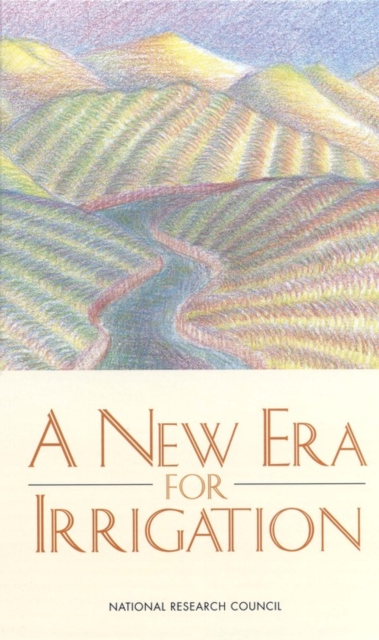
Irrigated agriculture has played a critical role in the economic and social development of the United Statesbut it is also at the root of increasing controversy.
Dry areas suffer not only from limited rainfall but alsonatural leakage'-90% of rainwater is lost directly or indirectly, and is unavailable for agriculture or domestic use.