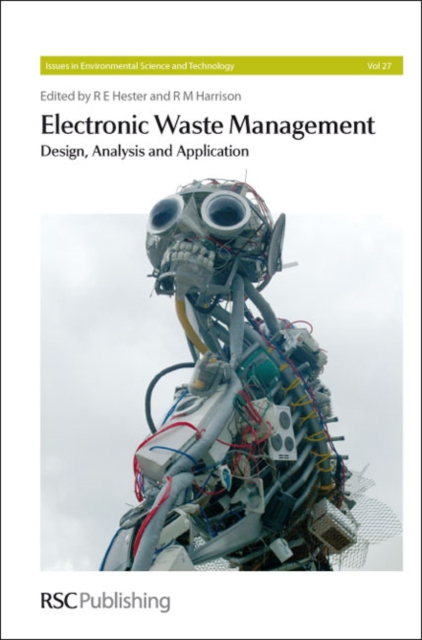
This book covers state-of-the-art technologies, principles, methods and industrial applications of electronic waste (e-waste) and waste PCB (WPCB) recycling.
This book presents a wide range of synthesis and characterization techniques to produce ceramic nanomaterials specially developed to be used in environmental applications.
The term "e;total petroleum hydrocarbons"e; (TPHs) is used for any mixture of several hundred hydrocarbons found in crude oil, and they represent the sum of volatile petroleum hydrocarbons and extractable petroleum hydrocarbons.
This book constitutes the 25th International Conference on Infrastructure and Environment (infraeco 2018) that focuses on rural problems connected with infrastructural equipment.
This two-volume work presents comprehensive, accurate information on the present status and contemporary development in phycoremediation of various types of domestic and industrial wastewaters.
This two-volume work presents comprehensive, accurate information on the present status and contemporary development in phycoremediation of various types of domestic and industrial wastewaters.
This book offers a comprehensive and authoritative review of the key environmental areas and compartments where fragrances have been found and discusses the current challenges of their presence and potential hazards.
This book is focused on the engineering of green materials, which comprise natural composites, bio-inspired armors, waste-added clay ceramics, lignocellulosic fibers, and biodegradable polymers.
This book describes the latest advances, innovations and applications in the field of waste management and environmental geomechanics as presented by leading researchers, engineers and practitioners at the International Conference on Sustainable Waste Management through Design (IC_SWMD), held in Ludhiana (Punjab), India on November 2-3, 2018.
This edited volume deals with the attempts made by the scientists and practitioners to address contemporary issues in geoenvironmental engineering such as characterization of dredged sediments, geomaterials and waste, valorization of waste, sustainability in waste management and some other geoenvironmental issues that are becoming quite relevant in today's world especially in view of the high urbanization rates, advancement in technologies, and changes in consumption behavior of people.
Electronic and electric waste (e-waste), defined as end-of-life electronic products, including computers, television sets, mobile phones, transformers, capacitors, wires and cables, are a major global environmental concern.
This book describes the latest advances, innovations and applications in the field of waste management and environmental geomechanics as presented by leading researchers, engineers and practitioners at the International Conference on Sustainable Waste Management through Design (IC_SWMD), held in Ludhiana (Punjab), India on November 2-3, 2018.
This book offers a valuable tool for understanding current efforts to promote the reuse and enhancement of pre-consumer waste in the development of new products for the construction sector, as well as the financial and regulatory tools being used to support this trend.
This book covers environmental and economic waste treatment with resource recovery strategies covering mining, urban, agricultural, industrial, and sewage wastes.
Land deterioration, drought, desertification, and water resources shrinkage threaten natural resources, negatively impacting environmental, economic, and political stability.
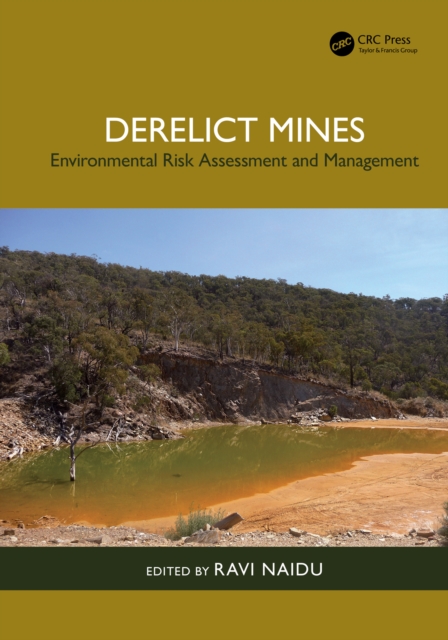
Mine areas left behind by companies that no longer exist are defined as derelict mines - those that were operated and closed at a time when most countries did not have adequate regulations requiring rehabilitation of the impacted mine areas.
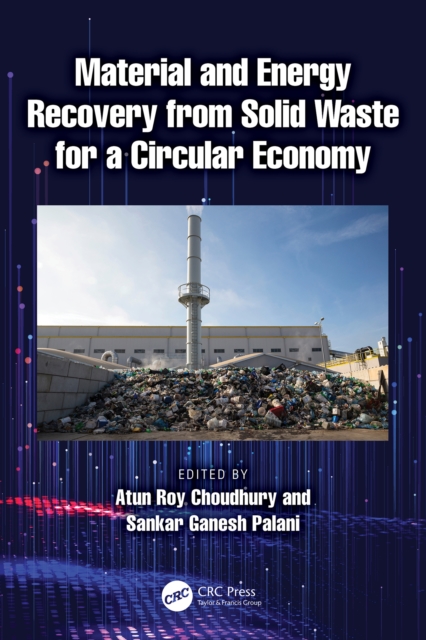
Material and Energy Recovery from Solid Waste for a Circular Economy describes solid waste to material and energy recovery to bridge the gap between theoretical possibilities and on-field criticalities.
This book and its sister book (Volume 1 ) of the Handbook of Environmental Engineering (HEE) series have been designed to serve as a mini-series covering waste treatment in biotechnology, agricultural and food industries .
This book and its sister book (Volume 1 ) of the Handbook of Environmental Engineering (HEE) series have been designed to serve as a mini-series covering waste treatment in biotechnology, agricultural and food industries .
This book adopts a "e;show and tell"e; approach to guiding readers in the area of industrial wastewater treatment and the facilities associated with such treatment.
This very unique research-oriented edited collection introduces waste and pollution treatment methods that can be adopted at local and international levels and examines appropriate resource management strategies for environmentally related issues.
Electronic waste includes such items as TVs, computers, LCD and plasma displays, and mobile phones, as well as a wide range of household, medical and industrial equipment which are simply discarded as new technologies become available.
Presenting a useful reference to the current state of membrane technology and its likely future growth, this book covers all aspects of the technology and its applications in the water industry.
Waste incineration is finding increasing favour as a waste disposal method and this Issue considers the topic of waste disposal and the place of incineration as an option.
Environmental issues are playing an increasingly important role in the textile industry, both from the point of view of government regulation and consumer expectations.
A geopolymer is a solid aluminosilicate material usually formed by alkali hydroxide or alkali silicate activation of a solid precursor such as coal fly ash, calcined clay and/or metallurgical slag.
This book looks at the technical advances in the limitation of waste such as that produced by computing processes and the various industrial practices employed by major companies for waste disposal and minimisation.
This book presents a complete state of the art for different types of nanomaterial, their environmental fate, and their use in textile waste remediation.
A geopolymer is a solid aluminosilicate material usually formed by alkali hydroxide or alkali silicate activation of a solid precursor such as coal fly ash, calcined clay and/or metallurgical slag.
As the global pursuit for environmental sustainability and circular water economy grows ever ambitious, this book explores recent trends, methods, and advancements in industrial wastewater treatment.