The books currently available on this subject contain some elements of physical-chemical treatment of water and wastewater but fall short of giving comprehensive and authoritative coverage.
High surface area, a microporous structure, and a high degree of surface reactivity make activated carbons versatile adsorbents, particularly effective in the adsorption of organic and inorganic pollutants from aqueous solutions.
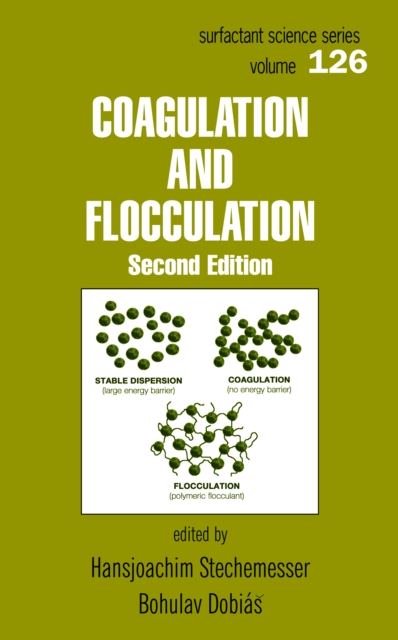
First published in 1993, Coagulation and Flocculation is a practical reference for the researchers in the field of the stabilization and destabilization of fine solid dispersions.
Complete and quantitative, NAPL Removal: Surfactants, Foams, and Microemulsions, belongs to a ten-monograph series that records the results of the Department of Defense/Advanced Applied Technology Demonstration Facility environmental technology demonstrations.
A part of the continuing effort to provide innovative in situ remediation techniques, Remediation of Firing-Range Impact Berms presents the results of a soil washing and leaching project.
The immense environmental challenges facing the world now and in years to come can only be met through marshalling the talents of the best environmental engineers and scientists, and through the use of innovative, cost-effective solutions.
The applications of solvent extraction (SX) and liquid membranes (LM) span chemistry, metallurgy, hydrometallurgy, chemical/mineral processing, and waste treatment-making it difficult to find a single resource that encompasses fundamentals as well as advanced applications.
Completely revised and updated, Treatment Wetlands, Second Edition is still the most comprehensive resource available for planning, designing, and operating wetland treatment systems.
Modeling Tools for Environmental Engineers and Scientists enables environmental professionals, faculty, and students with minimal computer programming skills to develop computer-based mathematical models for natural and engineered environmental systems.
Clean and environmentally sound disposal of animal waste in the quantities that Concentrated Animal Feeding Operations (CAFOs) produce can only be described as a challenge.
Drawing on the authors' combined experience of more than 30 years, Advanced Onsite Wastewater Systems Technologies explores use of these technologies on a wide-scale basis to solve the problems associated with conventional septic tank and drain field systems.
Nanotechnology uses nanomaterials/nanoparticles that can penetrate plant cells and interact with intracellular organelles and metabolites impacting plant growth, development, physiology, and biochemistry.
This North Atlantic Treaty Organization (NATO) Advanced Research Workshop (ARW) was devoted to Wastewater Reuse - Risk Assessment, Decision-Making and Environmental Security held in Istanbul, Turkey, at the Hotel Villa Suites, Taksim during October 12-16, 2006.
Business models, which aims at determining how efficient can be a life cycle strategy from different point of view (customer, policy, environment, economics,.
One of the plausible perceptions about safe and generally optimal geotechnical structure, leads to the conclusion that its success is supported by four columns.
This textbook is about the law, economics, practical assessment, and the management of risky activities arising from routine, catastrophic environmental and occupational exposures to hazardous agents.
Developed, developing and emerging economies worldwide are collectively contributing multiple stresses on aquatic ecosystems by the release of numerous contaminants.
The state of the art in the area of security related civil science and technology concerning energetic materials and munitions is of pressing importance at the present time, because 10 years after the end of the cold war, in many countries in east and west, huge stockpiles of munitions still await destruction.
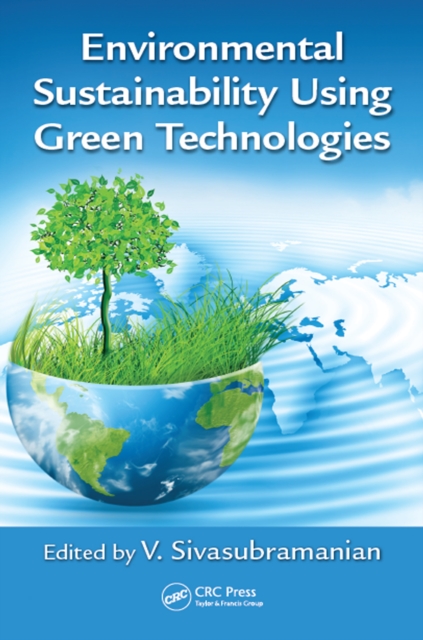
Environmental Sustainability Using Green Technologies explains the role of green engineering and social responsibility in the development of chemicals, processes, products, and systems.
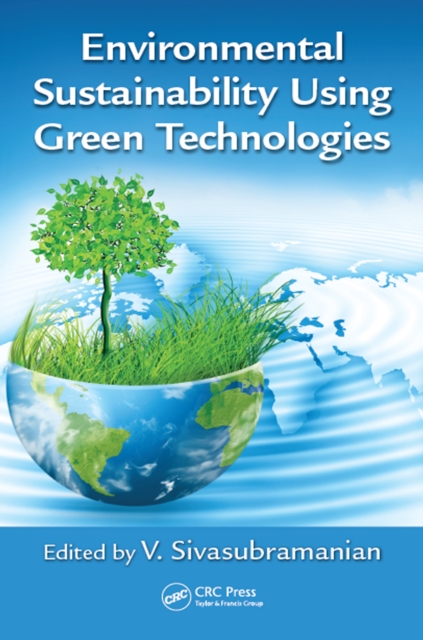
Environmental Sustainability Using Green Technologies explains the role of green engineering and social responsibility in the development of chemicals, processes, products, and systems.
Wastes: Solutions, Treatments and Opportunities II contains selected papers presented at the 4th edition of the International Conference Wastes: Solutions, Treatments and Opportunities, that took place 25-26 September 2017 at the Faculty of Engineering of the University of Porto, Porto, Portugal.
Wastes: Solutions, Treatments and Opportunities II contains selected papers presented at the 4th edition of the International Conference Wastes: Solutions, Treatments and Opportunities, that took place 25-26 September 2017 at the Faculty of Engineering of the University of Porto, Porto, Portugal.
Key features: Takes a quantitative approach to the science of aquaculture Covers the complete landscape of the scientific basis of fish culture Promotes problem solving and critical thinking Includes sample problems at the end of most chapters Guides the reader through the technical considerations of intensive aquaculture, including fish growth rates, hydraulic characteristics of fish rearing units, oxygen consumption rates in relation to oxygen solubility and fish tolerance of hypoxia, and water reconditioning by reaeration and ammonia filtration.