With growing public pressure and increasingly stringent environmental legislation, the waste industry is now being called upon to develop more sustainable methods of dealing with refuse.
The increasing scarcity of land and the ever-rising amount of waste produced worldwide, coupled with the consequent change of focus by policy makers from waste disposal and recovery to waste prevention is boosting research in the 'economics of waste'.
The increasing scarcity of land and the ever-rising amount of waste produced worldwide, coupled with the consequent change of focus by policy makers from waste disposal and recovery to waste prevention is boosting research in the 'economics of waste'.
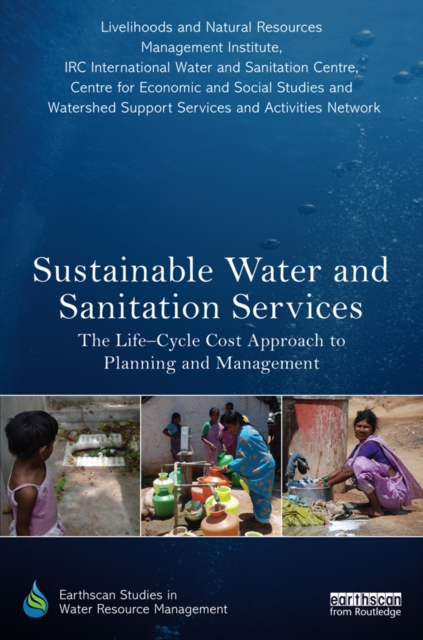
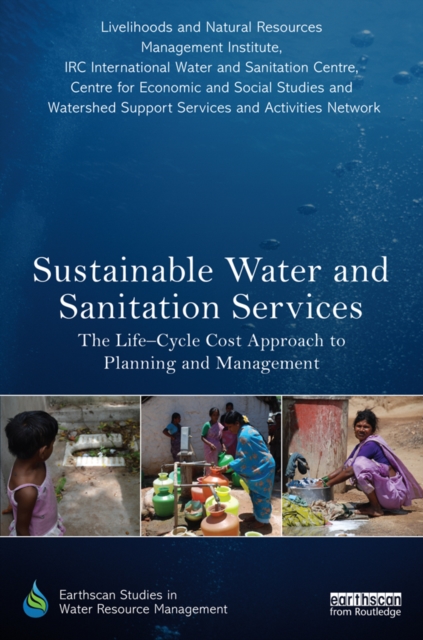
Based on the work of the WASHCost project run by the IRC International Water and Sanitation Centre (IRC), this book provides an evaluation of the water, sanitation and hygiene (WASH) sectors in the context of developing countries and is the first systematic study of applying the life-cycle cost approach to assessing allocations.
Based on the work of the WASHCost project run by the IRC International Water and Sanitation Centre (IRC), this book provides an evaluation of the water, sanitation and hygiene (WASH) sectors in the context of developing countries and is the first systematic study of applying the life-cycle cost approach to assessing allocations.
Households in the UK each generate around one tonne of waste per year, and the successful management and disposal of this waste is becoming an increasingly important issue.
Households in the UK each generate around one tonne of waste per year, and the successful management and disposal of this waste is becoming an increasingly important issue.
This research deals with the increasingly complex issues of waste generation, waste management and waste disposal that in less developed industrialised countries present diverse but critical concerns.
This research deals with the increasingly complex issues of waste generation, waste management and waste disposal that in less developed industrialised countries present diverse but critical concerns.
Waste Management and Resource Recycling in the Developing World provides a unique perspective on the state of waste management and resource recycling in the developing world, offering practical solutions based on innovative tools and technologies, along with examples and case studies.
Unravels fundamental engineering for the treatment, recovery, and disposal of solid waste, sludge and wastewater in the petroleum, chemical, and unconventional oil and gas processing industries This new edition unravels essential requirements for the process design and engineering of the equipment and facilities pertaining to waste management for gas refineries, chemical plants, oil terminals, and petrochemical plants.
Unravels fundamental engineering for the treatment, recovery, and disposal of solid waste, sludge and wastewater in the petroleum, chemical, and unconventional oil and gas processing industries This new edition unravels essential requirements for the process design and engineering of the equipment and facilities pertaining to waste management for gas refineries, chemical plants, oil terminals, and petrochemical plants.
The updated and expanded guide for handling industrial wastes and designing a wastewater treatment plant The revised and updated second edition of Practical Wastewater Treatment provides a hands-on guide to industrial wastewater treatment theory, practices, and issues.
The updated and expanded guide for handling industrial wastes and designing a wastewater treatment plant The revised and updated second edition of Practical Wastewater Treatment provides a hands-on guide to industrial wastewater treatment theory, practices, and issues.
A guide to the extraction, isolation and purification of bioactive compounds from agricultural wastes, and their applications Recovering Bioactive Compounds from Agricultural Wastes offers a guide to the many uses of agricultural wastes from the production of major food types including tea, coffee, cacao, cashew, fruit and vegetables, wine, edible oils, sugar, starch and more.
A guide to the extraction, isolation and purification of bioactive compounds from agricultural wastes, and their applications Recovering Bioactive Compounds from Agricultural Wastes offers a guide to the many uses of agricultural wastes from the production of major food types including tea, coffee, cacao, cashew, fruit and vegetables, wine, edible oils, sugar, starch and more.
Smart materials are used to develop more cost-effective and high-performance water treatment systems as well as instant and continuous ways to monitor water quality.
Smart materials are used to develop more cost-effective and high-performance water treatment systems as well as instant and continuous ways to monitor water quality.
Provides personnel a new understanding of how lagoon and fixed film sewage treatment systems work Tested in short-course situations by the author over the last 20 years Directs the material in a practical manner at operators who are responsible for process control and troubleshooting Reduces the jargon, chemical equations, and kinetics that overwhelm most operators and laboratory technicians Provides necessary information for understanding biological and chemical conditions at the treatment process
Provides personnel a new understanding of how lagoon and fixed film sewage treatment systems work Tested in short-course situations by the author over the last 20 years Directs the material in a practical manner at operators who are responsible for process control and troubleshooting Reduces the jargon, chemical equations, and kinetics that overwhelm most operators and laboratory technicians Provides necessary information for understanding biological and chemical conditions at the treatment process
This book presents the application of system analysis techniques with case studies to help readers learn how the techniques can be applied, how the problems are solved, and which sustainable management strategies can be reached.
This book presents the application of system analysis techniques with case studies to help readers learn how the techniques can be applied, how the problems are solved, and which sustainable management strategies can be reached.
Learn how to design and implement successful aeration control systems Combining principles and practices from mechanical, electrical, and environmental engineering, this book enables you to analyze, design, implement, and test automatic wastewater aeration control systems and processes.
Learn how to design and implement successful aeration control systems Combining principles and practices from mechanical, electrical, and environmental engineering, this book enables you to analyze, design, implement, and test automatic wastewater aeration control systems and processes.
A rapidly changing and expanding livestock and poultry production sector is causing a range of environmental problems on local, regional and global scales.
A rapidly changing and expanding livestock and poultry production sector is causing a range of environmental problems on local, regional and global scales.
Bioremediation and Sustainability is an up-to-date and comprehensive treatment of research and applications for some of the most important low-cost, "e;green,"e; emerging technologies in chemical and environmental engineering Sustainable development requires the development and promotion of environmental management and a constant search for green technologies to treat a wide range of aquatic and terrestrial habitats contaminated by increasing anthropogenic activities with the main sources of contaminants being the chemical industries.
Bioremediation and Sustainability is an up-to-date and comprehensive treatment of research and applications for some of the most important low-cost, "e;green,"e; emerging technologies in chemical and environmental engineering Sustainable development requires the development and promotion of environmental management and a constant search for green technologies to treat a wide range of aquatic and terrestrial habitats contaminated by increasing anthropogenic activities with the main sources of contaminants being the chemical industries.
Food and Agricultural Wastewater Utilization and Treatment, 2nd Edition Wastes, whether they are solid wastes or wastewater, are resources from which economic values may be derived.
A comprehensive guide to sludge management, reuse, and disposal When wastewater is treated, reducing organic material to carbon dioxide, water, and bacterial cells the cells are disposed of, producing a semisolid and nutrient-rich byproduct called sludge.
A comprehensive guide to sludge management, reuse, and disposal When wastewater is treated, reducing organic material to carbon dioxide, water, and bacterial cells the cells are disposed of, producing a semisolid and nutrient-rich byproduct called sludge.
New edition covers the latest practices, regulations, and alternative disinfectants Since the publication of the Fourth Edition of White's Handbook of Chlorination and Alternative Disinfectants more than ten years ago, the water industry has made substantial advances in their understanding and application of chlorine, hypochlorite, and alternative disinfectants for water and wastewater treatment.
MUNICIPAL SOLID WASTE TO ENERGY CONVERSION PROCESSES A TECHNICAL AND ECONOMIC REVIEW OF EMERGING WASTE DISPOSAL TECHNOLOGIES Intended for a wide audience ranging from engineers and academics to decision-makers in both the public and private sectors, Municipal Solid Waste to Energy Conversion Processes: Economic, Technical, and Renewable Comparisons reviews the current state of the solid waste disposal industry.
This book encompasses various approaches to electrochemical water treatment, emphasizing a well-structured framework within the nexus of electrochemistry, water, and energy.
Plastic Bottles: Processing, Recycling, Regulations and Alternatives explores the lifecycle of plastic bottles, from creation to disposal, offering a comprehensive and accessible look at bottle packaging.
The civil engineering sector accounts for a significant percentage of global material and energy consumption and is a major contributor of waste material.
Toxic metals are a class of chemical elements that, in certain concentrations, can cause damage to the health of humans and animals, in addition to impacting ecosystems.
Toxic metals are a class of chemical elements that, in certain concentrations, can cause damage to the health of humans and animals, in addition to impacting ecosystems.
Focusing on microbial community structure in the field of wastewater treatment, this book highlights structural analyses in relation to changes in physico-chemical parameters.
Focusing on microbial community structure in the field of wastewater treatment, this book highlights structural analyses in relation to changes in physico-chemical parameters.