The Microwave Processing of Foods, Second Edition, has been updated and extended to include the many developments that have taken place over the past 10 years.
Antimicrobial Food Packaging takes an interdisciplinary approach to provide a complete and robust understanding of packaging from some of the most well-known international experts.
Alternative and Replacement Foods, Volume 17, a volume in the Handbook of Food Bioengineering series, presents the most up-to-date research on synthetic and replacement food components for scientists and researchers.
Dairy Science, Four Volume Set includes the study of milk and milk-derived food products, examining the biological, chemical, physical, and microbiological aspects of milk itself as well as the technological (processing) aspects of the transformation of milk into its various consumer products, including beverages, fermented products, concentrated and dried products, butter and ice cream.
Advances in Food and Nutrition Research recognizes the integral relationship between the food and nutritional sciences and brings together outstanding and comprehensive reviews that highlight this relationship.
Carotenoids: Properties, Processing, and Applications fills the gap of transfer knowledge between academia and industry, covering integral information in three critical dimensions: properties, recovery and applications.
Food Safety and Quality Systems in Developing Countries, Volume One: Export Challenges and Implementation Strategies considers both the theoretical and practical aspects of food safety and quality systems implementation by major world markets and new and emerging markets in developing countries.
Environmental Nutrition: Connecting Health and Nutrition with Environmentally Sustainable Diets explores the connection between diet, environmental sustainability and human health.
Present Knowledge in Food Safety: A Risk-Based Approach Through the Food Chain presents approaches for exposure-led risk assessment and the management of changes in the chemical, pathogenic microbiological and physical (radioactivity) contamination of 'food' at all key stages of production, from farm to consumption.
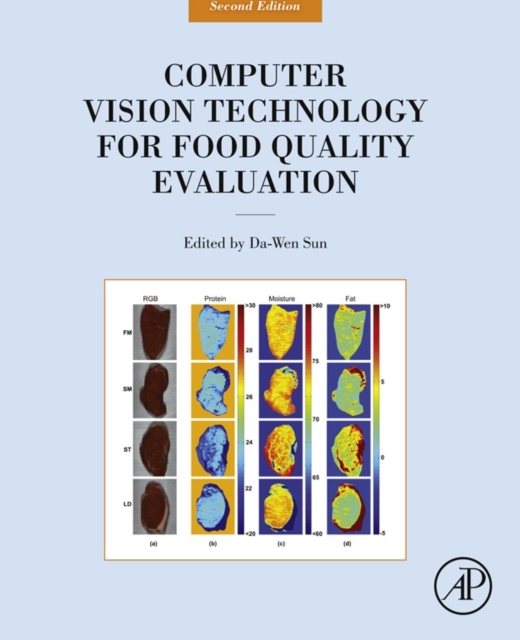
Based on the integration of computer vision and spectrscopy techniques, hyperspectral imaging is a novel technology for obtaining both spatial and spectral information on a product.
Value-Added Ingredients and Enrichment of Beverages, Volume Fourteen in The Science of Beverages series, takes a multidisciplinary approach in addressing what consumers demand in natural beverages.
Sensory Evaluation Practices, Fifth Edition, presents the latest developments and methods of sensory evaluation, including those on the front end of innovation, consumer acceptance/preference, multivariate statistical analysis, discrimination testing, descriptive analysis, sensory claims substantiation for advertising, and information management.
Chemical Contaminants and Residues in Food, Second Edition is an invaluable tool for all industrial and academic researchers involved with food safety, from industry professionals responsible for producing safe food, to chemical analysts involved in testing the final products.
Food Waste Recovery: Processing Technologies, Industrial Techniques, and Applications, Second Edition provides information on safe and economical strategies for the recapture of value compounds from food wastes while also exploring their re-utilization in fortifying foods and as ingredients in commercial products.
The Norovirus: Features, Detection and Prevention of Foodborne Disease is a unique and valuable reference for both researchers in industry and students who need to understand how this specific pathogen behaves in order to improve control of food as a transmission of this infectious biological agent.
Citrus Fruit Processing offers a thorough examination of citrus-from its physiology and production to its processing, including packaging and by-product processing.
Food Plant Safety: UV Applications for Food and Non-Food Surfaces discusses the fundamental principles of ultraviolet (UV) light technology, and gives practical recommendations on UV processes and systems design for specific processing operations, as well as how microbial efficacy of UV light can improve the quality of existing product lines.
Nanoencapsulation of Food Ingredients by Specialized Equipment, Third Edition, a new volume in the Nanoencapsulation in the Food Industry series provides an overview of specialized developed equipment for the nanoencapsulation of food ingredients.
Advances in Food and Nutrition Research recognizes the integral relationship between the food and nutritional sciences and brings together outstanding and comprehensive reviews that highlight this relationship.
Food Security, Poverty and Nutrition Analysis provides essential insights into the evaluative techniques necessary for creating appropriate and effective policies and programs to address these worldwide issues.
Trends in Nonalcoholic Beverages covers the most recent advances, production issues and nutritional and other effects of different nonalcoholic beverages, such as carbonated beverages, cereal-based beverages, energy drinks, fruit punches, non-dairy milk products, nonalcoholic beer, ready-to-drink products (e.
Characterization of Nanoencapsulated Food Ingredients, Volume Four in the Nanoencapsulation in the Food Industry series, introduces some of the common instrumental analysis and characterization methods for the evaluation of nanocarriers and nanoencapsulated ingredients in terms of their morphology, size distribution, surface charge and composition, appearance, physicochemical and rheological properties, and antioxidant activity.
Lipid-Based Nanostructures for Food Encapsulation Purposes, Volume Two in the Nanoencapsulation in the Food Industry series, reviews recent studies on the formulation and evaluation of different categories of lipid-based nano-carriers and discusses how lipid nanoencapsulation is a feasible technology for the food industry.
Post harvest biology and technology of citrus fruits is gaining importance as the therapeutic value of citrus fruits is realized and supported by the increase in health awareness among the general public.
Engineering Tools in the Beverage Industry, Volume Three in The Science of Beverages series, is an invaluable resource for anyone in the beverages field who is involved with quality assurance, lab analysis, and the safety of beverage products.
Starches for Food Application: Chemical, Technological and Health Properties examines the scientific, technological and nutritional knowledge of different types of starches, including their production and application in food, health and the environment.
Agricultural engineering, developed as an engineering discipline underpinned by physics, applies scientific principles, knowledge, and technological innovations in the agricultural and food industries.
Effects of Forage Feeding on Milk: Bioactive Compounds and Flavor collates the research related to biologically active compounds associated with chain fresh/preserved temperate forages, the dairy animal, and cow's, goat's, and ewe's milk and milk products.
Sprouted Grains: Nutritional Value, Production and Applications is a complete and comprehensive overview of sprouted grains, with coverage from grain to product.
Food Safety Management: A Practical Guide for the Food Industry with an Honorable Mention for Single Volume Reference/Science in the 2015 PROSE Awards from the Association of American Publishers is the first book to present an integrated, practical approach to the management of food safety throughout the production chain.
Breeding Sorghum for Diverse End Uses is a comprehensive overview of all significant global efforts for the genetic improvement of sorghum, a major crop of many semi-arid nations that is suitable for a huge range of uses, from human food, to biofuels.
Nutrient Metabolism, Second Edition, provides a comprehensive overview of the supply and use of nutrients in the human body and how the body regulates intake.
The second edition of Emerging Technologies in Food Processing presents essential, authoritative, and complete literature and research data from the past ten years.
Written out of extensive research on vegetable grafting, this book contains current scientific and applied practical knowledge about its various aspects.
Molecular Microbial Diagnostic Methods: Pathways to Implementation for the Food and Water Industry was developed by recognized and experienced highlevel scientists.
Understanding the causes and contributing factors leading to outbreaks of food-borne illness associated with contamination of fresh produce continues to be a worldwide challenge for everyone from the growers of fresh-cut produce through the entire production and delivery process.
Innovative and Emerging Technologies in the Bio-marine Food Sector: Applications, Regulations, and Prospects presents the use of technologies and recent advances in the emerging marine food industry.