This book introduces readers to both seed treatment and seedling pretreatments, taking into account various factors such as plant age, growing conditions and climate.
This book presents a wealth of perspectives on studying the manufacturing end of food processing industries, with a special focus on regions with a low industrial base and multiple missing markets, institutional finance being the most prominent example.
This is the first book to explore the science underlying the concept of "e;koku"e;, which is central to an understanding of the palatability of food within Japanese cuisine and is attracting increasing interest among food scientists and professionals worldwide.
This book summarizes the types, contents, analytical methods, formation mechanisms and control strategies for hazardous substances produced during the thermal processing of foods.
This book comprehensively describes the biological underpinnings of red meat production, discussing the current state of the science in the context of the provision of red meat products perceived by consumers to offer a quality eating experience.
This book comprehensively describes the biological underpinnings of red meat production, discussing the current state of the science in the context of the provision of red meat products perceived by consumers to offer a quality eating experience.
This book discusses the latest research and new techniques in the field of lactic acid bacteria, including comparative genomics, transcriptomics, proteomics and metabolomics.
This book introduces readers to basic studies on and applied techniques involving lactic acid bacteria, including their bioengineering and industrial applications.
This book introduces readers to essential advances in the application of physical processing technology in food processing that have been made in recent years.
This book provides practical information on obtaining and using a wide variety of plant based reagents for different sectors, addressing the needs and challenges in a single resource.
This book provides fundamentals, highlights recent developments and offers new perspectives relating to the use of electrolyzed water (EW) as an emerging user- and environmental-friendly broad-spectrum sanitizer, with particular focus on the food industry.
This book discusses the concept of water footprint and corporate water footprint, presenting case studies on a thermal power plant in India and on the food sector.
This book highlights various methods of quantifying sustainability indicators in the food sector, highlighting the environmental indicators in the meat chain and agri-food wastes from a bio-refinery perspective.
This book provides an overview of the physiological basis of lactic acid bacteria and their applications in minimizing foodborne risks, such as pathogens, heavy metal pollution, biotoxin contamination and food-based allergies.
Sugarcane enjoys a prominent position among agro-industrial crops and is commercially grown in 115 tropical and subtropical countries around the world.
The book discusses up-to-date and detailed information about the nutritional quality of forage in the biodiversity-rich Himalayan region and their potential in livestock feeding.
This book provides comprehensive information on starch modification using physical approaches - a field that has attracted increasing interest in recent years due to the fact that it is no longer desirable to label starch a modified.
Written as an introduction to the science of brewing and beer fermentation, this book provides an up-to-date overview of the science behind the various operations involved in the making of beer.
This book systematically covers the sensory, physical, chemical nutrition, and processing characteristics of different peanut varieties, while also providing an in-depth review of research advances in peanut processing quality.
This book is first of its kind exclusively dedicated to plant polyphenol oxidases (PPOs), highlighting their importance in the food processing industry.
The existence of living organisms in diverse ecosystems has been the focus of interest to human beings, primarily to obtain insights into the diversity and dynamics of the communities.
This book is a one-stop reference resource, presenting recent research in various emerging areas of microbiology, including microbial biotechnology, microbes in health, microbial interactions, agricultural microbiology and computational approaches.
This book describes the structure, function and nutritional values of iron-, zinc-, selenium- and calcium-containing proteins, exploring key mineral-containing proteins like phytoferritin and lactoferrin, as well as a host of zinc- and selenium-containing proteins.
This book primarily focuses on microbial colonization, its role in plant growth and nutrient cycling, mycorrhizae, and providing an overview of phytospheric microorganisms in sustainable crop systems.
This book examines the public stockholding policies of selected developing countries from the perspective of WTO rules and assesses whether the provisions of the Agreement on Agriculture (AoA) could hamper these countries' efforts to address the challenges of food security.
This book focuses on light-emitting diode (LED) lighting, mainly for the commercial production of horticultural crops in plant factories and greenhouses with controlled environments, giving special attention to: 1) plant growth and development as affected by the light environment; and 2) business and technological opportunities and challenges with regard to LEDs.
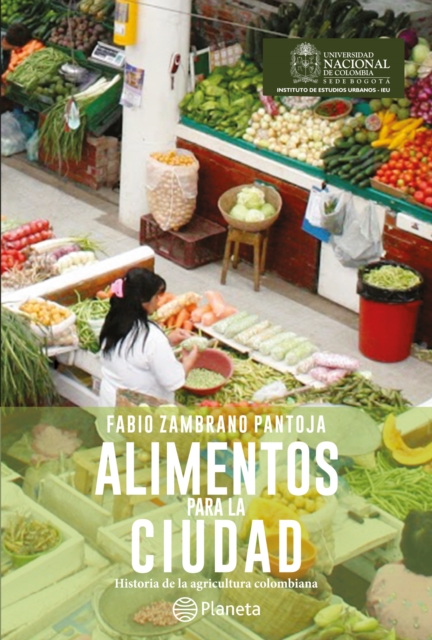
Hace cinco siglos, con el arranque de la dominación española, se inició el intercambio colombino, considerado como una de las transformaciones más revolucionarias que se ha realizado en la naturaleza y que produjo una de las mayores modificaciones en ella, esta vez como resultado de la acción humana.
Functional foods, also known as nutraceuticals, began to gain prominence in the 1980s in Japan as "e;foods for specified health use"e; and became more widely recognized in the 1990s as research and interest in foods that could provide specific health benefits beyond essential nutrition grew worldwide.
Esta obra presenta la importancia del envase en la agroindustria para la comercializacion de alimentos, y como esta se relaciona con la competitividad de los paises.