This new book presents the authors biomedical studies of natural degradable biopolymers (polyhydroxyalkanoates [PHAs]) and discusses the demand for medical-grade materials and modern trends, focusing on the present status and future potential of PHAs.
Technical and technological development demands the creation of new materials that are stronger, more reliable, and more durable-materials with new properties.
With the growing concern for the environment and the rising price of crude oil, there is increasing demand for non-petroleum-based polymers from renewable resources.
Polyurea: Synthesis, Properties, Composites, Production, and Applications is a comprehensive and practical guide to polyurea, a material used for its exceptional properties and performance in a range of high value industrial applications.
The Essentials of Composite Materials: A Guide for Engineering and Beyond combines the theory of composite materials and their applications, with a focus on the main industries where they are used.
Polydimethylsiloxane is a non-conducting, silicone-based elastomer that is of widespread interest due to its flexibility and ease of micromolding for the rapid prototyping of microdevices and systems.
An Introduction to Glass Transition opens with a comparison of entropy function of temperature dependence with configurational entropy, which was published by various authors and found almost the same temperature dependence with overlap.
Written by a group of international experts, this book provides a comprehensive analysis of the main scientific and technological advances that ensure the continued functionality of cellulosic textile supports.
First published in1906, this book contains a classic guide to textiles, dealing specifically with various different fabrics and how they should be prepared and dyed.
With the mapping of the partition function graphs of the n-vector magnetic model in the n to 0 limit as the self-avoiding walks, the conformational statistics of linear polymers was clearly understood in early seventies.
This book presents the chemical properties of lignocellulosic fibers, knowledge of which is essential for innovation and sustainable development of their transformation.
Biopolymers represent a carbon emission solution: they are green and eco-friendly with a variety of uses in biomedical engineering, the automotive industry, the packaging and paper industries, and for the development of new building materials.
Phase morphology in multicomponent polymer-based systems represents the main physical characteristic that allows for control of the material design and implicitly the development of new plastics.
Adhesive bonding plays an increasing role in the forest product industry and is a key factor for efficiently utilizing timber and other lignocellulosic resources.
Introduction to Polymer Chemistry provides undergraduate students with a much-needed, well-rounded presentation of the principles and applications of natural, synthetic, inorganic, and organic polymers.
Introduction to Polymer Chemistry provides undergraduate students with a much-needed, well-rounded presentation of the principles and applications of natural, synthetic, inorganic, and organic polymers.
This classic reference examines the mechanisms driving adhesion, categories of adhesives, techniques for bond formation and evaluation, and major industrial applications.
This book focuses on the recent trends in micro- and nano-structured polymer systems, particularly natural polymers, biopolymers, biomaterials, and their composites, blends, and IPNs.
High-Performance Polymers for Engineering-Based Composites presents a selection of investigations and innovative research in polymer chemistry and advanced materials.
The aim of this new compendium is to provide a solid understanding of the recent developments in advanced polymeric materials from macro- to nano-length scales.
This book is a comprehensive introduction to "e;green"e; or environmentally friendly polymer composites developed using renewable polymers of natural origin such as starch, lignin, cellulose acetate, poly-lactic acid (PLA), polyhydroxylalkanoates (PHA), polyhydroxylbutyrate (PHB), etc.
The construction industry is bombarded with ever-changing building materials-components of which are more and more difficult, if not impossible, to identify.
Technical and technological development demands the creation of new materials that are stronger, more reliable, and more durable-materials with new properties.
This work focuses on the factors critical to successful injection moulding, including knowledge of plastic materials and how they melt, the importance of mould design, the role of the screw, and the correct use of the controls of an injection moulding machine.
"e;Offers comprehensive, authoritative coverage of the chemistry, technology, and engineering of asphaltic products for paving, road construction, roofing, coatings, adhesives, and batteries.
This new book explores the consideration of relationships that connect the structural and basic mechanical properties of polymeric mediums within the frameworks of fractal analysis with cluster model representations attraction.
This book covers a broad range of polymeric materials and provides industry professionals and researchers in polymer science and technology with a single, comprehensive book summarizing all aspects involved in the functional materials production chain.
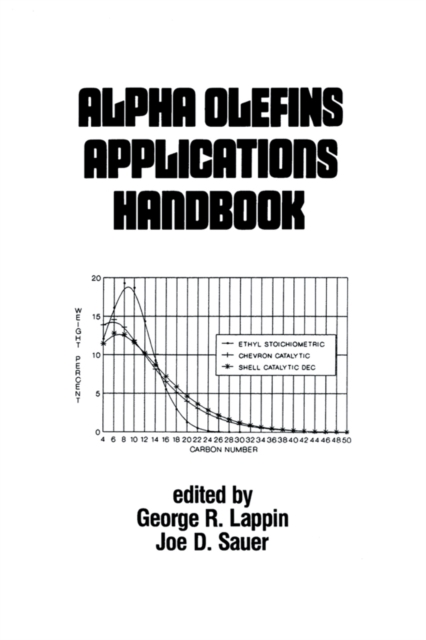
This book discusses the applications of higher linear alpha olefins containing 4 to 30 carbon atoms, describes current commercial uses of alpha olefins, and indicates potential new uses.
This valuable book is devoted to problems of the synthesis, vulcanization, modification, and study of structure and properties of highly filled sealants based on polysulfide oligomers (PSO).