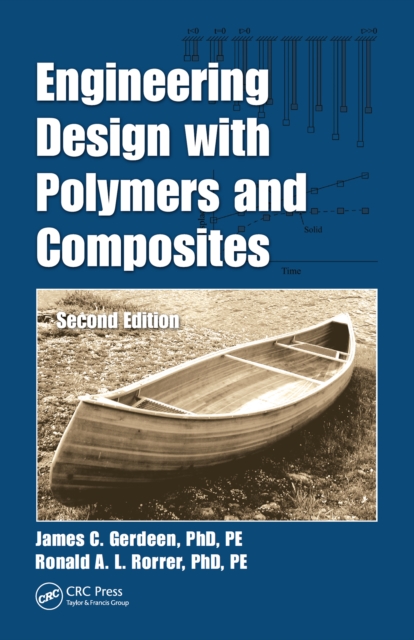
Engineering Design with Polymers and Composites, Second Edition continues to provide one of the only textbooks on the analysis and design of mechanical components made from polymer materials.
With their broad range of properties, polymer blends are widely used in adhesion, colloidal stability, the design of composite and biocompatible materials, and other areas.
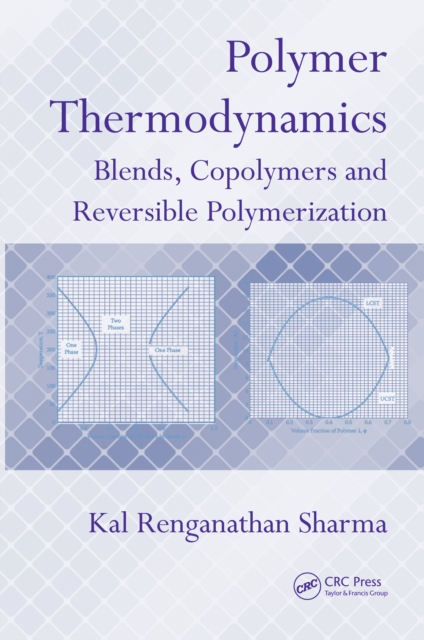
Polymer Thermodynamics: Blends, Copolymers and Reversible Polymerization describes the thermodynamic basis for miscibility as well as the mathematical models used to predict the compositional window of miscibility and construct temperature versus volume-fraction phase diagrams.
Handbook of Adhesives and Surface Preparation provides a thoroughly practical survey of all aspects of adhesives technology from selection and surface preparation to industrial applications and health and environmental factors.
Polylactic Acid (PLA) is the first viable thermoplastic that can be produced from a plant-based feedstock such as corn or sugar cane, and yet be processed by the conventional melt processing technologies.
Fluorinated ionomer polymers form impermeable membranes that conduct electricity, properties that have been put to use in large-scale electrochemical applications, revolutionizing the chlor-alkali industry and transforming production methods of some of the world's highest-production commodity chemicals: chlorine, sodium hydroxide and potassium hydroxide.
As a consultant to the plastics industry, Ottmar Brandau's focus is on using his engineering knowhow and production management experience to improve quality and productivity, cut down cycle time and introduce secondary processes such as inline printing.
Admired for their extraordinary stimuli-sensitive behavior and shape-changing capabilities, shape-memory polymers (SMPs) and multifunctional composites are among the most important smart materials.
Derived from the fourth edition of the well-known Plastics Technology Handbook, Plastics Fabrication and Recycling presents the molding and fabrication processes of plastics as well as several important fe
,Derived from the fourth edition of the well-known Plastics Technology Handbook, Industrial Polymers, Specialty Polymers, and Their Applications covers a wide range of general and special types of polymers
Starch is one of the major polysaccharides employed as biopolymers by the food industry, and its wide range of applications has resulted in intense research of starch structure and technology.
Discussing the definition of pressure sensitivity and characterization of pressure-sensitive behavior, Volume 1 of the Handbook of Pressure-Sensitive Adhesives and Products presents the underlying theory beh
Presenting the end-use and application technologies of pressure-sensitive adhesives and products, Volume Three of the Handbook of Pressure-Sensitive Adhesives and Products discusses the build up and classes
By consolidating into one volume the fundamentals currently covered piecemeal across several reference, this book simplifies the learning of polymer science.
Insufficient knowledge, time limitations, and budget constraints often result in poor material selection and implementation, which can lead to uncertain performance and premature failure of mechanical and electro-mechanical products.
Thermodynamic data of copolymer solutions are a necessity for industrial and laboratory processes and serve as essential tools for understanding the physical behavior of copolymer solutions, intermolecular interactions, and the molecular nature of mixtures.
As the first book written solely on the subject of nuclear batteries and their potential to revolutionize the electronics industry, this text will appeal to a broad audience, from engineers to energy policy makers.
Relating Materials Properties to Structure: Handbook and Software for Polymer Calculations and Materials Properties lays the foundation for an understanding of the basic structure of materials and the significant distinguishing features between major classes.
Polymer Processing Instabilities: Control and Understanding offers a practical understanding of the various flows that occur during the processing of polymer melts.
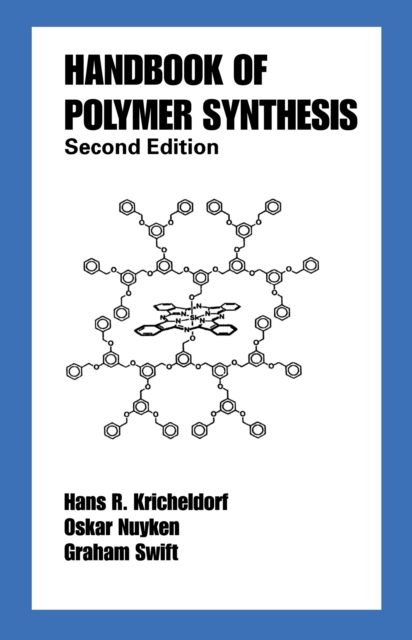
An in-depth review of important preparative methods for the synthesis and chemical modification of polymers, this authoritative second edition examines the advantages and limitations of various polymerization applications and procedures.
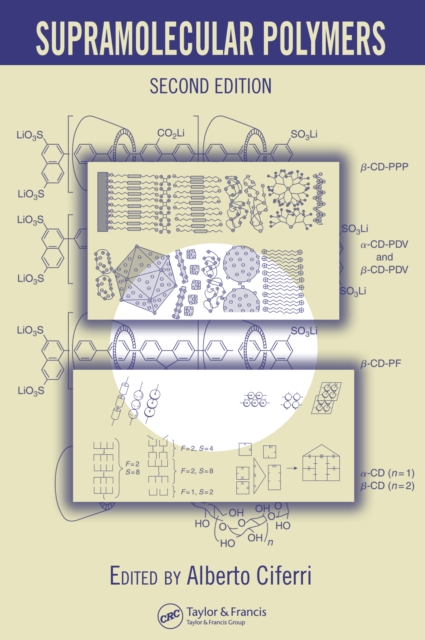
Supramolecular Polymers, Second Edition details assembly processes and structure-function correlation in natural and synthetic self-assembling materials, focusing on developments occurred over the past five years.
Micro- and Nanostructured Multiphase Polymer Blend Systems: Phase Morphology and Interfaces focuses on the formation of phase morphology in polymer blends and copolymers and considers various types of blends including thermosets, thermoplastics, thermoplastic vulcanizates, and structured copolymers.
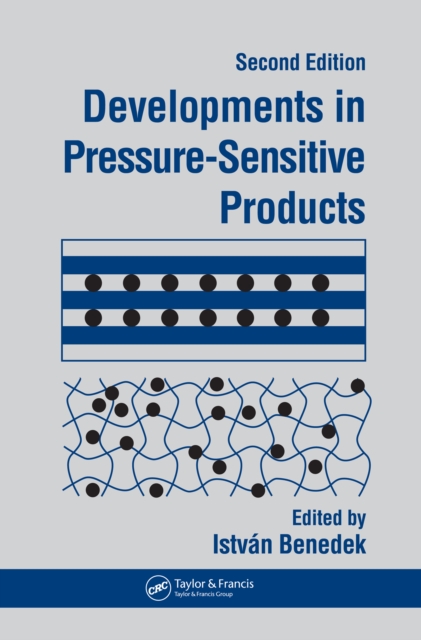
Since the first groundbreaking edition of Developments in Pressure-Sensitive Products was introduced in 1998, heavy research has resulted in substantial progress in the field.
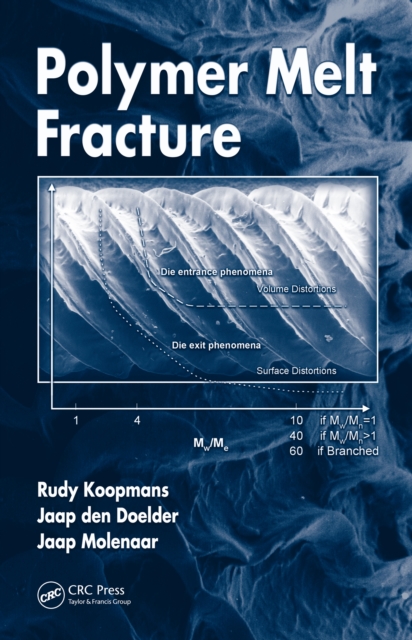
The continually growing plastics market consists of more than 250 million tons of product annually, making the recurring problem of polymer melt fracture an acute issue in the extrusion of these materials.
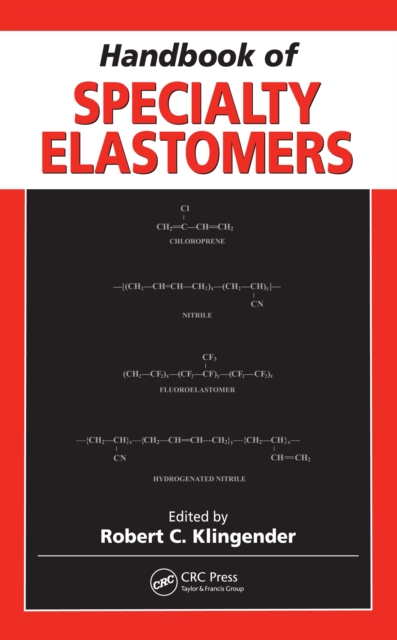
Written and edited by experts on specialty elastomers applications in the mechanical and automotive products industries, the Handbook of Specialty Elastomers provides a single source reference for the design of compounds using specialty elastomers.
New synthetic techniques allow chemists to modify polymer microstructures more precisely than ever, making it possible to design materials that meet increasingly demanding performance requirements.
Underscoring the multidisciplinary nature of polymer science, this third edition provides a broad-based and comprehensive text at an introductory, reader-friendly level.
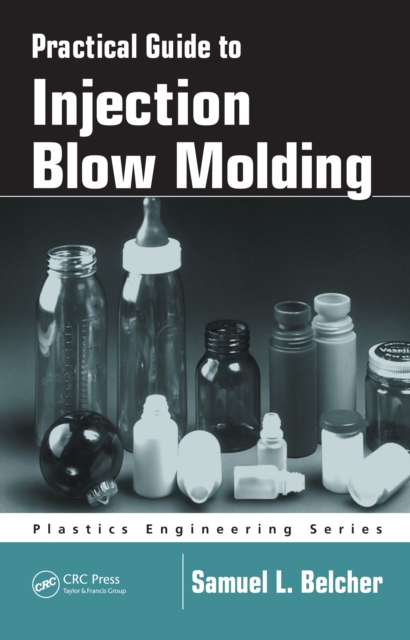
Taking a straight-forward approach, the Practical Guide to Injection Blow Molding explores the entire industry from conception, design, costing, tooling, and machinery, to trouble-shooting, testing, and daily production.
This third edition of a bestseller offers a current perspective on the mechanics, characteristics, test methods, applications, manufacturing processes, and design aspects of composites.
From weather-proof tires and artificial hearts to the o-rings and valve seals that enable successful space exploration, rubber is an indispensable component of modern civilization.
Green nanotechnology has two goals: producing nanomaterials and products without harming the environment or human health, and producing nanoproducts that provide solutions to environmental problems.
Green nanotechnology has two goals: producing nanomaterials and products without harming the environment or human health, and producing nanoproducts that provide solutions to environmental problems.
Conjugated Objects: Development, Synthesis, and Application contains 17 chapters written by young researchers and contains current trends in pi-conjugated systems for application in broad research areas such as design of unique pi-conjugation, catalysts, self-assembly, charge transfer complexes, liquid crystals, supramolecules, and nanostructures by using conjugated small and/or macro-objects organically or electrochemically.
Conjugated Objects: Development, Synthesis, and Application contains 17 chapters written by young researchers and contains current trends in pi-conjugated systems for application in broad research areas such as design of unique pi-conjugation, catalysts, self-assembly, charge transfer complexes, liquid crystals, supramolecules, and nanostructures by using conjugated small and/or macro-objects organically or electrochemically.
This new work, Functional Polymeric Composites: Macro to Nanoscales, focuses on new challenges, findings, opportunities, and applications in the area of polymer composites.
This book illustrates interfacial properties, preparation, characterization, devices, and applications from the standpoint of nano-interfacial tailoring.
Biopolymers are attracting immense attention of late because of their diverse applications that can address growing environmental concerns and energy demands.
Biopolymers are attracting immense attention of late because of their diverse applications that can address growing environmental concerns and energy demands.