Environmental Nutrition: Connecting Health and Nutrition with Environmentally Sustainable Diets explores the connection between diet, environmental sustainability and human health.
Advanced Low-Cost Separation Techniques in Interface Science, Volume 30 helps scientists and researchers in academia and industry gain expert knowledge on how to use separation techniques at minimal cost and energy usage.
Membrane Based Technologiesfor Environmental Pollution Control explains the application of this green technology while offering a systematic approach for accurately utilizing mathematical modeling methods for optimizing system design and scale-up.
Present Knowledge in Food Safety: A Risk-Based Approach Through the Food Chain presents approaches for exposure-led risk assessment and the management of changes in the chemical, pathogenic microbiological and physical (radioactivity) contamination of 'food' at all key stages of production, from farm to consumption.
Sustainable Energy, Towards a Zero-Carbon Economy Using Chemistry, Electrochemistry and Catalysis provides the reader with a clear outline of some of the strategies, particularly those based on various chemical approaches, that have been put forward with the aim of reducing greenhouse gas emissions in order to achieve "e;zero carbon"e; by 2050.
Methods in Chemical Process Safety, Volume Two, the latest release in a serial that publishes fully commissioned methods papers across the field of process safety, risk assessment, and management and loss prevention, aims to provide informative, visual and current content that appeals to both researchers and practitioners in process safety.
Smart Textile Coatings and Laminates, Second Edition, reviews a variety of topics regarding textile coatings and laminates to provide a stimulus for developing new and improved textile products.
Green Sustainable Process for Chemical and Environmental Engineering and Science: Ionic Liquids as Green Solvents discusses the application of ionic liquids as environment-friendly solvents in the extraction, separation and purification of organic and inorganic compounds, as reaction media in biochemical and chemical reactions and catalysis, and in green organic and drug syntheses.
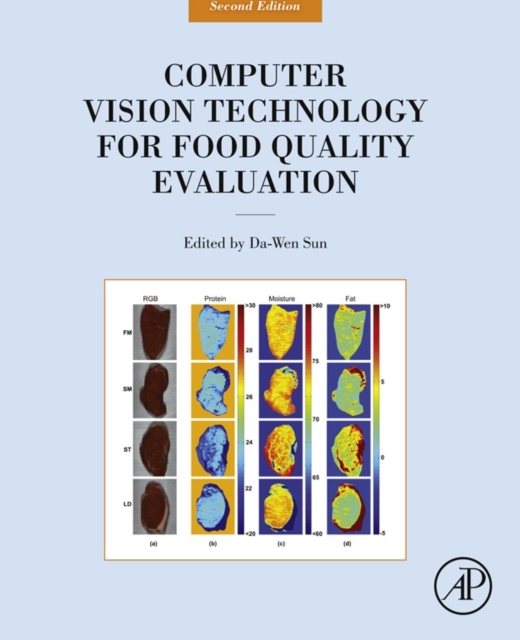
Based on the integration of computer vision and spectrscopy techniques, hyperspectral imaging is a novel technology for obtaining both spatial and spectral information on a product.
Thermal Induced Membrane Separation Processes describes the fundamental and advanced areas associated with the field of thermal induced membrane separation processes.
Value-Added Ingredients and Enrichment of Beverages, Volume Fourteen in The Science of Beverages series, takes a multidisciplinary approach in addressing what consumers demand in natural beverages.
Sensory Evaluation Practices, Fifth Edition, presents the latest developments and methods of sensory evaluation, including those on the front end of innovation, consumer acceptance/preference, multivariate statistical analysis, discrimination testing, descriptive analysis, sensory claims substantiation for advertising, and information management.
Food Waste Recovery: Processing Technologies, Industrial Techniques, and Applications, Second Edition provides information on safe and economical strategies for the recapture of value compounds from food wastes while also exploring their re-utilization in fortifying foods and as ingredients in commercial products.
Solve chemical engineering problems quickly and accuratelyFully revised throughout with new procedures, Handbook of Chemical Engineering Calculations, Fourth Edition shows how to solve the main process-related problems that often arise in chemical engineering practice.
The Norovirus: Features, Detection and Prevention of Foodborne Disease is a unique and valuable reference for both researchers in industry and students who need to understand how this specific pathogen behaves in order to improve control of food as a transmission of this infectious biological agent.
Citrus Fruit Processing offers a thorough examination of citrus-from its physiology and production to its processing, including packaging and by-product processing.
Food Plant Safety: UV Applications for Food and Non-Food Surfaces discusses the fundamental principles of ultraviolet (UV) light technology, and gives practical recommendations on UV processes and systems design for specific processing operations, as well as how microbial efficacy of UV light can improve the quality of existing product lines.
Inorganic and Composite Fibers: Production, Properties, and Applications provides a comprehensive review on the development, production and application of modern inorganic and composite fibers.
Auxetic Textiles provides a detailed introduction to the basic properties of auxetic materials and how they differ from conventional materials, particularly auxetic textiles, such as polymers, fibers, yarns, fabrics and textile composites.
Current Developments in Biotechnology and Bioengineering: Sustainable Food Waste Management: Resource Recovery and Treatment covers the latest methods of food waste management and resource recovery from a sustainability perspective and is suitable for universities, municipalities, and companies working in the field.
Statistical Process Monitoring Using Advanced Data-Driven and Deep Learning Approaches tackles multivariate challenges in process monitoring by merging the advantages of univariate and traditional multivariate techniques to enhance their performance and widen their practical applicability.
Fuel Cells and Hydrogen: From Fundamentals to Applied Research provides an overview of the basic principles of fuel cell and hydrogen technology, which subsequently allows the reader to delve more deeply into applied research.
Nanoencapsulation of Food Ingredients by Specialized Equipment, Third Edition, a new volume in the Nanoencapsulation in the Food Industry series provides an overview of specialized developed equipment for the nanoencapsulation of food ingredients.
Advances in Food and Nutrition Research recognizes the integral relationship between the food and nutritional sciences and brings together outstanding and comprehensive reviews that highlight this relationship.
Food Security, Poverty and Nutrition Analysis provides essential insights into the evaluative techniques necessary for creating appropriate and effective policies and programs to address these worldwide issues.
Trends in Nonalcoholic Beverages covers the most recent advances, production issues and nutritional and other effects of different nonalcoholic beverages, such as carbonated beverages, cereal-based beverages, energy drinks, fruit punches, non-dairy milk products, nonalcoholic beer, ready-to-drink products (e.
Characterization of Nanoencapsulated Food Ingredients, Volume Four in the Nanoencapsulation in the Food Industry series, introduces some of the common instrumental analysis and characterization methods for the evaluation of nanocarriers and nanoencapsulated ingredients in terms of their morphology, size distribution, surface charge and composition, appearance, physicochemical and rheological properties, and antioxidant activity.
Lipid-Based Nanostructures for Food Encapsulation Purposes, Volume Two in the Nanoencapsulation in the Food Industry series, reviews recent studies on the formulation and evaluation of different categories of lipid-based nano-carriers and discusses how lipid nanoencapsulation is a feasible technology for the food industry.
Focusing Mesoscales of Multiscale Problems in Chemical Engineering, a volume in the Advances in Chemical Engineering series provides readers with the personal views of recognized authorities who present assessments of the state-of-the-art in the field and help readers develop an understanding of its further evolution.
Post harvest biology and technology of citrus fruits is gaining importance as the therapeutic value of citrus fruits is realized and supported by the increase in health awareness among the general public.
Dust Explosion Dynamics focuses on the combustion science that governs the behavior of the three primary hazards of combustible dust: dust explosions, flash fires, and smoldering.
The COSMO-RS technique is a novel method for predicting the thermodynamic properties of pure and mixed fluids which are important in many areas, ranging from chemical engineering to drug design.
Hydraulic Rubber Dam: An Effective Water Management Technology is the go-to source for information on the materials, manufacture, mechanics and functional benefit of rubber dams in water management.
Engineering Tools in the Beverage Industry, Volume Three in The Science of Beverages series, is an invaluable resource for anyone in the beverages field who is involved with quality assurance, lab analysis, and the safety of beverage products.
Starches for Food Application: Chemical, Technological and Health Properties examines the scientific, technological and nutritional knowledge of different types of starches, including their production and application in food, health and the environment.
Cold Fusion: Advances in Condensed Matter Nuclear Science provides a concise description of the existing technological approaches in cold fusion or low energy nuclear reaction engineering.
The latest methodologies for the control of distillation processesWritten by an expert with more than 30 years of industry experience, Distillation Control and Optimization: Operation Fundamentals through Software Control is filled with proven solutions to control problems in distillation processes.
Advanced Functional Polymers for Biomedical Applications presents novel techniques for the preparation and characterization of functionalized polymers, enabling researchers, scientists and engineers to understand and utilize their enhanced functionality in a range of cutting-edge biomedical applications.