Lawrie's Meat Science, Eighth Edition, provides a timely and thorough update to this key reference work, documenting significant advances in the meat industry, including storage and preservation of meat, the eating quality of meat, and meat safety.
Safety Issues in Beverage Production, Volume 18, in the Science of Beverages series, offers a multidisciplinary approach to the complex issues emerging in the beverage industry.
Entropy of Complex Processes and Systems formalizes our understanding of many complex processes, including the development of the methodology of analytical computation of complex processes as applied in many industries, such as ore processing, or more generally, in areas of natural sciences.
Maximize productivity while minimizing environmental impactDevelop sustainable products, energy sources, and processes using the concepts and methods contained in this interdisciplinary resource.
Polyoxometalate Chemistry continues a long-running series that describes recent advances in scientific research, in particular, in the field of inorganic chemistry.
Liquid-Liquid and Solid-Liquid Extractors, part of the Industrial Equipment for Chemical Engineering set, presents a concise and easy-to-use book on the calculation of differential liquid-liquid extraction, an investigation of equilibrium and material transfer between a fluid and a divided solid, and the fundamentals of liquid-solid extraction, among other strategies.
Palm Trees and Fruits Residues: Recent Advances for Integrated and Sustainable Management places the wastes of palm trees and fruit residues in the international context of sustainable development, providing sustainable applications that are detailed based on sector to help readers from specific fields identify applications.
Case Studies in Food Retailing and Distribution aims to close the gap between academic researchers and industry professionals through the presentation of 'real world' scenarios and the application of field-based research.
Advances in Food and Nutrition Research recognizes the integral relationship between the food and nutritional sciences and brings together outstanding and comprehensive reviews that highlight this relationship.
Food Safety: A Roadmap to Success is a hands-on book that discusses the key pieces of the food safety puzzle, culture, management commitment, organizational structure, implementation, and the glue that holds it together, communication/education/training, influence, accountability, and metrics.
This volume on medicinal foods from the sea narrates the bioactive principles of various marine floral (vertebrate and Invertebrate), faunal (Macro and Micro algal) and microbial sources.
Dietary Fiber: Properties, Recovery and Applications explores the properties and health effects of dietary fiber, along with new trends in recovery procedures and applications.
FDA Warning Letters About Food Products: How to Avoid or Respond to Citations uses examples of FDA warning letters about food products as training tools to discuss important quality and manufacturing issues encountered by food companies around the world as they bring food products into the US market.
Preservatives for the Beverage Industry, Volume Fifteen, a new release in The Science of Beverages series, is a valuable resource that discusses preservatives and their impact in the beverage industry, including potential health impacts.
Advances in Food and Nutrition Research recognizes the integral relationship between the food and nutritional sciences and brings together outstanding and comprehensive reviews that highlight this relationship.
Genomics and Biotechnological Advances in Veterinary, Poultry, and Fisheries is a comprehensive reference for animal biotechnologists, veterinary clinicians, fishery scientists, and anyone who needs to understand the latest advances in the field of next generation sequencing and genomic editing in animals and fish.
Industrial Chemical Process Analysis and Design uses chemical engineering principles to explain the transformation of basic raw materials into major chemical products.
Molten salts and fused media provide the key properties and the theory of molten salts, as well as aspects of fused salts chemistry, helping you generate new ideas and applications for fused salts.
Thermochemical Process Engineering, the latest edition in the Advances in Chemical Engineering, provides up-to-date information, comprehensively presenting updates in a systematic fashion that has made the series of great importance to organic chemists, polymer chemists, and many biological scientists since its inception in 1960.
Nanoengineering in the Beverages Industry, Volume 20 in the Science of Beverages series, presents the impact of novel technologies in nanoengineering on the design of improved and future beverages.
Catalysis is the acceleration of a chemical reaction by a catalyst, a substance that notably affects the rate of a chemical reaction without itself being consumed or altered.
Mineral Composition and Radioactivity of Edible Mushrooms is the definitive reference guide that collects and collates all recent very dispersed data and information on mushroom mineral elements and radioactivity.
Genetically Modified and Irradiated Food: Controversial Issues: Facts versus Perceptions explains the technologies used in these processes so they can be understood by those in general public health, scientific organizations, politicians and opinion makers/policymakers.
Food Applications of Nanotechnology, Volume 88, consolidates the literature on recent developments in nanotechnology, addressing production, safety and nutritional aspects pertaining to foods and nutraceuticals.
Modern Techniques for Food Authentication, Second Edition presents a comprehensive review of the novel techniques available to authenticate food products, including various spectroscopic technologies, methods based on isotopic analysis and chromatography, and other techniques based on DNA, enzymatic analysis and electrophoresis.
Nutrition and Functional Foods for Healthy Aging aims to equip anyone studying geriatric nutrition or working with aging adults with the latest scientific reviews of critical topics.
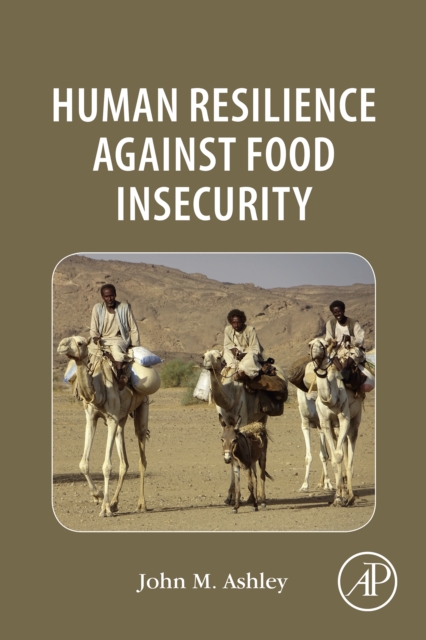
Human Resilience against Food Insecurity focuses on the human factors involved in building resilience against food and nutrition insecurity in perpetuity through better managing risks (such as 'better-spacing' of children), diversifying the asset portfolio, behavioral change, and communication strategies for to help achieve these goals.
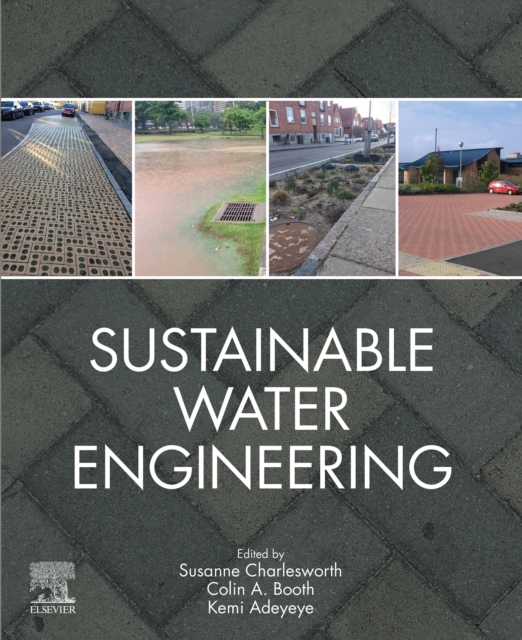
Sustainable Water Engineering introduces the latest thinking from academic, stakeholder and practitioner perspectives who address challenges around flooding, water quality issues, water supply, environmental quality and the future for sustainable water engineering.
Nanotechnology is a rapidly expanding field which includes fundamental nanoscale phenomena and processes, nanomaterials, nanoscale devices and systems, nanomanufacturing, and benefits and risks of nanotechnology.
Storage of Grains and Their Products, Fifth Edition, presents the most authoritative reference on the principles and practices of storing and handling grains and their products.
Applications of Genetic and Genomic Research in Cereals covers new techniques for practical breeding, also discussing genetic and genomic approaches for improving special traits.
Nanocolloids: A Meeting Point for Scientists and Technologists presents an easy-to-read approach to current trends in nanoscale colloid chemistry, which offers relatively simple and economically feasible ways to produce nanomaterials.
Industrial and Process Furnaces: Principles, Design and Operation, Third Edition continues to provide comprehensive coverage on all aspects of furnace operation and design, including topics essential for process engineers and operators to better understand furnaces.
Anticorrosive Rubber Lining discusses the state-of-the-art in this evolving industry, including sections on the best materials and formulations to use, what's best for a particular application, which repair technique is best for a given application, how long a rubber lining is likely to last, vulcanization parameters, and more.
Plasticizers Derived from Postconsumer PET: Research Trends and Potential Applications presents a roadmap to the successful use of postconsumer PET to obtain plasticizers for later use, a proposal which presents both economic and sustainability advantages.
Starchy Crops Morphology, Extraction, Properties and Applications is the first volume of the "e;Underground Starchy Crops of South American Origin"e; book series.
Multi-Functionality of Polymer Composites: Challenges and New Solutions brings together contributions from experts in the field of multifunctionality, presenting state-of-the-art discussion of this exciting and rapidly developing field, thus key enabling technologies for future applications.