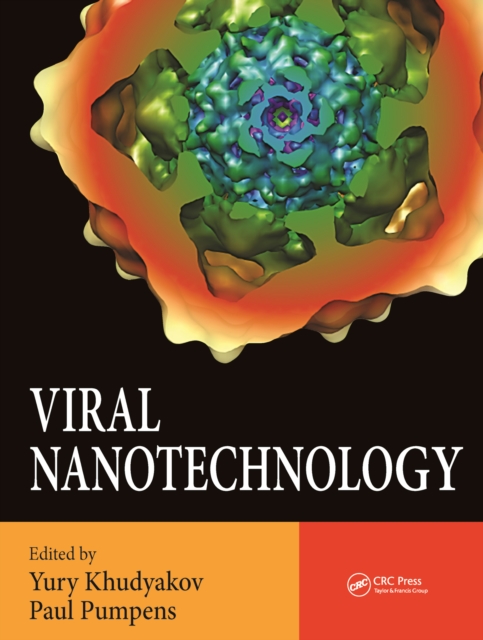
Viral Nanotechnology presents an up-to-date overview of the rapidly developing field of viral nanotechnology in the areas of immunology, virology, microbiology, chemistry, physics, and mathematical modeling.
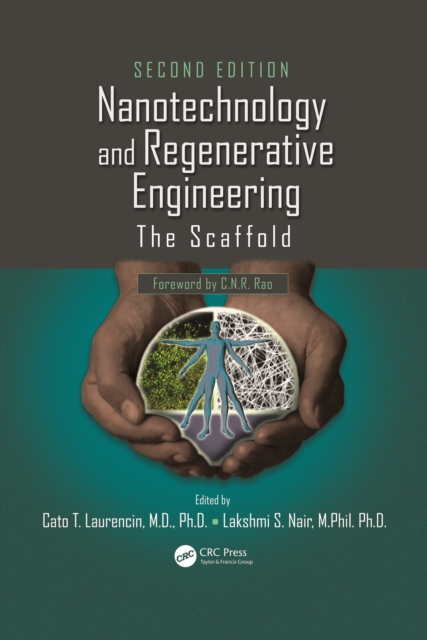
Nanotechnology and regenerative engineering have emerged to the forefront as the most versatile and innovative technologies to foster novel therapeutic techniques and strategies of the twenty-first century.
Many varieties of new, complex diseases are constantly being discovered, which leaves scientists with little choice but to embrace innovative methods for controlling the invasion of life-threatening problems.
Nanocomposite Membrane Technology: Fundamentals and Applications is the first book to deliver an extensive exploration of nanocomposite membrane technology.
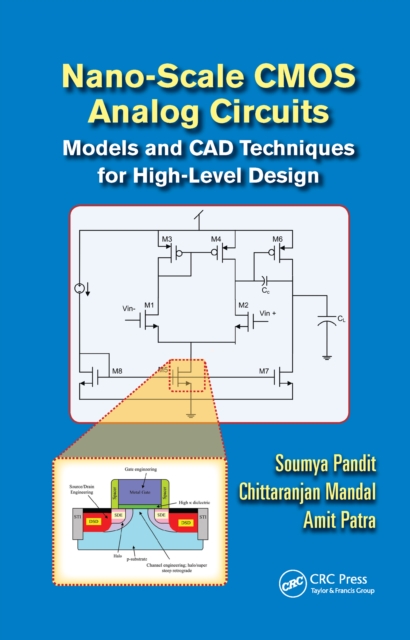
Reliability concerns and the limitations of process technology can sometimes restrict the innovation process involved in designing nano-scale analog circuits.
The book places nanotechnology's emergence within a broad historical and contemporary global context while developing and testing an interpretive framework through which to assess nanotechnology's claims.
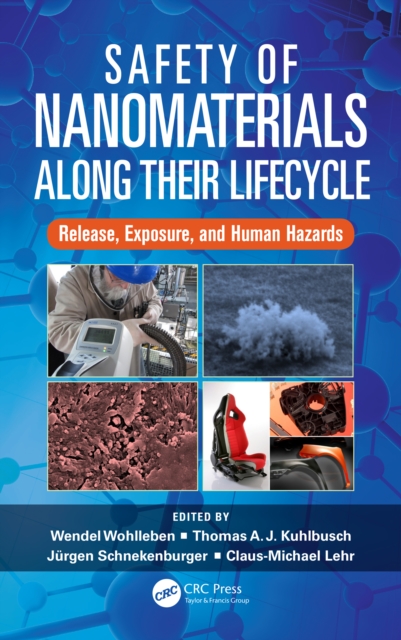
The incorporation of nanomaterials into products can improve performance, efficiency, and durability in various fields ranging from construction, energy management, catalysis, microelectronics, plastics, coatings, and paints to consumer articles such as foods and cosmetics.
Advances in nanotechnology are transforming the ways of creating materials and products, leading society to the threshold of a second industrial revolution.
Graphene, Carbon Nanotubes, and Nanostructures: Techniques and Applications offers a comprehensive review of groundbreaking research in nanofabrication technology and explores myriad applications that this technology has enabled.
Micro/nano-scale engineering-especially the design and implementation of ultra-fast and ultra-scale energy devices, sensors, and cellular and molecular systems-remains a daunting challenge.
Biosensors Based on Nanomaterials and Nanodevices links interdisciplinary research from leading experts to provide graduate students, academics, researchers, and industry professionals alike with a comprehensive source for key advancements and future trends in nanostructured biosensor development.
Focusing on control and manipulation of plasmons at nanometer dimensions, nanoplasmonics combines the strength of electronics and photonics, and is predicted to replace existing integrated circuits and photonic devices.
A first step in developing a clean and sustainable future is to think differently about everyday products, in particular how they influence energy use.
Nanodroplets, the basis of complex and advanced nanostructures such as quantum rings, quantum dots and quantum dot clusters for future electronic and optoelectronic materials and devices, have attracted the interdisciplinary interest of chemists, physicists and engineers.
Nanoencapsulation has the potential to improve human health through its capacity to both protect bioactive compounds and release them at a specific time and location into various substances, including food.
In the decade since the publication of the second edition of Scanning Electron Microscopy and X-Ray Microanalysis, there has been a great expansion in the capabilities of the basic scanning electron microscope (SEM) and the x-ray spectrometers.
This book takes a systematic approach to nanotoxicology and the developing risk factors associated with nanosized particles during manufacture and use of nanotechnology.
"e;Nanowire Field Effect Transistor: Basic Principles and Applications"e; places an emphasis on the application aspects of nanowire field effect transistors (NWFET).
Bismuth-containing compounds comprise a relatively unexplored materials system that is expected to offer many unique and desirable optoelectronic, thermoelectric, and electronic properties for innovative device applications.
Helium Ion Microscopy: Principles and Applications describes the theory and discusses the practical details of why scanning microscopes using beams of light ions - such as the Helium Ion Microscope (HIM) - are destined to become the imaging tools of choice for the 21st century.
The unfortunate and serious accident at the nuclear power plants in Fukushima, Japan caused by the earthquake and tsunami in March 2011 dealt Japan a serious blow.
It's well known that the structural characteristics of food materials influence their mass transfer, especially their water transfer properties during such processes as drying, hydration, and storage.
Smart Materials-Based Actuators at the Micro/Nano-Scale: Characterization, Control, and Applications gives a state of the art of emerging techniques to the characterization and control of actuators based on smart materials working at the micro/nano scale.
This book presents a state-of-the-art summary and critical analysis of work recently performed in leading research laboratories around the world on the implementation of metal oxide nanomaterial research methodologies for the discovery and optimization of new sensor materials and sensing systems.
Nanotechnology in Dermatology is the first book of its kind to address all of the important and rapidly growing aspects of nanotechnology as it relates to dermatology.
Nanoscale Applications for Information and Energy Systems presents nanotechnology fundamentals and applications in the key research areas of information technology (electronics and photonics) and alternative (solar) energy: plasmonics, photovoltaics, transparent conducting electrodes, silicon electroplating, and resistive switching.
MEMS and Nanotechnology, Volume 6: Proceedings of the 2012 Annual Conference on Experimental and Applied Mechanics represents one of seven volumes of technical papers presented at the Society for Experimental Mechanics SEM 12th International Congress & Exposition on Experimental and Applied Mechanics, held at Costa Mesa, California, June 11-14, 2012.