The Jesus and Mary Chain's swooning debut Psychocandy seared through the underground and through the pop charts, shifting the role of noise within pop music forever.
The Jesus and Mary Chain's swooning debut Psychocandy seared through the underground and through the pop charts, shifting the role of noise within pop music forever.
At the outset of summer in 1990, a Houston gangsta rap group called the Geto Boys was poised to debut its self-titled third album under the guidance of hip-hop guru Rick Rubin.
At the outset of summer in 1990, a Houston gangsta rap group called the Geto Boys was poised to debut its self-titled third album under the guidance of hip-hop guru Rick Rubin.
It was 1969, and Miles Davis, prince of cool, was on the edge of being left behind by a dynamic generation of young musicians, an important handful of whom had been in his band.
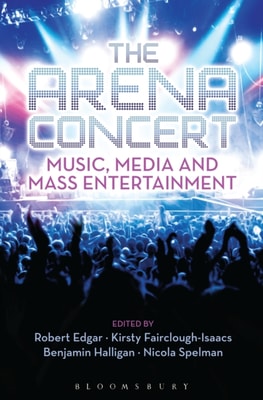
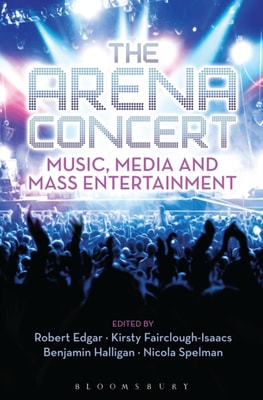
The Arena Concert: Music, Media and Mass Entertainment is the first sustained engagement with what might said to be - in its melding of concert and gathering, in its evolving relationship with digital and social media, in its delivery of event, experience, technology and star - the art form of the 21st century.
The Arena Concert: Music, Media and Mass Entertainment is the first sustained engagement with what might said to be - in its melding of concert and gathering, in its evolving relationship with digital and social media, in its delivery of event, experience, technology and star - the art form of the 21st century.
In Long and Winding Roads: The Evolving Artistry of the Beatles, Kenneth Womack brings the band's story vividly to life-from their salad days as a Liverpool Skiffle group and their apprenticeship in the nightclubs and mean streets of Hamburg through their early triumphs at the legendary Cavern Club and the massive onslaught of Beatlemania itself.
From 1987 to 1995, Bristol, England's Sarah Records was a modest underground success and, for the most part, a critical laughingstock in its native country-sneeringly dismissed as the sad, final repository for a fringe style of music (variously referred to as "e;indie-pop,"e; "e;C86,"e; "e;cutie"e; and "e;twee"e;) whose moment had passed.
Michelangelo's developing genius is revealed as never before by the man who became Michelangelo's last apprentice an American artist and art historian whose family helped carve Mount Rushmore.
Join Greg Laurie, pastor and bestselling author of Steve McQueen: The Salvation of an American Icon, as he takes you on a personal journey into the life and legend of Johnny Cash.
Cómo utilizar la ciencia de la sanación con sonidos para alcanzar un estado superior de la conciencia, fortalecer las relaciones, promover la unidad planetaria y contribuir a la sanación física y emocional
• Ofrece ejercicios de respiración, entonación, sonidos sagrados y cánticos de mantras de las bijas para activar y balancear los chakras a fin de mejorar la salud y la armonía
• Muestra cómo practicar la sanación con sonidos por cuenta propia o con un acompañante, para mejorar la comunicación, reducir el estrés y crear equilibrio y paz interior
Los maestros espirituales de la antigüedad y los expertos en física cuántica moderna reconocen que el universo es vibración.
The writer of such influential songs as ';Pancho and Lefty,' ';To Live's to Fly,' ';If I Needed You,' and ';For the Sake of the Song,' Townes Van Zandt exerted an influence on at least two generations of Texas musicians that belies his relatively brief, deeply troubled life.
Customize your sound environment for a better quality of life *; Shows how to use music and sound to reduce stress, enhance learning, and improve performance *; Provides detailed guidelines for musicians and health care professionals *; Includes a new 75-minute CD of psychoacoustically designed classical music What we hear, and how we process it, has a far greater impact on our daily living than we realize.
A complete introduction to using the sounds of the voice to promote healing*; Explains the emotional meanings and healing attributes of human vocal expression, from vowels and consonants to natural sounds such as laughter or sighs*; Includes easy-to-follow vocal and breathing exercises*; Contains chants and mantras from cultures around the worldAs infants and children we use our vocalizations to express our needs and emotions.
Book two in the Idols of Pop series, Idols of Pop: The Jonas Brothers, is an essential fan-focused guide to the latest and greatest icons in pop music: the Jonas Brothers!
From one of Britain's best-loved comedians comes this wonderfully funny, sharp and touching memoir and a celebration of the bond between man and dog - an autobidography, if you will.
The inspirational memoir from the star of OUR WELSH CHAPEL DREAM and THE GREAT POTTERY THROWDOWN Readers LOVE Boy In A China Shop: 'What a brilliant book.
A compendium of thirty-five incredible female pop stars whose energies, virtues, and vices make them the ideal role models for our age-powerful women who can teach us all how to discover our own inner goddess.
On the heels of Kendrick Lamars Pulitzer Prize, as the world begins to recognize the creative side of Hip-Hop,comes a writing guide from a musician and "e;The greatest MC of all time,"e; Rakim.
A collectible, four-color illustrated AZ treasury of gangster rappers, the hip-hop high-life, and notorious pop culture history, told through a series of graphic doodles on 3 x 3 sticky notes.
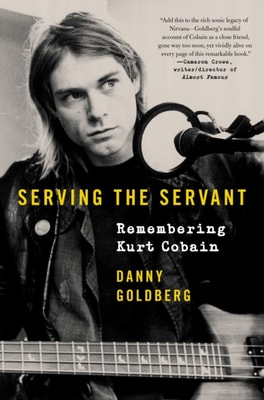
NATIONAL BESTSELLEROn the twenty-fifth anniversary of Kurt Cobain's death comes a new perspective on one of the most compelling icons of our timeIn early 1991, top music manager Danny Goldberg agreed to take on Nirvana, a critically acclaimed new band from the underground music scene in Seattle.
Chef and restaurateur Daniel Boulud once explained: The future of cooking is about how we can rewrite the history of itits important to keep the memory and be entertained by it and inspired by it.
Who knew that Bill Wyman (The Rolling Stones) makes an amazing Lamb Chops with Endive and Blue Cheese Salad, that Michael McDonald (The Doobie Brothers) loves Pasta with Ham and Parmesan Cheese, or that Boz Scaggs eats Tuscan Grilled Chicken?
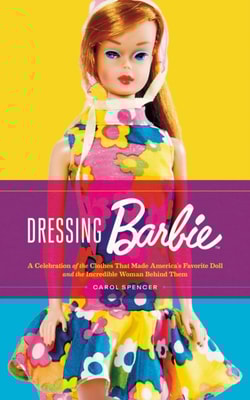
A legendary fashion designer for Barbie shares the story of her adventures working behind-the-scenes at Mattel, and spotlights the creations that transformed the worlds most famous doll into a style icon in this beautifully designed bookpublished in commemoration of Barbies sixtieth anniversaryillustrated with 100 full-color photographs, including many never-before-seen images of rare and one-of-a-kind pieces from the authors private archive.
Actress, director, entertainer Joely Fisher's touching, down-to-earth memoir filled with incredible, candid stories about her life, her famous parents, and how the loss of her unlikely hero, sister Carrie Fisher, ignited the writer in her.