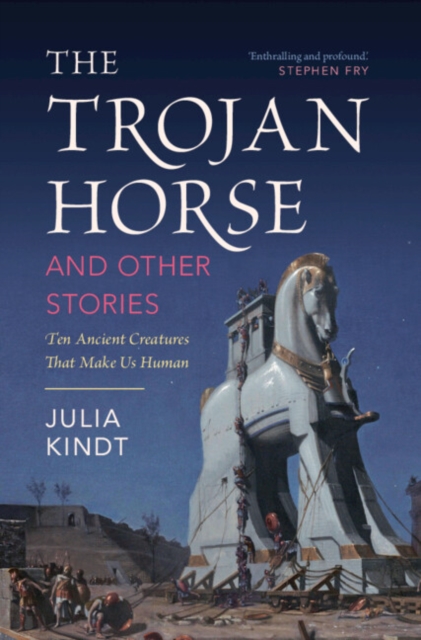
This fun, absorbing book, packed with quirky bite-sized lists, quizzes and trivia, is an exploration of the Latin language, aiming to prove that it is as vibrant and relevant today as it was 2,500 years ago.
Considering the ubiquity of rhetorical training in antiquity, the volume starts from the premise that every first-person statement in ancient literature is in some way rhetorically modelled and aesthetically shaped.
This authoritative new edition of the ancient scholia to Sophocles' Oedipus Tyrannus is the first to rely on a complete scrutiny of the sources of the text and the conjectural activity of scholars, but is also characterised by a fresh methodological approach: the transmission of scholia is prone to creating different versions of basically the same material, and to conflating originally distinct entities; these peculiarities are fully taken into consideration in analysing the manuscript tradition and composing the critical text.
This is a full-scale edition with commentary of the archaic epic poems Oichalias Halosis by Kreophylos of Samos and Herakleia by Peisandros of Kamiros.
This is a full-scale edition with commentary of the archaic epic poems Oichalias Halosis by Kreophylos of Samos and Herakleia by Peisandros of Kamiros.
Questa edizione contiene il testo greco degli scholia (vetera e recentiora) e delle glosse all'Andromacha di Euripide con un apparato critico e un apparato di loci similes.
In earlier scholarship, the late antique medical compilations of Oribasius of Pergamon, Aetius of Amida and Paul of Aegina were rather neglected and were believed to add nothing new themselves to what Galen, in particular, had to say.
Building on Calvino's observations on Exactitude in Six Memos for the Next Millennium, the present book elucidates on the possible definitions of exactitude, the endeavor of reaching exactitude, and the undeniable limits to the achievement of this ambitious milestone.
Ancient epistolary fiction is a still largely under-explored field of research, at the intersection of studies on epistolography and on pseudepigraphy.
Things themselves touch not the soul, not in the least degree; nor have they admission to the soul, nor can they turn or move the soul: but the soul turns and moves itself alone, and whatever judgments it may think proper to make, such it makes for itself the things which present themselves to it.
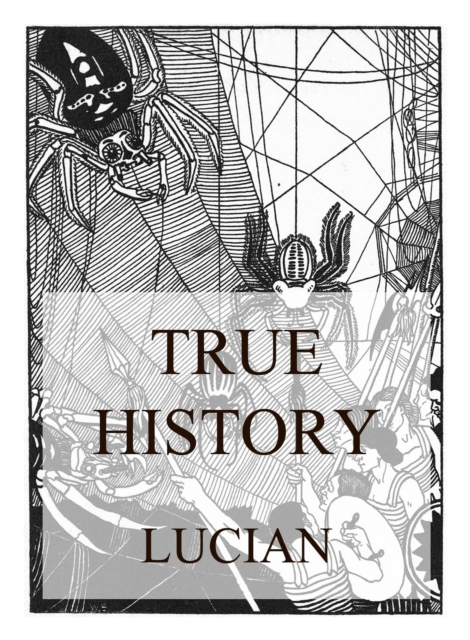
One of the best written and most amusing treatises of antiquity is Lucian's True History, forming a rather long narrative in two books, which suggested Swift's Gulliver's Travels, Rabelais's Voyage of Pantagruel and Cyrano de Bergerac's Journey to the Moon.
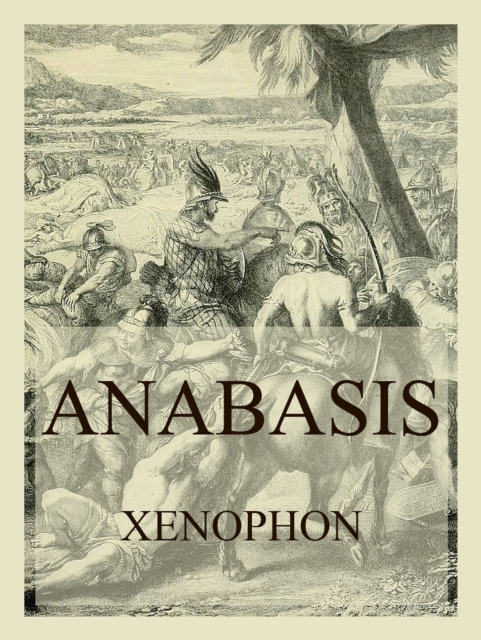
The Anabasis is his story of the march to Persia to aid Cyrus, who enlisted Greek help to try and take the throne from Artaxerxes, and the ensuing return of the Greeks, in which Xenophon played a leading role.