Expectations, Employment and Prices brings Keynesian economics into the 21st century by providing a new paradigm that explains how high unemployment could potentially persist forever without a little help from the government.
Orthodox economics operates within a hypothesized world of perfect competition in which perfect consumers and firms act to bring about supposedly optimal outcomes.
In Asset Management: A Systematic Approach to Factor Investing, Professor Andrew Ang presents a comprehensive, new approach to the age-old problem of where to put your money.
There is growing interest among academics and policymakers in the economics of gambling, which has been stimulated by major regulatory and tax changes in the U.
There is growing interest among academics and policymakers in the economics of gambling, which has been stimulated by major regulatory and tax changes in the U.
Blending economic analysis with political drama, EuroTragedy -chosen by both Foreign Affairs and The Financial Times as one of the best books of 2018-is a groundbreaking account of the euro's history and tragic consequences.
Blending economic analysis with political drama, EuroTragedy -chosen by both Foreign Affairs and The Financial Times as one of the best books of 2018-is a groundbreaking account of the euro's history and tragic consequences.
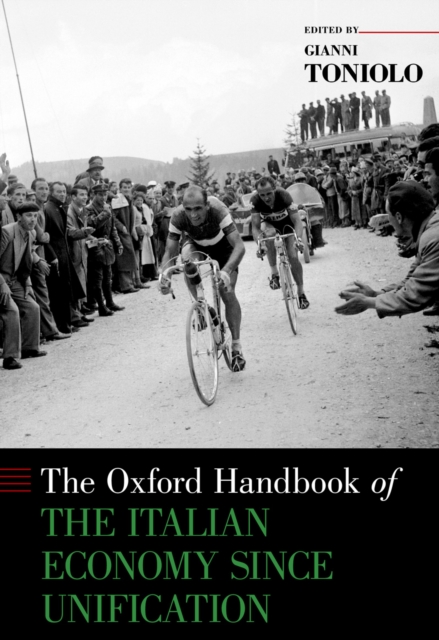
This Oxford Handbook provides a fresh overall view and interpretation of the modern economic growth of one of the largest European countries, whose economic history is less known internationally than that of other comparably large and successful economies.
This book collects results from ad hoc surveys on firms pricing behavior conducted in 2003 and 2004 by nine National central banks of the Euro area in the context of a joint research project (Eurosystem Inflation Persistence Network).
This book takes a global approach, with an emphasis on North and Latin America respectfully, by discussing one of today's most controversial topics in business; Dollarization.
The growth of service and high-tech industries in recent years has dramatically altered the geographical distribution of businesses throughout America.
This is the first comprehensive history and economic analysis of the Fertile Crescent during the 19th century, a region currently encompassing Iraq, Syria, Lebanon, Israel, Jordan, and a small part of Turkey.
Widely considered the crowning achievement in the history of international monetary relations, the classical gold standard (1880-1914) has long been treated like a holy relic.
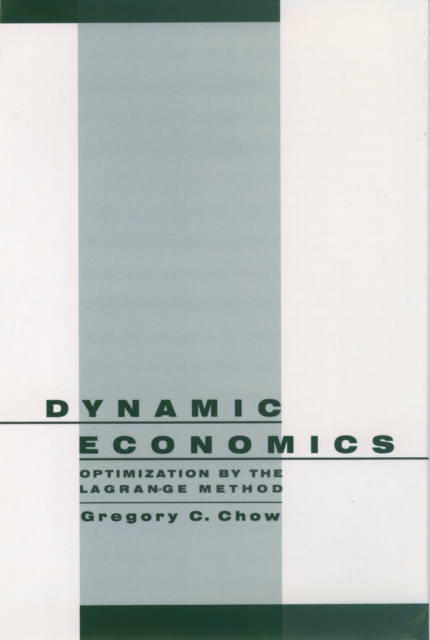
This work provides a unified and simple treatment of dynamic economics using dynamic optimization as the main theme, and the method of Lagrange multipliers to solve dynamic economic problems.
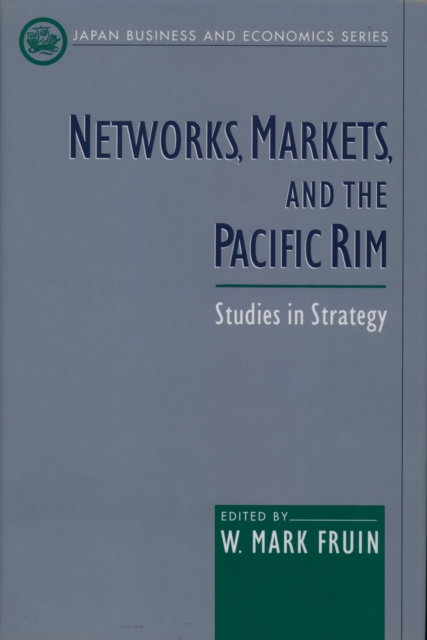
Despite the negative press Asian economies have received in connection with the recent financial crisis, their record of spectacular growth over the past few decades remains irrefutable.
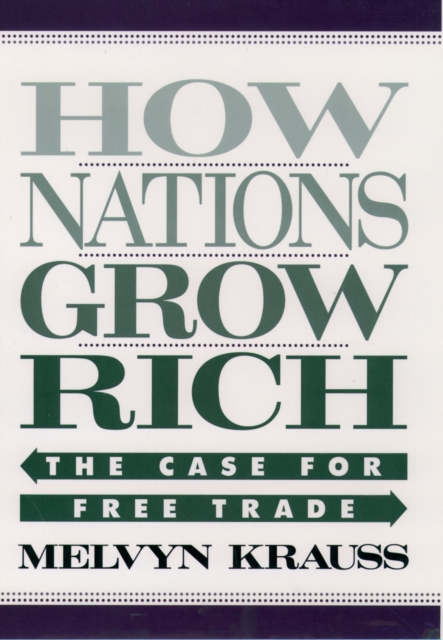
There can be no doubt, writes economist Melvyn Krauss, that the prosperity of the industrial nations since the Second World War has been due largely to global specialization and interdependence.
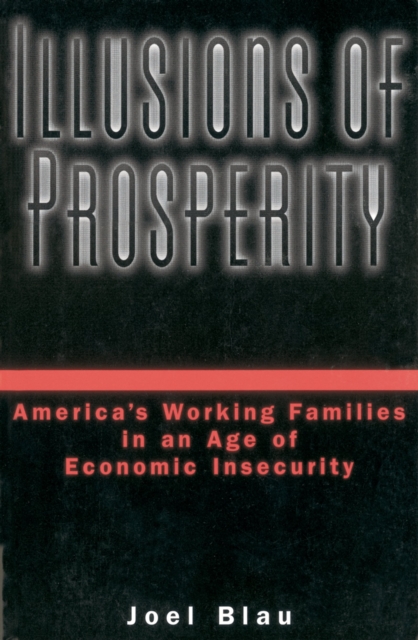
Faith in the free market--the idea that, for instance, profit-seeking managed care companies will improve the health care delivery system--has become a basic tenet of public policy debate.
Volume II provides an in-depth analysis of important specific issues, detailed discussion of the independence of the Bank of Israel, and an econometric study of the central banks policies.
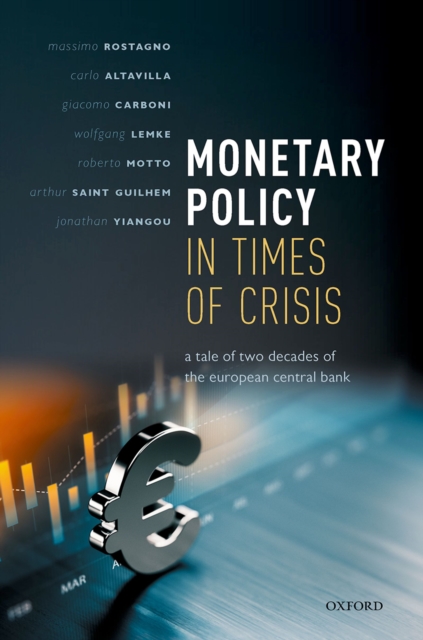
The first twenty years of the European Central Bank (ECB) offer a clear demonstration of how a central bank can navigate macroeconomic insecurity and crisis.
The first twenty years of the European Central Bank (ECB) offer a clear demonstration of how a central bank can navigate macroeconomic insecurity and crisis.