When the southern African country of Rhodesia was reborn as Zimbabwe in 1980, democracy advocates celebrated the defeat of a white supremacist regime and the end of colonial rule.
"e;Laura Bier unpacks the complicated dynamics and legacy of an historical moment in which women were understood to be crucial to modern nation-building.
The massacres that spread across Algeria in 1997 and 1998 shocked the world, both in their horror and in the international community's failure to respond.
Islam in Africa South of the Sahara: Essays in Gender Relations and Political Reform draws together contributions from scholars that focus on changes taking place in the practice of the religion and their effects on the political terrain and civil society.
The Outcast Majority invites policymakers, practitioners, academics, students, and others to think about three commanding contemporary issues-war, development, and youth-in new ways.
For many Egyptians in the early twentieth century, the biggest national problem was not British domination or the Great Depression but a "e;marriage crisis"e; heralded in the press as a devastating rise in the number of middle-class men refraining from marriage.
Europe's imperial projects were often predicated on a series of legal and scientific distinctions that were frequently challenged by the reality of social and sexual interactions between the colonized and the colonizers.
The Darfur conflict exploded in early 2003 when two rebel groups, the Sudan Liberation Movement and the Justice and Equality Movement, struck national military installations in Darfur to send a hard-hitting message of resentment over the region's political and economic marginalization.
When Breeze FM, a radio station in the provincial Zambian town of Chipata, hired an elderly retired schoolteacher in 2003, no one anticipated the skyrocketing success that would follow.
Yoruba culture has been a part of the Americas for centuries, brought from Africa during the transatlantic slave trade and maintained in various forms ever since.
Nigeria's Nollywood has rapidly grown into one of the world's largest film industries, radically altering media environments across Africa and in the diaspora; it has also become one of African culture's most powerful and consequential expressions, powerfully shaping how Africans see themselves and are seen by others.
In Bottleneck, anthropologist Caroline Melly uses the problem of traffic bottlenecks to launch a wide-ranging study of mobility in contemporary urban Senegal-a concept that she argues is central to both citizens' and the state's visions of a successful future.
When the Republic of Guinea gained independence in 1958, one of the first policies of the new state was a village-to-village eradication of masks and other ritual objects it deemed "e;fetishes.
Song Walking explores the politics of land, its position in memories, and its foundation in changing land-use practices in western Maputaland, a borderland region situated at the juncture of South Africa, Mozambique, and Swaziland.
In this remarkable work by seasoned scholar Lawrence Rosen, we follow the fascinating intellectual developments of four ordinary Moroccans over the span of forty years.
In Mastering the Niger, David Lambert recalls Scotsman James MacQueen (1778-1870) and his publication of A New Map of Africa in 1841 to show that Atlantic slavery-as a practice of subjugation, a source of wealth, and a focus of political struggle-was entangled with the production, circulation, and reception of geographical knowledge.
The Eyes of the World focuses on the lives and experiences of Eastern Congolese people involved in extracting and transporting the minerals needed for digital devices.
Primate Societies is a synthesis of the most current information on primate socioecology and its theoretical and empirical significance, spanning the disciplines of behavioral biology, ecology, anthropology, and psychology.
A comprehensive history of the relationship between Africa and the United States Toyin Falola and Raphael Njoku reexamine the history of the relationship between Africa and the United States from the dawn of the trans-Atlantic slave trade to the present.
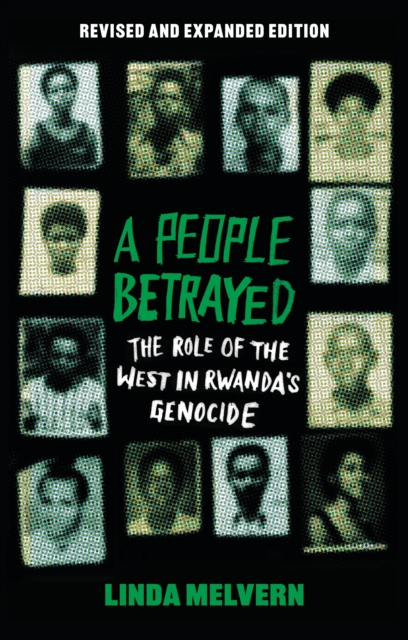
A sobering study of the troubled African nation, both pre- and post-genocide, and its uncertain future The brutal civil war between Hutu and Tutsi factions in Rwanda ended in 1994 when the Rwandan Patriotic Front came to power and embarked on an ambitious social, political, and economic project to remake the devastated central-east African nation.
In Memory Eternal, Sergei Kan combines anthropology and history, anecdote and theory to portray the encounter between the Tlingit Indians and the Russian Orthodox Church in Alaska in the late 1700s and to analyze the indigenous Orthodoxy that developed over the next 200 years.
A rich analysis of the complex dynamic between food collection and food production in the farming societies of precolonial south central Africa Engaging new linguistic evidence and reinterpreting published archaeological evidence, this sweeping study explores the place of bushcraft and agriculture in the precolonial history of south central Africa across nearly three millennia.
The surprising connections between the American frontier and empire in southern Africa, and the people who participated in both This book begins in an era when romantic notions of American frontiering overlapped with Gilded Age extractive capitalism.
The revolt against white rule in Rhodesia nurtured incipient local feminisms in women who imagined independence as a road to gender equity and economic justice.
A previously untold story of Jewish-Muslim relations in modern Morocco, showing how law facilitated Jews’ integration into the broader Moroccan society in which they lived Morocco went through immense upheaval in the nineteenth and early twentieth centuries.
In most places on the African continent, multiple health care options exist and patients draw on a therapeutic continuum that ranges from traditional medicine and religious healing to the latest in biomedical technology.
The colonial era in Africa, spanning less than a century, ushered in a more rapid expansion of Islam than at any time during the previous thousand years.
An introduction to the complex relationship between African Americans and the African continent What is an “African American” and how does this identity relate to the African continent?
A provocative reassessment of the relationship between states and environmental politics in Africa From climate-related risks such as crop failure and famine to longer-term concerns about sustainable urbanization, environmental justice, and biodiversity conservation, African states face a range of environmental issues.
"e;Africa for the Africans"e; was the name given in Africa to the extraordinary black social protest movement led by Jamaican Marcus Mosiah Garvey (1887-1940).
Although the reception of the Eastern Father Gregory of Nyssa has varied over the centuries, the past few decades have witnessed a profound awakening of interest in his thought.
Global Africa is a striking, original volume that disrupts the dominant narratives that continue to frame our discussion of Africa, complicating conventional views of the region as a place of violence, despair, and victimhood.