Bryophytes, which are important constituents of ecosystems globally and often dominate carbon and water dynamics at high latitudes and elevations, were also among the pioneers of terrestrial photosynthesis.
Non-mammalian synapsids were the dominant terrestrial vertebrates from the Late Carboniferous to the Middle Triassic and play a key role in understanding the origin and evolution of mammals.
The main topic of the book is a reconstruction of the evolution of nervous systems and brains as well as of mental-cognitive abilities, in short "e;intelligence"e; from simplest organisms to humans.
The Quaternary comprises a brief time in the Earth's history, and apart from a few exceptions, molluscan assemblages recovered from exposures along the coast of Southwestern South America (Southern Brazil, Uruguay, Argentina) are essentially the same than those that inhabit the region today, leading to the assumption that no important change in the distribution of the faunas since Pleistocene times has occurred.
Australopithecus species have been the topic of much debate in palaeoanthropology since Raymond Dart described the first species, Australopithecus africanus, in 1925.
Although consensus exists among researchers that birds evolved from coelurosaurian theropods, paleontologists still debate the identification of the group of coelurosaurians that most closely approaches the common ancestor of birds.
One of the most intriguing paleobiogeographical phenomena involving the origins and gradual sundering of Gondwana concerns the close similarities and, in most cases, inferred sister-group relationships of a number of terrestrial and freshwater vertebrate taxa, e.
Modern birds (Neornithes) are represented by two big lineages, the Palaeognathae (Tinamiformes + Ratitae) and the Neognathae [Galloanserae + Neoaves (Metaves + Coronoaves)].
This volume handles in various perspectives the concept of function and the nature of functional explanations, topics much discussed since two major and conflicting accounts have been raised by Larry Wright and Robert Cummins' papers in the 1970s.
The aim of this book is to provide a new insight on Neanderthal behaviour using the data recovered in level J of Romani rockshelter (north-eastern Spain).
Genesis - In The Beginning deals with the origin and diversity of Life and early biological evolution and discusses the question of where (hot or cold sources) and when the beginning of Life took place.
Over the last decade, Africa has taken a central position in the search for the timing and mechanisms leading to modern human origins, and the rich archaeological and human paleontological record of North Africa is critical to this search.
The past decade has witnessed an explosion of our knowledge on the structure, coding capacity and evolution of the genomes of the two DNA-containing cell organelles in plants: chloroplasts (plastids) and mitochondria.
This book uses the reaction of a number of biologists in the United States and Great Britain to provide an overview of one of the most important controversies in Twentieth Century biology, the "e;Lysenko Affair.
Although the unique flora of the Socotra Archipelago with its high degree of endemism has received much attention recently, little information is available on the vegetation and related ecological aspects.
Origin(s) of Design in Nature is a collection of over 40 articles from prominent researchers in the life, physical, and social sciences, medicine, and the philosophy of science that all address the philosophical and scientific question of how design emerged in the natural world.
Since the publication of The New Science of Astrobiology in the year 2001-the first edition of the present book-two significant events have taken place raising the subject from the beginning of the present century to its present maturity.
Evolution and Religion in American Education shines a light into one of America's dark educational corners, exposing the regressive pedagogy that can invade science classrooms when school boards and state overseers take their eyes off the ball.
The search for new producers of biologically active substances (BAS) against human and animal diseases continues to be an important task in biology and medicine.
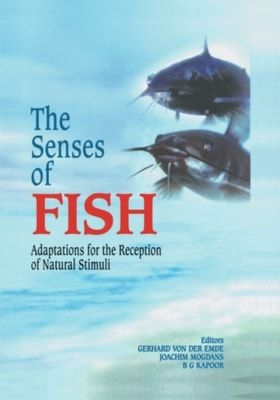
Fish comprise more than 50% of all living vertebrates and are found in a wide range of highly diverse habitats like the deep sea, the shoreline, tide pools, tropical streams and sweetwater ponds.
Fisheries genetics researchers will find invaluable the thirty-eight peer-reviewed contributions in this book, presented at the 20th Lowell Wakefield Fisheries Symposium "e;Genetics of Subpolar Fish and Invertebrates,"e; held in May 2002 in Juneau, Alaska.
Since the Western world first became aware of the existence of Neanderthals, this Pleistocene human has been a regular focus of interest among specialists and also among the general public.
This publication is unique among a number of books on cyanobacteria because it focuses on the bioenergetics of these widespread organisms which are the evolutionary prerequisite for the development of all higher forms of life on our "e;blue"e; planet.
Being the only place in the northern North Atlantic yielding late Cainozoic terrestrial sediments rich in plant fossils, Iceland provides a unique archive for vegetation and climate development in this region.
This volume handles in various perspectives the concept of function and the nature of functional explanations, topics much discussed since two major and conflicting accounts have been raised by Larry Wright and Robert Cummins' papers in the 1970s.
The present edited book is an attempt to update the state of art of the knowledge on metabolism of ROS and antioxidants and their relationship in plant adaptation to abiotic stresses involving physiological, biochemical and molecular processes.
This book is the first one in which basic demographic models are rigorously formulated by using modern age-structured population dynamics, extended to study real-world population problems.
This volume 2 and its companion volume 1 present the results of new investigations into the geology, paleontology and paleoecology of the early hominin site of Laetoli in northern Tanzania.
This volume 1 and its companion volume 2 present the results of new investigations into the geology, paleontology and paleoecology of the early hominin site of Laetoli in northern Tanzania.
The first and so far only Plant Geography of Chile was written about 100 years ago, since when many things have changed: plants have been renamed and reclassified; taxonomy and systematics have experienced deep changes as have biology, geography, and biogeography.